Mike Flanagan’s Carrie Series Is Reinventing Stephen King’s Classic Horror Tale
Mike Flanagan’s upcoming Carrie series is already shaping up to be far more than another remake. Instead of recreating the events audiences know from Brian De Palma’s iconic 1976 film or Stephen King’s bestselling novel scene by scene, the filmmaker is taking a bold new direction by modernizing the story, expanding its mythology, and reimagining several of its most memorable moments.
Premiering as an eight-episode limited series on Prime Video, the adaptation marks the first time Carrie has been told as a television series. That expanded format gives Flanagan room to explore characters and ideas that previous adaptations only briefly touched on while introducing new storylines designed for today’s audience.
During a recent interview with Entertainment Weekly, Flanagan revealed that the series makes four major changes to Stephen King’s original novel. From Carrie’s family history to her relationship with her mother—and even the infamous prom night massacre—the new adaptation appears determined to surprise longtime fans without abandoning the emotional core of King’s story.
What Changes Does Mike Flanagan Make to Carrie?
Mike Flanagan’s Carrie series introduces four significant departures from Stephen King’s novel:
- Carrie’s father plays a much larger role before his death.
- Margaret White is portrayed as a more emotionally layered mother.
- The legendary prom sequence unfolds in an entirely different way.
- The story expands the mythology of telekinetic abilities far beyond Carrie herself.
Rather than simply updating the setting, Flanagan is reshaping the narrative while keeping the novel’s themes of fear, isolation, trauma, and identity at its center.
Change #1: Carrie’s Father Dies Later, Completely Changing Her Childhood
One of the biggest surprises revealed by Flanagan involves Carrie White’s father, Ralph White.
In Stephen King’s 1974 novel, Ralph dies in a construction accident before Carrie is born. Because of his early death, Carrie grows up isolated under the strict control of her deeply religious mother, Margaret White, while attending public school throughout her childhood.
The Prime Video adaptation rewrites that timeline.
Instead of dying before Carrie’s birth, Ralph survives long enough to be part of her early life. His sudden death becomes a turning point that forces government authorities to take notice of the White family. As a result, Carrie is enrolled in public school much later than she is in the novel, dramatically changing how she experiences the outside world.
This single narrative adjustment alters the foundation of Carrie’s journey.
Rather than growing up gradually exposed to classmates and society, the series presents a teenager who is suddenly thrust into an unfamiliar environment after years of isolation. That shift has the potential to make her culture shock, social anxiety, and vulnerability even more believable for modern audiences.
Why This Change Matters
Expanding Ralph White’s role gives the series an opportunity to explore a part of Carrie’s life that previous adaptations largely skipped.
Instead of beginning with years of abuse already behind her, viewers will witness a major life transition that helps explain why Carrie struggles to fit into school and connect with other teenagers. It also creates a stronger emotional foundation before her supernatural abilities begin to emerge.
For an eight-episode television series, this additional character development could make Carrie’s transformation feel more gradual and emotionally impactful than earlier film adaptations.
Change #2: Margaret White Becomes More Than Just a Villain
Perhaps the most unexpected creative decision is Mike Flanagan’s approach to Margaret White, one of horror’s most infamous mothers.
In Stephen King’s novel, Margaret is portrayed as a fanatical religious extremist whose emotional and physical abuse shapes nearly every aspect of Carrie’s life. She suppresses her daughter’s curiosity, treats natural human experiences as sinful, and rules their home through fear.
The television adaptation takes a far more nuanced approach.
Rather than presenting Margaret as purely cruel, Flanagan describes her as a mother who genuinely believes she is protecting her daughter from a dangerous world. Instead of intentionally punishing Carrie, she attempts to create a sheltered environment where her daughter can remain innocent and safe.
While her methods remain deeply flawed, her motivations become significantly more understandable.
This doesn’t necessarily make Margaret a sympathetic hero, but it transforms her into a more emotionally layered character whose actions stem from fear and misguided love rather than simple malice.
A Fresh Dynamic Between Mother and Daughter
By adding complexity to Margaret White, the series also changes the emotional relationship at the heart of Carrie.
Previous adaptations often focused on Margaret as an unmistakable antagonist. Flanagan’s version appears more interested in exploring the tragedy of two people trapped by fear, trauma, and conflicting beliefs.
That emotional depth aligns with Flanagan’s previous adaptations, including Doctor Sleep and Gerald’s Game, both of which expanded supporting characters without losing the essence of Stephen King’s original stories.
If executed well, this revised mother-daughter relationship could become one of the television series’ biggest strengths, offering longtime fans a fresh perspective while preserving the psychological horror that has defined Carrie for decades.
Why Mike Flanagan’s Changes Feel Different From Previous Adaptations
Modern remakes often update classic stories simply by changing the setting or adding contemporary technology. Mike Flanagan appears to be taking a more ambitious approach.
Instead of retelling familiar scenes with modern smartphones and social media, he’s restructuring character motivations, expanding emotional arcs, and building new mythology around King’s original ideas. That strategy suggests the Prime Video series isn’t trying to replace earlier versions of Carrie—it’s attempting to tell a richer story that only an episodic format can support.
For longtime Stephen King readers, these creative risks may be surprising. But they also indicate that the new series aims to stand on its own rather than exist as another shot-for-shot adaptation.
Change #3: The Iconic Prom Scene Will Be Completely Reimagined
No moment from Carrie is more famous than the shocking prom-night sequence. Ever since Stephen King’s novel was adapted by Brian De Palma in 1976, the image of Carrie White standing on stage covered in pig’s blood has become one of horror cinema’s most recognizable scenes.
Rather than simply recreating that sequence, Mike Flanagan has confirmed that the Prime Video series takes a dramatically different approach.
According to the filmmaker, audiences will still reach prom night, but the events leading up to it—and what happens afterward—will not unfold the way fans expect.
Flanagan has described the sequence as an opportunity to revisit one of the most iconic moments in horror while surprising viewers who already know every twist of the original story.
That creative decision immediately separates the series from previous adaptations. Instead of relying on nostalgia, the new version aims to restore suspense by making even longtime Stephen King readers unsure of what comes next.
Why Reinventing Prom Night Makes Sense
For nearly five decades, audiences have known exactly what to expect from Carrie’s climactic prom scene.
The prank, the humiliation, and Carrie’s devastating response have become so ingrained in pop culture that simply repeating them would offer little suspense. By changing how the sequence unfolds, Flanagan creates genuine uncertainty without abandoning the emotional significance of the event.
The humiliation Carrie experiences has always represented the story’s emotional breaking point. That core idea remains intact, but the television format gives the creative team freedom to explore different circumstances, consequences, and character reactions.
If successful, the new prom sequence could become one of the biggest talking points of the series while giving longtime fans a reason to experience the story again.
Change #4: The Series Expands Stephen King’s Telekinetic Universe
Perhaps the most ambitious change isn’t tied to Carrie herself—it’s about the world surrounding her.
Flanagan revealed that beginning after Episode 2, nearly every episode will open by introducing a different woman from another place and another time who is discovering her own extraordinary abilities.
These stories gradually reveal that Carrie is not an isolated phenomenon but part of something much larger.
This idea isn’t entirely new.
Stephen King’s original novel briefly references scientific studies, police reports, witness statements, and government investigations suggesting that telekinetic abilities may exist beyond Carrie White. The book also introduces the concept of the so-called “TK gene,” hinting that her powers are part of a broader phenomenon rather than a one-time supernatural event.
Earlier adaptations, however, mostly ignored that larger mythology.
Mike Flanagan is taking those overlooked ideas and expanding them into a major part of the television series.
Building a Bigger Stephen King Mythology
The episodic structure allows the adaptation to explore questions the novel only hinted at:
- Are there others born with telekinetic abilities?
- How common is the mysterious TK gene?
- Why does Carrie possess such extraordinary power?
- Could similar events be happening elsewhere in the world?
Instead of treating Carrie’s powers as an unexplained anomaly, the Prime Video series appears determined to examine their origins and broader implications.
This approach gives the adaptation a much larger scope than any previous version while remaining rooted in concepts Stephen King originally introduced.
How This Differs From Earlier Adaptations
The 1976 film and later remakes primarily focused on Carrie’s personal tragedy.
While those versions succeeded as intimate psychological horror stories, they rarely explored the wider mythology surrounding telekinesis.
Flanagan’s adaptation shifts that perspective.
By introducing additional women with similar abilities, the series transforms Carrie from a standalone horror story into one connected by a shared supernatural thread.
Rather than replacing Carrie’s journey, these parallel stories are expected to provide greater context for her place within Stephen King’s fictional universe.
For longtime readers, this could be one of the adaptation’s most exciting additions because it develops ideas that existed in the novel but were never fully explored on screen.
Why Mike Flanagan Believes These Changes Were Necessary
Making significant changes to one of Stephen King’s most beloved novels is always a risk, especially when previous adaptations have become horror classics.
Mike Flanagan understands that expectation better than most.
Throughout his career, he has earned a reputation for adapting King’s work with respect while finding meaningful ways to expand the source material. His films Gerald’s Game, Doctor Sleep, and The Life of Chuck demonstrated that faithful adaptations don’t always require scene-for-scene recreations.
With Carrie, Flanagan believes the television format demands a different approach.
An eight-episode limited series offers far more storytelling space than a two-hour film. Simply stretching the original novel across multiple episodes would likely feel repetitive for viewers already familiar with the story.
Instead, Flanagan is using that additional runtime to deepen character relationships, introduce new mythology, and explore emotional conflicts that previous adaptations had little time to examine.
What These Changes Mean for Stephen King Fans
Whenever a classic novel receives a new adaptation, one question inevitably follows:
How much should change?
For many readers, Stephen King’s original Carrie remains a near-perfect blend of supernatural horror and emotional tragedy. Naturally, any major departure from the novel will spark debate.
However, the changes revealed so far suggest that Mike Flanagan isn’t attempting to modernize the story simply for the sake of being different.
Instead, each adjustment appears designed to serve one of three purposes:
- Give familiar characters greater emotional depth.
- Expand ideas Stephen King originally introduced but never fully developed.
- Restore suspense for audiences who already know every major plot point.
That approach reflects Flanagan’s history as both a filmmaker and a lifelong Stephen King admirer.
Rather than replacing the novel, the Prime Video series seems intent on exploring another interpretation of it—one that preserves the emotional heart of Carrie while offering longtime fans meaningful surprises.
If those creative risks pay off, this adaptation could become one of the most distinctive Stephen King television projects in recent years, standing alongside Flanagan’s previous work while carving out its own identity within the author’s ever-growing cinematic universe.
Carrie Cast: Who Stars in Mike Flanagan’s New Series?
Mike Flanagan has assembled a talented ensemble cast to bring Stephen King’s iconic characters to life. Several actors are frequent collaborators of the filmmaker, while others are newcomers to the Carrie universe.
Confirmed Cast
| Actor | Character |
|---|---|
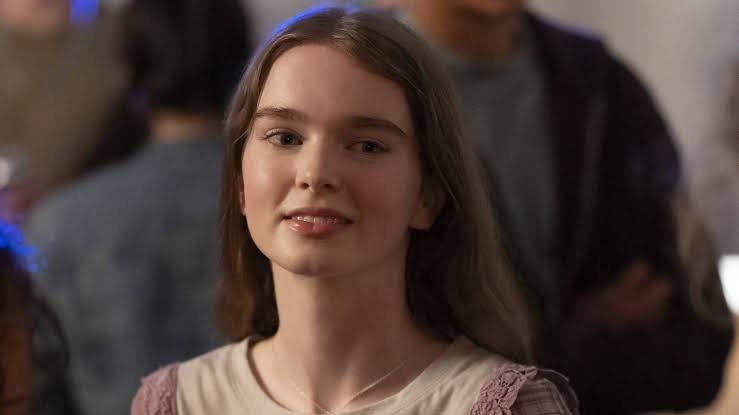
| Summer H. Howell | Carrie White |
| Samantha Sloyan | Margaret White |
| Matthew Lillard | Principal Grayle |
| Alison Thornton | Chris Hargensen |
| Siena Agudong | Sue Snell |
| Joel Oulette | Tommy Ross |
| Arthur Conti | Billy |
| Amber Midthunder | Miss Desjardin |
Flanagan serves as the showrunner, writer, executive producer, and director for four of the series’ eight episodes. Stephen King is also attached as an executive producer, highlighting the author’s involvement in bringing this new adaptation to the screen.
Carrie Release Date: When Will the Series Premiere?
Prime Video has confirmed that Carrie will debut this fall as an eight-episode limited series.
While an exact premiere date has not yet been announced, the show will launch in more than 240 countries and territories, making it one of Prime Video’s biggest global releases of the year.
Additional trailers and promotional material are expected to arrive closer to the premiere.
Why This Could Be the Most Ambitious Carrie Adaptation Yet
Every adaptation of Carrie has interpreted Stephen King’s novel differently.
Brian De Palma’s 1976 film became a horror classic by faithfully capturing the novel’s emotional tragedy. Later versions largely followed the same blueprint, modernizing the setting while keeping the core story intact.
Mike Flanagan appears to be taking a different path.
Rather than retelling a familiar story beat for beat, he’s expanding overlooked ideas from King’s novel, adding emotional complexity to key characters, and introducing fresh mysteries that even longtime fans won’t see coming.
That strategy carries obvious risks. Changing beloved source material can divide audiences, especially when iconic scenes are involved.
At the same time, it’s also what makes this adaptation one of the year’s most intriguing Stephen King projects.
Instead of asking viewers to watch the same story again, Flanagan is inviting them to experience Carrie through an entirely new lens—one that remains rooted in King’s themes of isolation, fear, grief, bullying, and the devastating consequences of cruelty.
If the series successfully balances respect for the original novel with meaningful innovation, it could become the definitive modern adaptation of Carrie for a new generation.
Frequently Asked Questions (FAQ)
1. Is Mike Flanagan’s Carrie based on Stephen King’s novel?
Yes. The series is based on Stephen King’s 1974 novel Carrie. However, Mike Flanagan has confirmed that the adaptation introduces several major story changes while preserving the novel’s central themes.
2. What are the biggest changes in the new Carrie series?
The adaptation makes four significant changes:
Carrie’s father survives longer than in the novel.
Margaret White is portrayed as a more emotionally layered character.
The famous prom-night sequence unfolds differently.
The series expands the mythology surrounding telekinetic abilities.
3. Who plays Carrie White in the Prime Video series?
Summer H. Howell stars as Carrie White, taking over the iconic role previously portrayed by Sissy Spacek, Angela Bettis, and Chloë Grace Moretz in earlier adaptations.
4. Is Stephen King involved with the new adaptation?
Yes. Stephen King is an executive producer on the series alongside Mike Flanagan and the rest of the production team.
5. When will Mike Flanagan’s Carrie be released?
Prime Video has announced that the eight-episode limited series will premiere this fall. A specific release date has not yet been revealed.
6. Will the new series follow the original novel exactly?
No. While it remains inspired by Stephen King’s novel, Mike Flanagan has confirmed that the adaptation includes new storylines, expanded mythology, and several major character changes designed specifically for the television format.
Final Thoughts
Mike Flanagan’s Carrie isn’t trying to replace the classic novel or its previous film adaptations. Instead, it aims to expand Stephen King’s original vision by exploring new character dynamics, modern themes, and a broader supernatural mythology.
The four confirmed changes already suggest that this won’t be a scene-for-scene remake. Whether it’s giving Ralph White a larger role, redefining Margaret White’s motivations, reinventing the legendary prom sequence, or exploring the mysterious “TK gene,” the series appears focused on delivering fresh surprises while respecting the emotional foundation that made Carrie a horror landmark.
For longtime Stephen King readers and newcomers alike, that combination of familiarity and innovation may be exactly what sets this adaptation apart when it arrives on Prime Video later this year.
About The Author