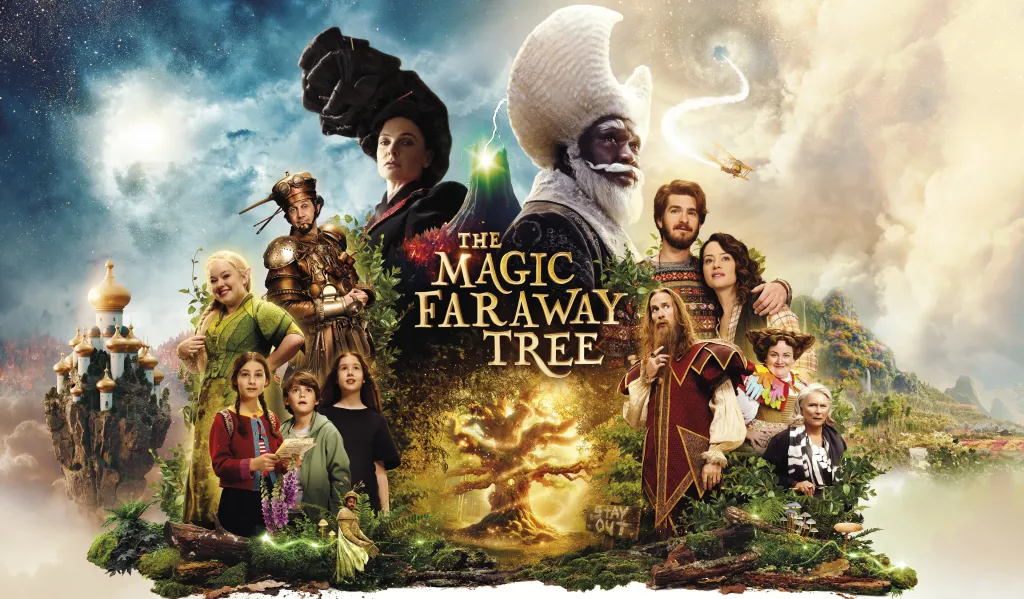
The Magic Faraway Tree: An Enid Blyton classic reimagined as an ode to impermanence.
There are children’s stories we remember for their characters, some for their adventures, and a rare few because they seem to contain an entire philosophy of life.
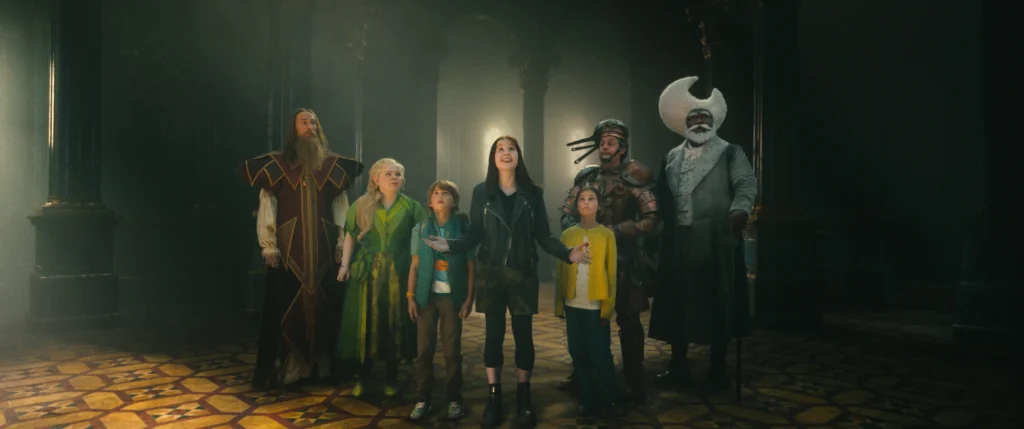
Enid Blyton‘s The Magic Faraway Tree belongs to that rare category.
At first glance, the classic is an exuberant fantasy about children climbing a gigantic enchanted tree and discovering whatever magical land happens to have arrived at its summit. But look beneath the whimsy and another idea begins to emerge: nothing stays the same.
The lands change. Adventures end. Characters appear and disappear. Happiness gives way to anxiety, fear turns into excitement, and the children eventually return home.
In that sense, The Magic Faraway Tree can be read as an unlikely children’s meditation on impermanence — the ancient philosophical idea that everything is continually changing.
And the 2026 big-screen reimagining gives that interpretation a surprisingly contemporary resonance.
The Magic Faraway Tree Comes Back — But Not Quite the Same
The new live-action The Magic Faraway Tree adapts Enid Blyton’s beloved fantasy for a contemporary audience. Written by Simon Farnaby, known for Paddington 2 and Wonka, and directed by Ben Gregor, the film stars Andrew Garfield, Claire Foy, Nicola Coughlan, Nonso Anozie, Rebecca Ferguson and Jennifer Saunders, among others.
Rather than simply reproducing the original children’s adventure, the movie relocates its central family into a modern context. Polly and Tim Thompson and their children Beth, Joe and Fran are forced to leave their previous life behind and move to the English countryside, where they discover the enchanted tree and its extraordinary inhabitants.
That change is significant.
The original Faraway Tree stories emerged from a very different cultural world. The new film asks what happens when Blyton’s fantasy meets a generation living through economic uncertainty, digital isolation, family disruption and anxiety about an unpredictable future.
That makes the old tree feel surprisingly new.
What Does “Impermanence” Mean?
Impermanence is the idea that everything changes.
People change. Relationships change. Circumstances change. Places change. Emotions change.
We often experience this as a problem because human beings instinctively want permanence. We want the perfect moment to last. We want childhood to remain intact. We want our homes, relationships and identities to stay familiar.
But the Faraway Tree refuses to offer that certainty.
At the top of the tree, you never quite know what awaits you.
It could be the Land of Goodies.
It could be the Land of Birthdays.
It could be another strange and unpredictable world entirely.
The official Enid Blyton site describes the central premise in precisely these terms: the children climb the Faraway Tree to discover which new land has appeared at the top.
The magic, therefore, isn’t merely that these worlds exist.
The magic is that they don’t stay.
The Tree Is a Metaphor for Life
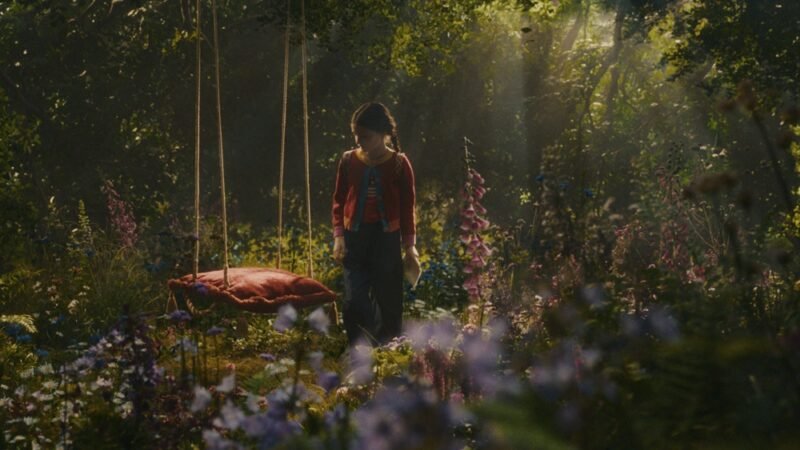
This is what makes the Faraway Tree such a fascinating symbol.
The tree is enormous, rooted in one place, while everything around its upper branches is constantly changing.
That contradiction mirrors human existence.
We spend our lives looking for stability while living in a constantly changing world.
The children have a home.
They also have the tree.
The home represents familiarity.
The tree represents uncertainty.
And between the two lies the entire experience of growing up.
Every climb is an act of trust.
Every new land is an encounter with uncertainty.
Every return is a reminder that the adventure has ended — at least for now.
The “Perfect” World Never Lasts
One of Blyton’s most fascinating ideas is that there isn’t one permanently perfect destination at the top of the Faraway Tree.
The children don’t arrive at paradise and stay there forever.
They arrive somewhere wonderful, experience it, and eventually move on.
That is almost the opposite of the way modern fantasy franchises frequently operate. Contemporary storytelling often builds increasingly elaborate worlds that audiences are encouraged to revisit indefinitely.
The Faraway Tree does something different.
It says:
Enjoy this world while you’re in it.
Tomorrow may bring another one.
And that is essentially the philosophy of impermanence.
Why This Idea Feels So Modern
The story may have originated decades ago, but its emotional logic feels remarkably relevant today.
Modern life is dominated by constant transition.
People change jobs. Families relocate. Children move between schools. Technology transforms daily life. Friendships migrate online. Social identities evolve. Entire industries disappear and reappear in different forms.
Even childhood itself is changing.
The new film appears to recognise this shift. Its story begins with a family being uprooted after a job loss and moving to a remote countryside home — a very contemporary disruption before the fantasy even begins.
The Faraway Tree then becomes more than an escape.
It becomes a way of learning how to live with change.
From Childhood Fantasy to Emotional Resilience
Perhaps this is why the story continues to work.
Children encounter uncertainty constantly.
They don’t know what tomorrow will bring. They don’t know which friendships will survive. They don’t know how their bodies, interests or personalities will change.
The Faraway Tree turns that uncertainty into an adventure.
Instead of saying:
“The unknown is frightening.”
It asks:
“What if the unknown is exciting?”
That is a powerful psychological shift.
Fear and curiosity can occupy the same space.
The unknown can be dangerous, but it can also contain wonder.
And that is arguably one of the most important lessons hidden inside Blyton’s fantasy.
Moon-Face, Silky and the Community of Change
The beloved characters of the Faraway Tree aren’t merely colourful companions.
Moon-Face, Silky, Saucepan Man, Dame Washalot and the other inhabitants make the changing worlds feel like a living ecosystem. The official series description continues to foreground these characters alongside the constantly changing lands at the top of the tree.
Their presence reinforces another aspect of impermanence:
We don’t experience change alone.
People arrive in our lives.
People leave.
Some remain for years.
Some appear for only one chapter.
Yet every relationship can alter us.
The children may climb the tree for the fantasy, but the friendships they form are what make the fantasy emotionally meaningful.
Going Home Is Part of the Adventure
There’s something particularly important about the fact that the children can return home.
Without home, the Faraway Tree would simply be chaos.
Adventure has meaning because there is a place to return to.
This creates a beautiful balance:
Security gives us the courage to explore uncertainty.
And that idea may be more relevant to childhood than any magical creature in the story.
Children need boundaries, but they also need freedom.
They need protection, but they also need discovery.
The Faraway Tree occupies the space between those two needs.
The New Film and the Meaning of Reimagining a Classic
A fascinating aspect of the 2026 adaptation is that it doesn’t attempt to freeze Blyton’s world in time.
Instead, it reimagines it.
That is itself an example of impermanence.
A story written generations ago is being interpreted for a new generation. Familiar characters are preserved, but their surroundings and circumstances evolve.
This is how classics survive.
They don’t remain completely unchanged.
They change enough to remain meaningful.
The film’s contemporary family story, modern humour and updated emotional context reflect that evolution, while still retaining the iconic Faraway Tree world and characters.
The adaptation therefore demonstrates the very principle that sits at the centre of this interpretation of Blyton:
Even stories change.
Why Adults May See Something Children Don’t
A child watching The Magic Faraway Tree may simply see magic.
An adult returning to it decades later may see something else.
They may recognise the loss of childhood.
The death of old routines.
The disappearance of friendships.
The strange speed at which children grow up.
The homes we leave.
The people we cannot keep.
And suddenly the Faraway Tree becomes bittersweet.
Because the child thinks:
“What wonderful place will be there next?”
The adult thinks:
“How long before this disappears?”
That difference may be the most poignant thing about revisiting Enid Blyton as an adult.
The Philosophy Hidden Inside the Magic
Perhaps the deepest lesson of the Faraway Tree isn’t that there is always another magical land waiting.
It is that we cannot know which one is coming next.
And yet we climb.
That is courage.
That is curiosity.
That is childhood.
And, in many ways, that is life.
The past cannot be permanently recreated. The present cannot be held forever. The future cannot be controlled.
All we can do is experience the moment in front of us.
The Land of Goodies will end.
The Land of Birthdays will end.
The adventure will end.
Then another adventure begins.
And perhaps that is exactly why the Faraway Tree remains magical.
An Ode to Impermanence
Seen through this philosophical lens, The Magic Faraway Tree is not merely an Enid Blyton fantasy classic. It is an ode to impermanence disguised as a children’s adventure.
Its worlds change because life changes.
Its adventures end because moments end.
Its characters come and go because relationships evolve.
And its children keep climbing because the alternative to uncertainty is to never discover what lies beyond the familiar.
The Faraway Tree ultimately whispers a remarkably mature truth beneath all its childhood magic:
Nothing lasts forever — and that isn’t necessarily sad.
Sometimes, the fact that something is temporary is precisely what makes it beautiful.
So perhaps the real question isn’t:
“Which land is at the top of the Faraway Tree?”
Perhaps the real question is:
“What will we discover when we climb?”
And perhaps that is why, generations after Enid Blyton first imagined it, the Faraway Tree still feels like a place worth visiting.
Because the tree never promises us permanence.
It promises us possibility.
Final Verdict
The Magic Faraway Tree works because it transforms uncertainty into wonder. The 2026 reimagining brings that philosophy into a contemporary family story, making the Blyton classic feel less like a relic of childhood and more like a reminder for adults: everything changes, nothing stays forever, and there is still magic in climbing toward whatever comes next.
About The Author