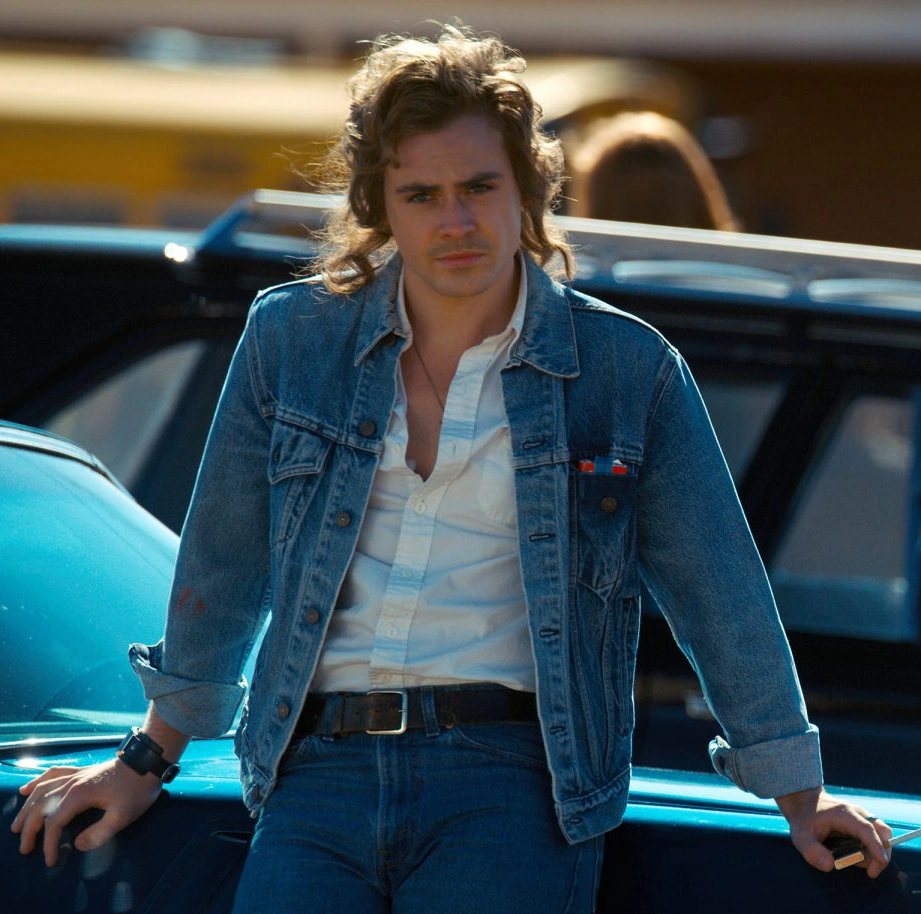
Billy Hargrove is one of the most controversial characters in Stranger Things, and one question continues to come up whenever fans revisit Season 2: Is Billy from Stranger Things racist?
Played by Dacre Montgomery, Billy arrives in Hawkins as Max Mayfield’s aggressive older stepbrother. He is violent, controlling, arrogant and openly hostile toward several people around him. But his treatment of Lucas Sinclair stands out because Billy targets Lucas almost immediately, even though he barely knows him.
The confusion comes partly from the way the show handles Billy’s prejudice. He never uses an explicit racial slur on screen, and Dacre Montgomery initially interpreted Billy’s hostility toward Lucas differently. However, the Duffer Brothers later made their intention much clearer: Billy was written as a racist character, with his attitude toward Lucas designed to reflect racial tension surrounding an interracial relationship in the 1980s.
Why Does Billy Hate Lucas in Stranger Things?
Billy’s hostility toward Lucas becomes obvious in Stranger Things 2 when he sees Max spending time with him. Billy tells Max that there are certain types of people she should stay away from and specifically identifies Lucas as one of them.
The scene is important because Billy has no real personal history with Lucas that would explain such immediate hostility. Lucas has not done anything to Billy, yet Billy singles him out after seeing him with Max. Later, Billy confronts Lucas more aggressively and physically attacks him.
That is why the Billy Hargrove racism question has remained such a common topic among Stranger Things viewers. On the surface, Billy can be dismissed as an abusive and controlling older brother who doesn’t want Max dating or spending time with boys. But the character’s specific treatment of Lucas carries an additional racial context.
The Duffer Brothers Confirmed Billy Was Written as Racist
The strongest evidence comes from the show’s creators themselves.
When discussing Billy’s behavior in Season 2, Ross Duffer described him as racist and explained that his attitude reflected the way he viewed people he considered different from himself. The discussion specifically connected Billy’s reaction to Max being involved with Lucas to the reality of an interracial relationship during the period in which the story takes place.
That distinction matters because it separates what viewers may personally interpret from the writers’ intention. There was considerable debate among fans about whether Billy simply hated Lucas because he was protective of Max. But the Duffer Brothers’ explanation establishes that racism was deliberately part of Billy’s characterization.
The show does not present Billy as a character delivering lengthy speeches about racism. Instead, his prejudice is folded into his existing pattern of aggression, control and hatred toward people he sees as different.
What Did Billy Say to Max About Lucas?
Billy’s warning to Max is one of the biggest reasons viewers search for “Billy Stranger Things racist.”
After seeing Max with Lucas, Billy tells her that there are certain types of people she should stay away from and identifies Lucas as one of them. The wording is deliberately vague, but the scene gives viewers enough context to understand what Billy is implying.
Billy does not know Lucas well enough to have developed a genuine personal grudge against him. His reaction is based on seeing Lucas with Max and immediately deciding that Lucas is someone she should not associate with.
That is also why the scene works differently from Billy’s other bullying behavior. Billy is generally cruel, but his reaction to Lucas has a specific racial dimension that the show’s creators later confirmed.
Did Billy Ever Call Lucas a Racial Slur?
No. Stranger Things does not show Billy using an explicit racial slur against Lucas.
That is one reason the character’s racism became a subject of debate among viewers. The final version of the show relies heavily on implication rather than explicit dialogue.
Reports and later discussions surrounding the character have also noted that an earlier version of the material was more overt, but Dacre Montgomery was uncomfortable with saying a racial slur, and the scene was changed. This detail has circulated through fan and character references, while the more important confirmed point is that the Duffers intended Billy’s prejudice toward Lucas to be racial.
So, while viewers never hear Billy use the slur in the finished episode, that does not mean the racism was accidental or invented by the fandom.
Why Did Dacre Montgomery Initially Say Billy Wasn’t Racist?
This is where the Billy Hargrove racist debate becomes more complicated.
When Dacre Montgomery first discussed the character after Season 2, he did not interpret Billy’s behavior toward Lucas primarily as racism. In interviews, Montgomery explained that he viewed Billy as an angry and damaged character whose hostility was connected to his relationship with Max and his own troubled background.
That interpretation created a noticeable difference between the actor’s understanding of Billy and the writers’ stated intention.
Montgomery was also interested in humanizing Billy. He worked with the creators to explore the character’s abusive relationship with his father and the insecurity underneath his aggression. That helped make Billy more complicated than a straightforward teenage villain, but it did not erase the specific prejudice written into his relationship with Lucas.
Billy’s Racism Does Not Explain All of His Behavior
It would also be too simplistic to reduce Billy entirely to racism.
Billy is abusive toward Max, physically violent toward Steve, disrespectful toward women and generally aggressive toward people who challenge his authority. His behavior comes from several different aspects of his personality and upbringing.
Dacre Montgomery has spoken about trying to understand what was underneath Billy’s aggression, while the show eventually revealed the abusive environment created by Billy’s father, Neil Hargrove. Montgomery wanted audiences to see the vulnerability behind the character’s violence rather than treating him as a one-dimensional villain.
That background provides context for Billy’s behavior, but context is not the same thing as an excuse. The show can explain why Billy became violent without suggesting that his treatment of Lucas or Max was acceptable.
Was Billy’s Father Responsible for His Racism?
Billy’s father, Neil Hargrove, is clearly presented as an abusive and bigoted figure. The series shows how Neil’s behavior shapes Billy and contributes to the anger and violence Billy carries with him.
That connection becomes especially important when understanding Billy’s worldview. He grew up around someone who used intimidation, prejudice and physical violence as tools of control. Some character references also connect Neil’s bigotry to Billy’s own prejudices.
Still, Stranger Things does not portray Billy as simply a helpless product of his father. Billy makes his own choices, and his treatment of Lucas is part of the character the Duffers intentionally created.
The distinction is important because Billy’s tragic backstory is designed to make him understandable, not necessarily innocent.
Why Does Billy Target Lucas More Than the Other Boys?
Billy is hostile toward several members of Max’s social circle, but Lucas receives particularly focused treatment.
One reason the scene can be confusing is that Billy’s general personality makes almost any explanation seem possible. He is jealous, controlling, violent and suspicious of people around Max. A viewer could initially interpret his anger toward Lucas as nothing more than an overprotective stepbrother trying to control Max’s relationships.
But the Duffer Brothers’ explanation changes the reading of those scenes. Billy’s anger toward Lucas is not merely about Max spending time with a boy. The character was specifically written to react to Lucas as a Black teenager involved with Max.
That is what gives the storyline its racial dimension.
Billy’s Racism Is Part of Stranger Things’ 1980s Setting
The decision to make Billy racist also fits the show’s attempt to explore some of the darker realities surrounding its nostalgic 1980s setting.
Much of Stranger Things uses the decade as a playground for movies, music, fashion, video games and pop culture. But the series occasionally contrasts that nostalgia with more uncomfortable social realities.
Billy’s relationship with Lucas is one example. The Duffer Brothers specifically described wanting to be honest about how an interracial relationship could be viewed by certain people during that period.
That does not mean every person in Hawkins is portrayed as racist. Instead, Billy represents one individual whose prejudice becomes another obstacle Lucas has to deal with alongside the supernatural threats surrounding the group.
Does Billy’s Redemption in Season 3 Change the Answer?
No. Billy’s later actions do not erase the earlier characterization.
By Stranger Things 3, Billy becomes connected to the Mind Flayer and eventually gets a chance to resist its control. His final confrontation with the creature gives the character a tragic and emotional ending.
That sacrifice is often the reason fans remember Billy as more complicated than simply a villain. The show gives him a moment of courage and allows viewers to see flashes of the person he might have been without his father’s abuse and the anger that shaped him.
But a redemption moment does not rewrite earlier events. Billy can be a tragic character who makes a courageous final choice while also having been racist, abusive and violent earlier in the story.
Why Do Some Stranger Things Fans Still Debate Billy’s Racism?
The debate largely comes from the difference between what is explicitly shown on screen and what the creators later explained.
On screen, Billy never directly announces that he hates Lucas because Lucas is Black. Instead, viewers see Billy single Lucas out, tell Max to stay away from him and later become physically aggressive toward him.
That ambiguity allowed some viewers to interpret Billy’s behavior as ordinary bullying, possessiveness or protectiveness. Dacre Montgomery’s early comments also contributed to that interpretation because he initially did not view the character as racist.
However, the Duffer Brothers’ explanation provides the missing context. Their stated intention was that Billy’s reaction to Lucas was connected to race and the interracial relationship between Lucas and Max.
So the debate is understandable from the way the scene is presented, but the writers’ stated characterization is much less ambiguous.
Billy Hargrove’s Racism vs. His Abusive Upbringing
One of the more interesting aspects of Billy’s character is that two things can be true at the same time.
Billy is a product of an abusive household, and his father clearly contributes to the anger, insecurity and violence that define him. At the same time, Billy is responsible for the way he treats other people.
His childhood helps explain why he became the person viewers meet in Season 2. It does not make his actions toward Lucas, Max, Steve or anyone else acceptable.
That distinction is essential to understanding why Billy remains such a divisive Stranger Things character. The show gives him enough vulnerability to create sympathy without completely removing responsibility for his actions.
Billy Hargrove’s Character Is More Complicated Than His Redemption
Billy’s popularity has always been slightly unusual because many viewers are drawn to complicated villains and antagonists. Dacre Montgomery’s performance gives Billy an undeniable screen presence, and the character’s later storyline adds emotional weight to his story.
But liking a fictional character does not require ignoring the character’s worst actions.
Billy can be an effective villain, a tragic figure, a victim of abuse and a character who ultimately makes a heroic sacrifice. He can also be racist. Those elements are not mutually exclusive.
That complexity is part of why Billy continues to generate discussion years after his introduction. For more background on the wider cast and where the characters and actors stand in the franchise, Fandomora’s Stranger Things Cast From Season 1 to Now: Where Are the Stars Today? is a natural related read.
Is Billy From Stranger Things Racist? The Answer Explained
Yes. Billy Hargrove was written as a racist character, particularly in his treatment of Lucas Sinclair. The Duffer Brothers explicitly described Billy’s behavior toward Lucas in racial terms and connected it to how an interracial relationship could be viewed by prejudiced people during the 1980s.
The confusion largely comes from the fact that the finished episodes portray Billy’s racism through implication rather than explicit racial slurs, while Dacre Montgomery initially interpreted Billy’s hostility differently.
Billy’s abusive relationship with his father explains part of his anger and worldview, but it does not excuse his actions. His later sacrifice in Season 3 adds another layer to his story without changing what the character was established to be in Season 2.
FAQs About Billy Hargrove and Racism
1. Was Billy Hargrove racist in Stranger Things?
Yes. The Duffer Brothers confirmed that Billy was written as racist, particularly in relation to his hostility toward Lucas Sinclair and Max’s interracial relationship with him.
2. Why did Billy hate Lucas?
Billy targeted Lucas after seeing him with Max. While his controlling personality is part of the scene, the Duffer Brothers explained that Billy’s reaction was intentionally connected to racism and prejudice toward an interracial relationship.
3. Did Billy call Lucas a racial slur?
No explicit racial slur is spoken by Billy toward Lucas in the finished series. Reports and character references have discussed an earlier version of the material containing stronger racial language, but that version did not appear in the final episode.
4. Did Dacre Montgomery think Billy was racist?
Montgomery initially said he did not view Billy’s behavior toward Lucas primarily as racism. His interpretation focused more on Billy’s anger, protectiveness and troubled personality.
5. Was Billy a good person in Stranger Things?
Billy is not portrayed as a consistently good person. He is abusive, violent and prejudiced, although the series gives him a tragic background and eventually allows him to make a heroic sacrifice.
6. Did Billy’s father make him racist?
Neil Hargrove’s abuse and bigotry are important parts of Billy’s background and help explain his behavior. However, the show does not use Billy’s upbringing as a complete excuse for his actions.
7. Why is Billy still popular with Stranger Things fans?
Billy’s popularity comes partly from Dacre Montgomery’s performance and the character’s combination of charisma, aggression, vulnerability and tragedy. His Season 3 storyline also gives him a memorable final act, making him more complicated than a conventional villain.
Stay updated with the latest trends on Fandomora — your go-to destination for breaking movie news, web series updates, anime releases, gaming trends, celebrity insights, and music updates. Explore reviews, OTT release dates, anime guides, gaming walkthroughs, and curated lists to discover the best in global entertainment.
About The Author