Na Hong-jin is back, and he clearly did not return quietly. After The Wailing, the Korean filmmaker’s latest movie, Hope, goes bigger, louder and far more action-heavy, turning a remote South Korean village into the battleground for a bizarre creature invasion.
The result is a Korean action epic that refuses to settle into one genre. Hope mixes science fiction, creature horror, black comedy, survival thriller and explosive action, with Hwang Jung-min, Zo In-sung and Hoyeon leading a cast that gives the chaos plenty of personality. The movie premiered in competition at Cannes and was released in South Korea on July 15, 2026. The Korean Film Council lists its runtime at 156 minutes and classifies it as an SF, thriller and action film.
For roughly the first hour, Hope is exceptionally confident. Na Hong-jin builds suspense around something the characters barely understand, then gradually transforms that mystery into an increasingly outrageous action spectacle. The problem is that the movie eventually becomes almost as interested in explaining its mythology as it is in delivering the mayhem.
Our Rating: 4/5
Quick Answer: Is Hope Worth Watching?
Yes. Hope is worth watching if you enjoy ambitious Korean action movies, creature features and genre films that are willing to take strange risks.
Na Hong-jin’s direction gives the movie several genuinely memorable action sequences, while Hwang Jung-min, Zo In-sung and Hoyeon provide the grounded performances needed to keep the increasingly ridiculous situation entertaining. The biggest weaknesses are the long runtime, uneven pacing in the second half and visual effects that do not always match the scale of the production.
What Is Hope About?
Hope takes place in a remote coastal community in South Korea that suddenly becomes isolated after a mysterious threat begins attacking the area. What initially looks like a strange animal incident quickly develops into something much more dangerous.
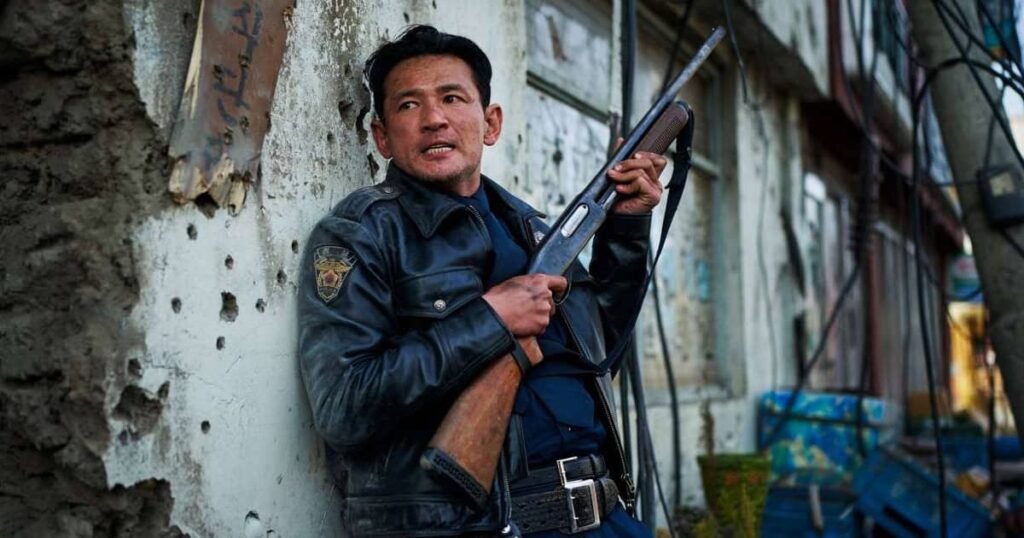
Police chief Beom-seok, played by Hwang Jung-min, becomes involved in the investigation alongside local hunters and residents. Zo In-sung plays Sung-ki, while Hoyeon plays Seong-ae, another key member of the local response.
The film deliberately keeps the threat mysterious during its opening stretch. Rather than immediately showing audiences the creature and explaining its origins, Na Hong-jin builds tension through damaged buildings, dead animals, frightened residents and increasingly violent encounters.
That approach is one of the movie’s smartest decisions. The less the audience understands, the more dangerous the situation feels.
Na Hong-jin Turns Hope Into Something Completely Different
Anyone expecting another The Wailing should adjust those expectations immediately.
Na Hong-jin’s earlier films were built around dread, mystery and psychological unease. Hope still has those ingredients, but they are buried underneath a much larger action framework. The filmmaker is clearly interested in spectacle here, and the movie repeatedly pushes toward the kind of large-scale set pieces more commonly associated with Hollywood blockbusters.
BFI’s Sight and Sound described Hope as a maximalist South Korean monster movie influenced by action cinema, including Mad Max: Fury Road. That comparison makes sense because Na frequently treats movement, destruction and physical space as important parts of the storytelling.
Yet Hope still feels unmistakably Korean. Its humor, character dynamics and depiction of ordinary villagers caught in extraordinary circumstances give the movie an identity beyond its creature-feature premise.
The First Hour of Hope Is Its Strongest Material
The opening section is where Hope demonstrates exactly how effective Na Hong-jin can be when he refuses to give the audience easy answers.
A mysterious animal death becomes the first warning sign. From there, the investigation expands through the village while the threat remains largely unseen. Instead of relying on constant monster shots, Na builds suspense through aftermath.
That creates a wonderful sense of uncertainty.
A destroyed vehicle can be more frightening than a close-up of a creature. A damaged building can suggest violence without showing exactly what happened. A character looking into the darkness can make the audience start imagining possibilities that the movie has not yet confirmed.
Hope understands that anticipation is often more powerful than explanation.
Hwang Jung-min Is the Perfect Lead for This Korean Action Movie
Hwang Jung-min gives Hope its emotional center as Beom-seok, a police chief who is hardly presented as an invincible action hero.
That distinction matters.
Instead of creating another perfectly trained protagonist who effortlessly destroys everything in his path, Na gives audiences a more nervous and human figure. Beom-seok often looks overwhelmed by the situation around him, which makes his attempts to protect the community more entertaining and suspenseful.
Hwang also understands the movie’s unusual tone. He can play a scene seriously one moment and then become the source of an absurd burst of humor without completely breaking the atmosphere.
That performance is particularly important because Hope frequently moves between horror, action and comedy.
Fans interested in more Korean performers can also explore Fandomora’s guide to top Korean actors and actresses, which fits naturally with the movie’s Korean ensemble.
Zo In-sung Brings a Different Energy to Hope
Zo In-sung’s Sung-ki provides a strong contrast to Beom-seok.
Where the police chief is more cautious and reactive, Sung-ki feels more comfortable in the dangerous environment surrounding the village. His connection to the hunters also gives the movie a different action perspective once the story moves away from the town.
Zo brings physical confidence to the role without making Sung-ki feel like a conventional superhero.
That is one of the reasons the central performances work so well together. The movie does not depend on one traditional hero. Instead, it creates a collection of flawed people who are forced to react to something far beyond their understanding.
Hoyeon Proves She Can Handle More Than Squid Game
Hoyeon is another major strength of Hope.
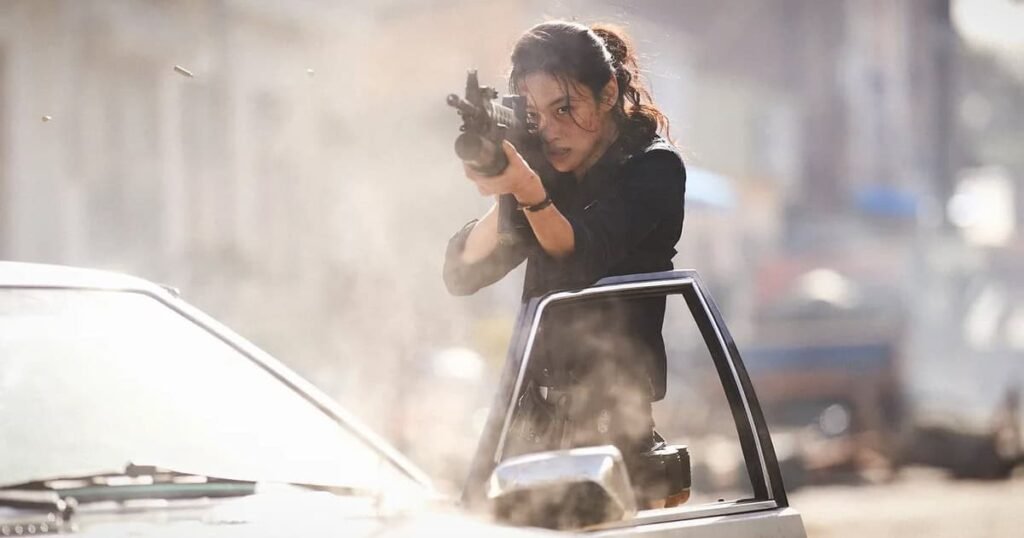
Known internationally for Squid Game, she gets considerably more physical material here. Her character is involved in the increasingly dangerous situation and becomes an important part of the movie’s action-driven second half.
What makes her performance work is the combination of toughness and unpredictability. She does not simply exist to support the male characters. She contributes to the movie’s escalating survival dynamic and fits comfortably into Na Hong-jin’s strange mixture of danger and humor.
Her presence also adds another recognizable name to an already impressive Korean cast.
The Action Scenes Are Where Hope Really Goes Crazy
If the main reason you’re searching for a Hope review is to find out whether the action is worth the hype, the answer is straightforward: yes.
Na Hong-jin approaches the action with a willingness to let sequences become increasingly ridiculous without losing their physical impact.
Cars, guns, explosions, creatures and desperate escapes constantly collide. One extended sequence involving horses and weapons stands out as exactly the kind of insane set piece that makes Hope different from a standard Korean thriller.
Recent reviews have similarly highlighted the movie’s large-scale chases, shootouts and creature confrontations as major strengths.
The best action scenes also have a clear sense of geography. Characters are not simply placed in front of digital backgrounds and allowed to shoot in every direction. The village, roads, forests and surrounding landscape become part of the action.
That gives the destruction weight.
Hope Understands How to Delay a Monster Reveal
One of the smartest decisions in the movie is how long Na Hong-jin waits before fully revealing what is attacking the community.
This is a familiar creature-feature technique, but Hope stretches it considerably. The first part of the movie is built around fragments: injuries, destruction, strange sounds and characters trying to determine what they are dealing with.
That restraint creates genuine suspense.
RogerEbert.com’s review similarly praised the early section for taking considerable time before fully revealing the creature, noting how the mystery allows the audience to question who is actually dangerous.
The strategy works because Hope initially makes the mystery more interesting than the answer.
The Creature Horror Works Best When Hope Keeps Things Unclear
The movie’s monster is not simply a conventional animal that has wandered into a village.
As more information emerges, the situation becomes stranger, and the film starts shifting from survival horror toward science fiction.
That transition is fascinating because it changes the audience’s understanding of what came before. The early violence seems straightforward at first. Later developments encourage viewers to reconsider the assumptions made by both the characters and the audience.
This is where the movie’s title becomes more thematically relevant. Hope is interested in how people react when they cannot understand the threat in front of them.
Fear leads to assumptions. Assumptions lead to violence. And violence creates consequences.
Hong Kyung-pyo’s Cinematography Gives the Movie Its Scale
The cinematography by Hong Kyung-pyo is another major reason Hope feels larger than its rural setting.
Hong, whose previous work includes major Korean productions such as Parasite and Snowpiercer, gives the film a strong visual contrast between the ordinary village environment and the increasingly destructive events taking place within it.
The production design also helps sell the idea that this is a real community being gradually torn apart.
Even when the movie becomes enormous in scale, the visual language frequently returns to roads, buildings, forests and fields. That connection to physical space keeps the action from becoming completely detached from the characters.
The Visual Effects Are Impressive — But Not Always Consistent
This is where the Hope review gets more complicated.
The movie clearly wants to compete with enormous international science-fiction productions. Some sequences successfully achieve that ambition, while others reveal the limitations of the digital effects.
The creature work can occasionally look less convincing than the surrounding practical environments. Several critics have pointed to uneven CGI as one of the film’s weaknesses, particularly when the spectacle becomes more dependent on digital imagery.
Interestingly, that does not completely destroy the experience.
Na Hong-jin is so committed to the movie’s momentum that even imperfect visual effects can be carried by strong editing, sound design and physical staging.
Still, this is one area where Hope falls short of the very best modern creature movies.
The Biggest Problem With Hope Is Its Runtime
At 156 minutes according to the Korean Film Council, Hope is a long movie.
The first hour makes that length feel justified because the suspense keeps building. But once the film expands into its larger mythology, the pacing becomes less consistent.
This is the central weakness of the movie.
The action remains energetic, but the story begins adding more explanations, characters and ideas just as the initial mystery starts becoming less important.
Some viewers will appreciate that expansion. Others will wonder why the movie did not simply trust the strength of its central premise and tighten the second half.
That division is already reflected in critical reactions. Some reviews have praised the film’s ambition and spectacle while criticizing its extended runtime and uneven back half.
Does Hope Explain Too Much?
Ironically, one of the film’s problems is that it eventually starts explaining the very mystery that made its opening so effective.
The early Hope is fascinating because nobody knows exactly what is happening.
The later Hope becomes more interested in explaining the creatures, their origins and the larger mythology surrounding the conflict.
That shift is not inherently bad. In fact, some audiences will enjoy getting deeper into the science-fiction mythology. But the explanations arrive after the movie has already trained viewers to enjoy uncertainty.
This is where Hope feels less controlled than The Wailing.
In The Wailing, ambiguity is part of the horror. In Hope, ambiguity eventually gives way to exposition.
Michael Fassbender and Alicia Vikander Add an Unexpected International Element
Hope also features international stars Michael Fassbender and Alicia Vikander, alongside Taylor Russell and Cameron Britton. Their presence reinforces the movie’s unusually global scale.
However, audiences should approach these appearances without expecting a conventional Hollywood-style ensemble movie.
Their involvement becomes part of the film’s increasingly strange science-fiction mythology rather than simply functioning as celebrity casting.
For viewers who prefer the grounded Korean side of the story, these sections can feel like a major tonal shift. For others, they are exactly what makes Hope so unpredictable.
Hope Is at Its Best When It Stops Trying to Behave
There is a wonderfully chaotic quality to this movie.
It can move from horror to slapstick comedy, from tense investigation to explosive action, and from rural Korean realism to full-blown science fiction.
Normally, that combination would sound like a recipe for tonal disaster.
Yet Na Hong-jin understands that Hope is supposed to feel excessive. The movie is not trying to be a perfectly balanced genre exercise. It is deliberately pushing different cinematic traditions into the same space.
That approach will not work for everyone, but it gives Hope a personality.
There are plenty of technically polished blockbusters. There are fewer that feel this strange.
How Hope Compares With The Wailing
The easiest comparison is obviously The Wailing, but the two movies serve very different purposes.
The Wailing is slower, darker and more psychologically focused. Its mystery is central to the experience, and its horror comes from uncertainty and paranoia.
Hope takes some of those ideas and throws them into a much larger action framework.
Instead of asking audiences to sit with dread for long stretches, Hope eventually gives them car chases, gunfights, creature attacks and large-scale destruction.
The connection between the two films is therefore less about plot and more about Na Hong-jin’s interest in ordinary people confronting something they cannot fully comprehend.
What Works Best in Hope?
The strongest elements of the movie are its ambition, action and performances.
The biggest strengths include:
- Na Hong-jin’s confident direction.
- A suspenseful opening hour.
- Hwang Jung-min’s energetic lead performance.
- Zo In-sung’s physical presence.
- Hoyeon’s increasingly action-oriented role.
- Creative and unpredictable action sequences.
- Strong cinematography from Hong Kyung-pyo.
- A strange combination of horror, science fiction and black comedy.
- A willingness to avoid conventional blockbuster storytelling.
The movie’s greatest achievement is simply that it feels like its own thing.
What Doesn’t Work in Hope?
The weaknesses are mostly concentrated in the second half.
The 156-minute runtime can become exhausting, particularly when the movie slows down to explain its mythology. Some CGI sequences also look less convincing than the film’s practical environments.
The tonal shifts can be another issue. What feels refreshing and unpredictable to one viewer may feel messy to another.
And while the larger mythology gives Hope more scale, it also reduces some of the mystery that made the opening so compelling.
Final Verdict: Is Hope One of 2026’s Best Korean Action Movies?
Hope is messy, excessive and occasionally frustrating — but it is also incredibly difficult to forget.
Na Hong-jin has made a Korean action movie that refuses to stay inside one genre. It begins like a rural mystery, transforms into a creature horror film and eventually explodes into a giant science-fiction action spectacle.
Not every decision works. The runtime is too long, the pacing loses some control and the CGI occasionally struggles to support the movie’s enormous ambitions.
But the action is often spectacular, the cast is excellent and the first half demonstrates exactly why Na Hong-jin remains such an exciting filmmaker.
If you want a polished, predictable blockbuster, Hope may test your patience.
If you want something wild, violent, funny, strange and unmistakably Korean, this is exactly the kind of movie worth taking a chance on.
Fandomora Verdict: 4/5
Hope does not always know when to stop — but when Na Hong-jin’s instincts are firing, the movie delivers some of the most outrageous Korean action filmmaking of 2026.
Frequently Asked Questions About Hope
1. Is Hope a Korean movie?
Yes. Hope is a South Korean science-fiction, thriller and action movie directed by Na Hong-jin. The Korean Film Council lists the film as a 2026 South Korean production with a 156-minute runtime.
2. Who directed Hope?
Hope was written and directed by Na Hong-jin, the filmmaker behind The Wailing and The Chaser. It marks his return to feature filmmaking after The Wailing.
3. Who stars in Hope?
The main cast includes Hwang Jung-min, Zo In-sung, Hoyeon, Michael Fassbender, Alicia Vikander, Taylor Russell and Cameron Britton.
4. What genre is Hope?
Hope is primarily a science-fiction, thriller and action movie, although it also incorporates creature horror, dark comedy and survival elements.
5. How long is Hope?
The Korean Film Council lists Hope at 156 minutes, while some international festival and review materials have listed a runtime of around 160 minutes.
6. Is Hope similar to The Wailing?
Both movies are directed by Na Hong-jin and explore people confronting mysterious threats, but they are very different experiences. The Wailing is a slower supernatural mystery, while Hope is a much larger action and creature-feature spectacle.
7. Is Hope worth watching?
Yes, particularly for fans of Korean action movies, creature features and unusual science-fiction thrillers. Its biggest drawbacks are its long runtime, uneven second half and inconsistent CGI, but the performances and action sequences make it a worthwhile genre experience.
Stay updated with the latest trends on Fandomora — your go-to destination for breaking movie news, web series updates, anime releases, gaming trends, celebrity insights, and music updates. Explore reviews, OTT release dates, anime guides, gaming walkthroughs, and curated lists to discover the best in global entertainment.
About The Author