
Nowhere to lay my eyes, a Korean unsettling reunion drama at Locarno Film Festival is grabbing attention
Hong Sang-soo trades emotional fireworks for uncomfortable silence in one of 2026’s most quietly affecting family dramas.
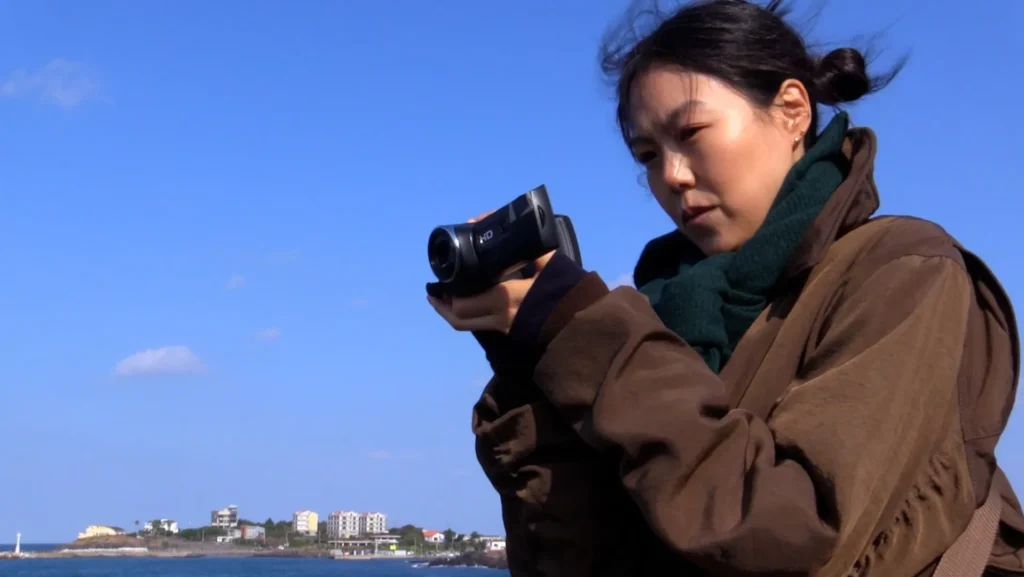
In cinema, reunions are usually designed to deliver emotional payoff. Estranged parents embrace their children, old lovers rediscover unfinished feelings, and long-buried secrets erupt into dramatic confrontations. Audiences expect tears, redemption, and closure.
Nowhere to Lay My Eyes has little interest in any of that.
Premiering at the 79th Locarno Film Festival, Hong Sang-soo’s latest feature quietly dismantles the familiar reunion movie formula. Instead of asking whether broken relationships can be repaired, the film asks a far more unsettling question: What if people simply don’t know how to reconnect anymore?
That subtle shift makes Nowhere to Lay My Eyes one of the most unconventional reunion films to emerge from international cinema in recent years.
A Reunion That Refuses to Perform
The film follows a daughter who visits her mother after years of separation. On paper, it sounds like the setup for an emotionally charged family drama.
But Hong Sang-soo deliberately avoids every predictable turn.
There are no explosive arguments. No shocking revelations. No orchestral score telling viewers when to cry.
Instead, the camera patiently observes ordinary conversations over meals, hesitant exchanges, uncomfortable pauses, and the invisible emotional distance that time creates between family members.
The reunion doesn’t feel like a destination.
It feels like two strangers trying to remember how they once belonged to each other.
That quiet honesty becomes the film’s greatest strength.
Silence Speaks Louder Than Dialogue
Most filmmakers treat silence as a pause between important conversations.
Hong Sang-soo treats silence as the conversation itself.
The most revealing moments arrive not through dramatic speeches but through lingering glances, unfinished sentences, awkward smiles, and the things nobody is willing to say aloud.
This minimalist approach demands patience from the audience, but it rewards careful viewers with emotional layers that conventional dramas often explain too directly.
Every scene feels lived rather than written.
Why It Stands Apart from Other Reunion Films
International cinema has produced several unforgettable reunion stories, but Nowhere to Lay My Eyes occupies its own distinctive space.
Hirokazu Kore-eda‘s Still Walking explores family grief through warm domestic rituals and generations carrying invisible emotional scars. Like Kore-eda, Hong believes that family history often reveals itself around dinner tables rather than during confrontations. Yet Hong’s storytelling is even more restrained, allowing scenes to drift naturally without pushing viewers toward a specific emotional conclusion.
Kenneth Lonergan‘s Manchester by the Sea confronts trauma through devastating emotional release. Its characters eventually acknowledge their pain, even if healing remains impossible. Hong chooses another path. His characters continue living beside their unresolved emotions, suggesting that some relationships simply evolve into quiet coexistence rather than reconciliation.
Andrey Zvyagintsev‘s The Return turns a family reunion into psychological suspense, where every interaction carries mystery and danger. Nowhere to Lay My Eyes removes that tension completely. Its drama comes from ordinary human discomfort—the realization that familiarity can disappear even within families.
In an era when reunion films often rely on emotional climaxes, Hong Sang-soo creates tension through emotional absence.
The Beauty of Emotional Incompleteness
Perhaps the film’s boldest decision is its refusal to offer closure.
Modern audiences are conditioned to expect answers. We want apologies, forgiveness, transformation, or at least certainty.
Hong offers none of them.
Relationships remain imperfect.
Questions remain unanswered.
People leave carrying the same emotional weight they arrived with.
Yet that incompleteness feels remarkably authentic. Families rarely resolve decades of distance during a single visit. Sometimes a reunion is simply an acknowledgment that life moved on while everyone was looking elsewhere.
The film embraces that uncomfortable truth with remarkable confidence.
A Masterclass in Minimalism
Visually, Nowhere to Lay My Eyes reflects Hong Sang-soo’s trademark style—unobtrusive camera work, natural lighting, long conversational takes, and performances that feel almost documentary-like.
Nothing appears exaggerated.
Nothing competes for attention.
The filmmaking quietly disappears, leaving only the emotional rhythms of everyday life.
This simplicity allows viewers to focus on expressions, pauses, body language, and subtle shifts in relationships rather than cinematic spectacle.
Final Verdict
Rating: ★★★☆☆½ (3.5/5)
Fandomora Rating: 3.5/5 Stars
Nowhere to Lay My Eyes won’t resonate with viewers seeking emotionally explosive family drama or neatly tied-up endings. However, for audiences who appreciate contemplative world cinema, Hong Sang-soo crafts an intimate portrait of estrangement that feels quietly authentic. Its measured pacing and minimalist storytelling may test casual viewers, but its emotional honesty and understated performances make it a rewarding watch for fans of arthouse cinema.
Verdict: A subtle, introspective reunion drama that values emotional realism over melodrama, proving that sometimes the deepest conversations are the ones left unspoken.
Stay updated with the latest trends on Fandomora — your go-to destination for breaking movie news, web series updates, anime releases, gaming trends, celebrity insights, and music updates. Explore reviews, OTT release dates, anime guides, gaming walkthroughs, and curated lists to discover the best in global entertainment.
About The Author