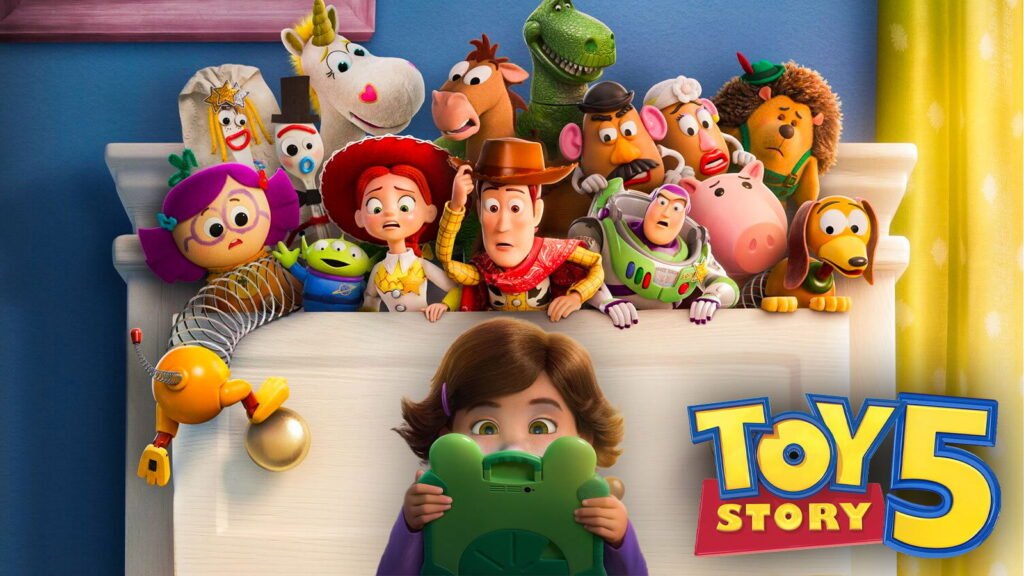
Toy Story 5 had one of the hardest jobs imaginable. Pixar’s beloved franchise had already delivered four movies spanning more than three decades, with Toy Story 3 providing an emotional farewell and Toy Story 4 giving Woody a surprisingly different ending. Bringing the toys back yet again could easily have felt like another trip to a familiar toy box.
Instead, Toy Story 5 finds a surprisingly relevant reason to return.
Directed by Andrew Stanton and co-directed by Kenna Harris, the fifth installment shifts the franchise into a new conflict: toys versus technology. Woody, Buzz Lightyear, Jessie, and the other toys must deal with Lilypad, a high-tech tablet that becomes a major threat to traditional playtime. Disney lists the film at 1 hour and 42 minutes and classifies it as an adventure, animation, comedy, and family movie.
The result is a movie that still delivers the colorful humor, emotional storytelling, and character-driven adventure audiences expect from Pixar, while addressing something very familiar to modern families: what happens when screens begin replacing imagination and real-world play?
That makes Toy Story 5 more than another nostalgic sequel. At its best, it is a thoughtful story about childhood, technology, friendship, growing up, and why imagination still matters.
Toy Story 5 Review: Is the New Pixar Sequel Any Good?
Yes, Toy Story 5 is a surprisingly strong sequel that manages to justify its existence by giving the franchise a new thematic conflict rather than simply repeating an old adventure.
The movie understands that the toys’ greatest enemy isn’t necessarily another villain trying to destroy them. Instead, their challenge comes from a changing childhood environment. Technology has become increasingly central to the way children play, communicate, learn, and entertain themselves.
That gives Toy Story 5 a conflict that feels contemporary without abandoning the emotional foundation of the franchise.
The movie also benefits from bringing Woody, Buzz, and Jessie back into the same story. Their relationships remain the heart of the franchise, while the new characters provide enough freshness to prevent the movie from becoming purely nostalgic.
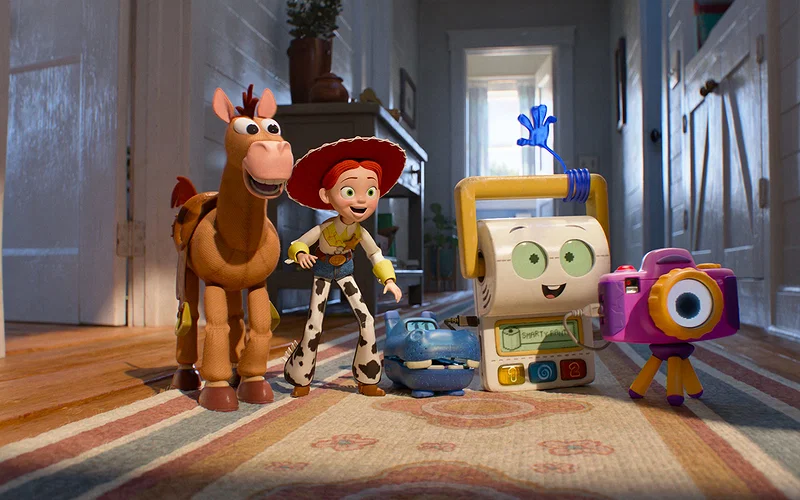
Toy Story 5 Story Explained
The Toy Story 5 story centers on Bonnie and the toys’ struggle to remain relevant in a world increasingly dominated by technology.
Bonnie receives Lilypad, a new tablet device voiced by Greta Lee. Rather than functioning as a simple piece of technology in the background, Lilypad becomes an active part of the story and challenges the toys’ understanding of what Bonnie actually needs. Disney describes the central conflict as “Toy meets Tech,” with Woody, Buzz, Jessie, and the rest of the gang facing a new threat to playtime.
This premise gives the sequel a clever way to revisit the franchise’s original idea. The toys have always existed because children need imagination, companionship, and play. Now they are forced to compete with technology that can offer instant entertainment.
That conflict makes Toy Story 5 feel surprisingly modern.
Toy Story 5 and the Battle Between Toys and Technology
The most interesting element of Toy Story 5 is its central theme. The movie isn’t simply saying that technology is bad. Instead, it asks what children might lose if digital entertainment completely replaces traditional imaginative play.
That distinction is important.
Technology can be useful, educational, creative, and entertaining. But Pixar’s story argues that there is something unique about physically playing, inventing stories, creating imaginary worlds, and forming emotional connections with other people.
The toys therefore represent more than old-fashioned playthings. They represent imagination itself.
This gives the movie a deeper message than its colorful premise initially suggests.
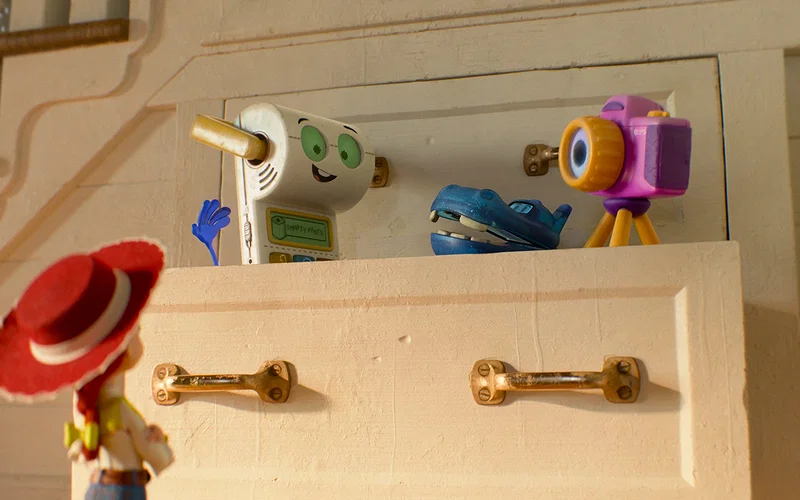
Woody’s Role in Toy Story 5
Woody remains one of the emotional anchors of the franchise, but Toy Story 5 approaches him differently than the earlier movies.
After the events of Toy Story 4, Woody’s relationship with his old friends had changed dramatically. The fifth movie has to deal with that history while also giving him a reason to become involved in another adventure.
The result is a Woody who feels older and more reflective.
His experiences over the previous four movies have taught him that being a toy isn’t simply about belonging to one child forever. It is about understanding what children need and knowing when to step forward or step aside.
That emotional maturity gives Woody’s presence in Toy Story 5 more weight than a simple nostalgic reunion.
Buzz Lightyear in Toy Story 5
Buzz Lightyear once again provides some of the movie’s humor, energy, and action.
Tim Allen returns as the voice of Buzz, bringing back the confident, overly serious space ranger personality that has made the character one of Pixar’s most recognizable creations.
What makes Buzz particularly effective in the sequel is his relationship with the other toys. He doesn’t need to dominate the story to remain important. His loyalty and friendship continue to make him an essential part of the group.
The movie also gives the franchise plenty of opportunities to play with Buzz’s science-fiction identity, making his presence especially useful whenever the story becomes more action-oriented.
Jessie Gets More Attention in Toy Story 5
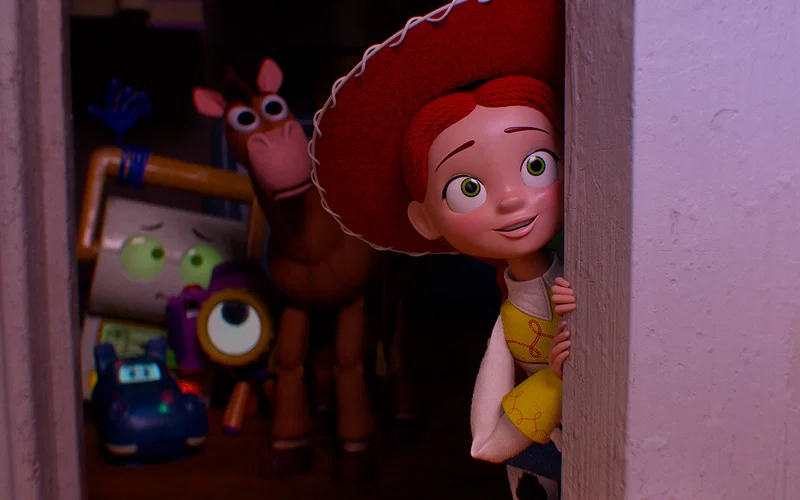
One of the most rewarding aspects of Toy Story 5 is the attention given to Jessie.
Joan Cusack returns as the voice of the cowgirl toy, and the character receives more emotional space within the story.
Jessie has always carried one of the franchise’s most painful histories. Her fear of abandonment and her memories of her previous owner have made her one of the more emotionally complicated members of the Toy Story family.
The fifth movie builds on that history rather than ignoring it.
As a result, Jessie feels less like a supporting member of Woody and Buzz’s story and more like a character with her own emotional journey.
Lilypad Explained
Lilypad is one of the most important new characters in Toy Story 5.
Voiced by Greta Lee, Lilypad is a frog-themed tablet that enters Bonnie’s life and represents the new generation of technology competing for a child’s attention.
What makes Lilypad interesting is that she isn’t simply designed as an evil villain. Her existence creates a more complicated conflict because technology isn’t inherently malicious.
Lilypad represents a different idea of entertainment.
The toys provide physical imagination and emotional companionship, while Lilypad offers digital experiences. The movie’s conflict emerges from the question of which one should dominate a child’s attention.
That makes Lilypad a more thematically appropriate antagonist for this chapter of the franchise than another traditional villain would have been.
Toy Story 5 Voice Cast
The Toy Story 5 cast combines returning franchise favorites with several new performers.
Tom Hanks returns as Woody, Tim Allen returns as Buzz Lightyear, Joan Cusack returns as Jessie, and Greta Lee voices Lilypad. The cast also includes Conan O’Brien, Tony Hale, Craig Robinson, Ernie Hudson, Bonnie Hunt, Keanu Reeves, and several other performers.
The combination of familiar voices and new personalities helps the film retain the identity of the original franchise while expanding its world.
Pixar understands that the voices of these characters are almost as recognizable as their designs.
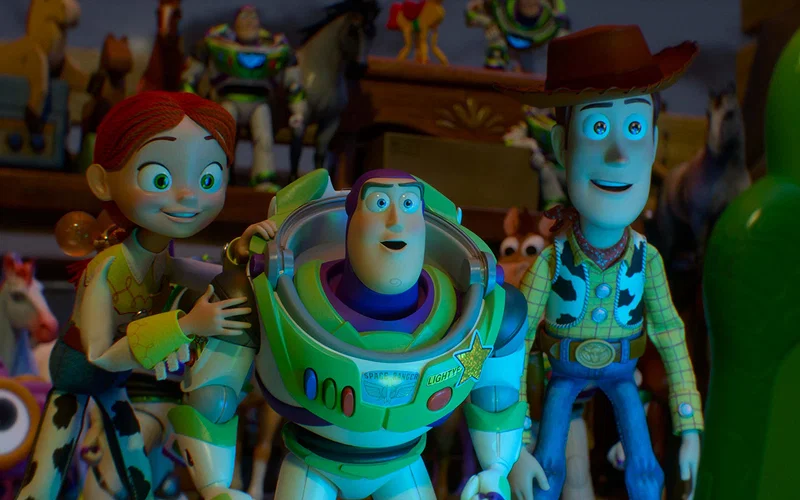
Tom Hanks and Tim Allen Return
The return of Tom Hanks as Woody and Tim Allen as Buzz Lightyear is crucial to the movie’s success.
Their voices have been associated with these characters since the original Toy Story in 1995. Even after multiple sequels and changes in the characters’ circumstances, the chemistry between Woody and Buzz remains one of the franchise’s biggest strengths.
Their reunion also gives the movie an emotional connection to the original trilogy.
For longtime fans, hearing Hanks and Allen together again is part of what makes Toy Story 5 feel like a genuine continuation rather than a completely separate spin-off.
Andrew Stanton’s Direction
Toy Story 5 is directed by Academy Award winner Andrew Stanton, with Kenna Harris serving as co-director. Stanton also co-wrote the screenplay with Harris from a story by Stanton.
Stanton’s Pixar history is significant. He previously directed Finding Nemo and WALL-E, two movies known for combining accessible family storytelling with surprisingly sophisticated themes.
That background is particularly appropriate for Toy Story 5.
The movie needs to entertain children while giving adults something meaningful to think about. The conflict between traditional play and technology gives Stanton plenty of room to explore that balance.
Toy Story 5 Animation and Visuals
Visually, Toy Story 5 continues the technical evolution of Pixar’s animation.
The original Toy Story was groundbreaking because it demonstrated the potential of computer-generated feature animation. More than three decades later, Pixar can create environments, lighting, character animation, and visual effects that would have been impossible in the original film.
Yet the movie wisely doesn’t make technical spectacle the entire point.
The toys still need to feel like toys.
That contrast between sophisticated animation and familiar physical objects is one of the visual pleasures of the franchise.
Toy Story 5 Humor
The humor remains one of the movie’s biggest strengths.
Toy Story 5 uses character-based comedy rather than relying entirely on pop-culture references. Buzz’s personality, the toys’ reactions to technology, and the contrast between old-fashioned toys and modern devices create plenty of opportunities for jokes.
The humor works for different age groups, which is essential for a Pixar family movie.
Children can enjoy the visual comedy and characters, while adults are likely to recognize the jokes about technology, parenting, nostalgia, and changing childhood habits.
Toy Story 5 Emotional Moments
A Toy Story 5 review wouldn’t be complete without discussing its emotional side.
Pixar has spent decades establishing the emotional importance of these characters, so even relatively small moments can carry considerable weight.
The sequel understands that the audience has grown alongside Woody, Buzz, and Jessie. Someone who watched the original movie as a child may now be watching Toy Story 5 as a parent.
That creates an interesting emotional bridge between generations.
The movie’s message about childhood therefore works on two levels. Children can understand the importance of playing, while adults may think about how quickly childhood changes.
The Deeper Meaning of Toy Story 5
The most profound idea in Toy Story 5 is that imagination isn’t something children should simply outgrow.
The franchise has always treated toys as extensions of childhood imagination. The fifth movie takes that concept and places it against a modern technological landscape.
The result is a story about balance.
Technology doesn’t have to disappear. Screens aren’t automatically the enemy. But childhood also needs physical play, creativity, friendship, exploration, and the freedom to invent something without an algorithm telling you what comes next.
That message gives Toy Story 5 relevance beyond its franchise status.
Toy Story 5 and Modern Childhood
This may be the most contemporary Toy Story movie yet.
The first film introduced audiences to the secret lives of toys. The new sequel asks whether children still need those toys when technology can provide endless entertainment.
That is a question many parents recognize.
Children today have access to smartphones, tablets, streaming services, video games, social media, and countless digital experiences. The movie doesn’t pretend those technologies don’t exist. Instead, it uses the toys to argue that imaginative play still has a place.
That makes the film’s central conflict feel surprisingly personal.
Is Toy Story 5 Better Than Toy Story 4?
Comparing Toy Story 5 vs Toy Story 4 is unavoidable, particularly because the previous movie already provided a major ending for Woody.
Toy Story 4 was more focused on Woody’s individual journey and his decision to embrace a different purpose. Toy Story 5, by contrast, brings the wider group back together and focuses more heavily on the future of play itself.
For fans who wanted the original group dynamic again, the fifth movie offers a more familiar experience.
It also benefits from having a clear contemporary theme rather than simply extending Woody’s previous arc.
Is Toy Story 5 Better Than Toy Story 3?
Toy Story 3 remains difficult to surpass because of its emotional farewell and the enormous weight of Andy’s story.
Toy Story 5 isn’t trying to recreate that exact experience.
Instead, it tells a different kind of story. Where Toy Story 3 focused heavily on growing up and letting go, Toy Story 5 is more concerned with how childhood itself is changing.
That makes the two movies emotionally different rather than direct competitors.
Toy Story 5 vs the Original Toy Story
The original Toy Story remains unique because it introduced the entire concept and established the emotional language of the franchise.
Toy Story 5 cannot reproduce that sense of discovery, but it benefits from everything the previous films established.
The characters already have history. Their relationships already mean something. That allows the fifth movie to explore more complicated themes without spending much time explaining who these toys are.
The trade-off is that newcomers may not experience the same magical surprise that made the original so revolutionary.
Does Toy Story 5 Have a Good Message?
Yes. The message is one of the strongest elements of the film.
Toy Story 5 argues that imagination, human connection, and physical play still matter in an increasingly digital world.
Importantly, the movie doesn’t need to claim that technology is evil to make this point. Its argument is more balanced: digital entertainment has value, but it shouldn’t completely replace the experiences that help children develop creativity and social connections.
That is a surprisingly mature message for a family animated movie.
Toy Story 5 Soundtrack and Music
The music continues to play an important role in the emotional identity of the franchise.
Randy Newman returns to score his fifth Toy Story feature, bringing back the musical sensibility that has helped define the series.
Newman’s involvement provides another connection between the newest installment and the original films.
For longtime fans, familiar musical ideas can make the movie feel immediately recognizable while supporting its newer emotional themes.
Toy Story 5 Runtime and Rating
Toy Story 5 has a runtime of approximately 1 hour and 42 minutes and is rated PG. Disney classifies the film as an adventure, animation, comedy, and kids-and-family movie.
The runtime gives the movie enough room to develop its central conflict without becoming excessively long.
Its PG rating also makes it accessible to family audiences, although younger children may respond differently to some of the movie’s more emotional themes.
Toy Story 5 Release Date
Toy Story 5 was released exclusively in theaters on June 19, 2026. Disney and Pixar positioned the movie as a major theatrical return for the franchise rather than a streaming-first release.
The theatrical launch also reflects the franchise’s status as one of Pixar’s biggest properties.
By August 2026, the movie had become a major commercial success, with Disney reporting that Toy Story 5 contributed to strong box-office performance as well as increased streaming engagement and merchandise sales.
Toy Story 5 Box Office Success
The movie’s commercial performance reinforces the continued popularity of the franchise.
Disney reported that Toy Story 5 became a global box-office success, crossing the $1 billion mark according to reporting from the Associated Press. The movie also helped drive merchandise sales and Disney+ engagement.
That performance suggests that the audience’s relationship with Woody, Buzz, and Jessie remains remarkably strong more than 30 years after the original film.
Is Toy Story 5 Worth Watching?
Absolutely.
If you grew up with the original Toy Story movies, the fifth installment offers enough nostalgia to make the reunion worthwhile. More importantly, it gives the characters a new problem that feels connected to the world children live in today.
Parents may appreciate the movie’s message about screen time and imagination, while younger viewers can enjoy the adventure, humor, colorful characters, and action.
It may not erase the fact that the franchise has already delivered several emotional conclusions, but it proves that there are still meaningful stories to tell with these characters.
Also Read
Kevin Review: Aubrey Plaza’s Cat Comedy on Amazon Prime Is Weird, Hilarious & Surprisingly Heartfelt
Mr. Monopoly vs. Mr. Burns: The Simpsons Take Over Monopoly GO in an Epic Springfield Showdown
Witch on the Holy Night: Release Date, Story, Characters & Everything We Know
Toy Story 5 Review: Final Verdict
Toy Story 5 is a magical and surprisingly profound return for Pixar’s most enduring franchise.
Its greatest strength is that it doesn’t simply rely on nostalgia. Instead, it takes the central idea of the series — that toys represent imagination, companionship, and childhood — and places that idea against one of the biggest changes in modern childhood: the dominance of technology.
Woody, Buzz, and Jessie remain as lovable as ever, while Lilypad introduces a fresh conflict that feels relevant rather than manufactured.
The result is a sequel that can entertain children while giving adults something more substantial to think about.
Final Rating: 4.5/5
Verdict: A heartfelt, funny, visually stunning sequel that proves the Toy Story magic still has something meaningful to say.
Frequently Asked Questions
1. Is Toy Story 5 worth watching?
Yes. Toy Story 5 is worth watching for both longtime Pixar fans and families looking for a new animated adventure. Its story about toys competing with technology gives the sequel a contemporary theme while retaining the emotional heart of the franchise.
2. What is Toy Story 5 about?
Toy Story 5 follows Woody, Buzz, Jessie, and the other toys as they face a new challenge involving Lilypad, a high-tech tablet that enters Bonnie’s life. The story explores the changing nature of childhood and the importance of imaginative play.
3. Who voices Lilypad in Toy Story 5?
Greta Lee voices Lilypad, the new tablet character at the center of the movie’s toy-versus-technology conflict.
4. Who directed Toy Story 5?
Andrew Stanton directed Toy Story 5, with Kenna Harris serving as co-director. Stanton and Harris also wrote the screenplay from a story by Stanton.
5. Does Tom Hanks return in Toy Story 5?
Yes. Tom Hanks returns as Woody, while Tim Allen returns as Buzz Lightyear and Joan Cusack returns as Jessie.
6. When was Toy Story 5 released?
Toy Story 5 was released in theaters on June 19, 2026.
7. How long is Toy Story 5?
The official runtime for Toy Story 5 is 1 hour and 42 minutes. The film is rated PG.
8. Is Toy Story 5 better than Toy Story 4?
That depends on personal preference. Toy Story 4 focuses heavily on Woody’s individual journey, while Toy Story 5 returns more strongly to the group and explores the conflict between traditional play and technology.
9. What is the main message of Toy Story 5?
The central message of Toy Story 5 is that imagination, play, friendship, and human connection remain important even as technology becomes a larger part of children’s lives.
Stay updated with the latest trends on Fandomora — your go-to destination for breaking movie news, web series updates, anime releases, gaming trends, celebrity insights, and music updates. Explore reviews, OTT release dates, anime guides, gaming walkthroughs, and curated lists to discover the best in global entertainment.
About The Author