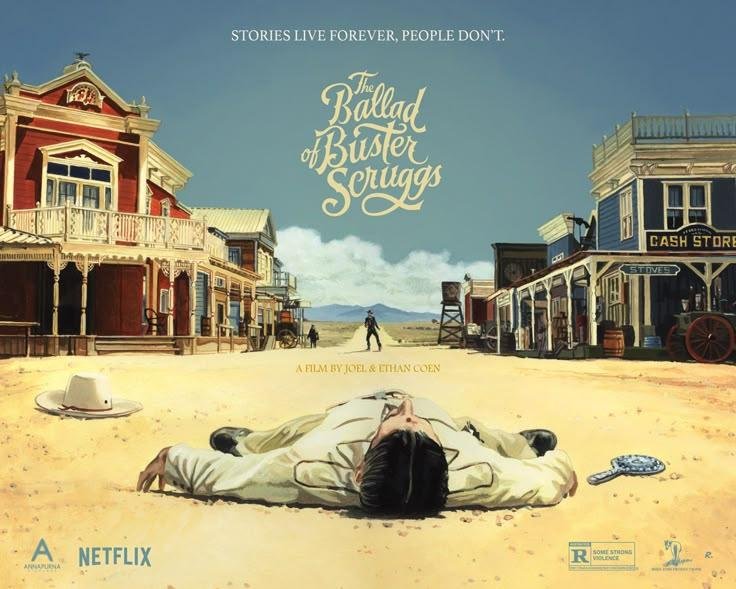
Is The Ballad of Buster Scruggs Really a Western?
Is The Ballad of Buster Scruggs Really a Western?
On the surface, The Ballad of Buster Scruggs is an anthology of six Western stories filled with gunslingers, prospectors, wagon trains, and bounty hunters. But beneath its dusty landscapes and razor-sharp humor lies something far more profound—a philosophical meditation on death, fate, existentialism, absurdity, and the fragile meaning of human life.
Released in 2018 and directed by the Coen Brothers, The Ballad of Buster Scruggs is less about the American frontier and more about the universal journey every human being shares. Every chapter ends with the same inevitable destination, reminding us that while our stories differ, our endings rarely do.
Whether you’re looking for The Ballad of Buster Scruggs explained, an ending explained, or a deeper understanding of the movie’s hidden philosophy, here’s everything you need to know.

The Hidden Philosophy Behind The Ballad of Buster Scruggs
The film asks one fundamental question:
If death is inevitable, what makes life meaningful?
Instead of answering directly, each story presents a different perspective on how people confront mortality. Some embrace it with arrogance, others with fear, some with hope, and others with quiet acceptance.
The Coen Brothers never preach. Instead, they invite viewers to reflect on their own relationship with fate.
Story 1: The Ballad of Buster Scruggs
Pride Is Temporary
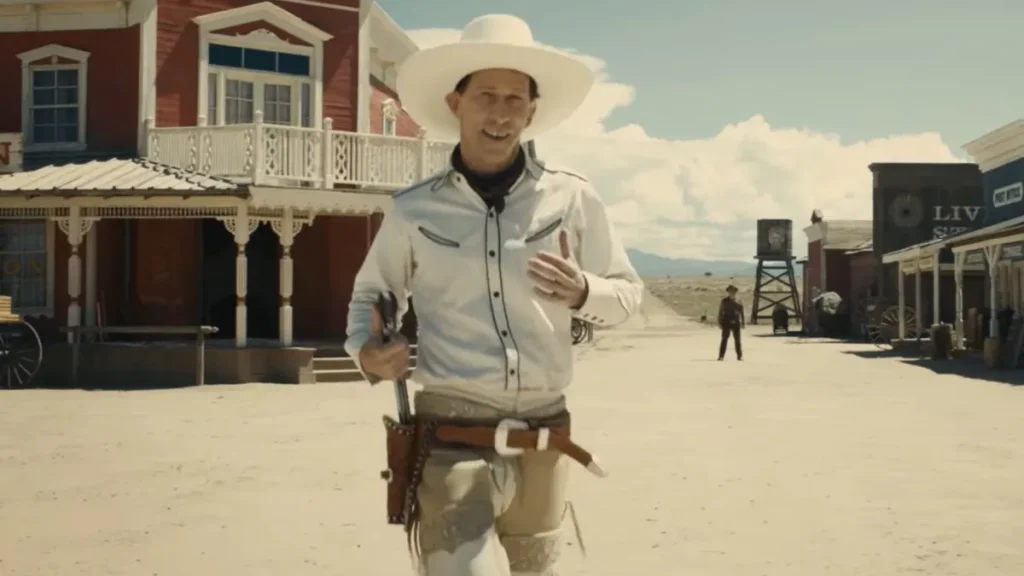
Buster Scruggs is introduced as the perfect cowboy.
He sings.
He smiles.
He never misses a shot.
He seems untouchable.
His confidence borders on divine invincibility until a younger, faster gunslinger appears and kills him without ceremony.
This opening chapter immediately dismantles the myth of the unbeatable hero.
Philosophical Meaning
Buster represents human ego.
We all believe we’re unique, indispensable, or somehow exempt from life’s harsh realities. Yet history continuously replaces every champion with another.
The lesson is brutally simple:
No one remains the best forever.
Story 2: Near Algodones
Fate Doesn’t Care About Justice
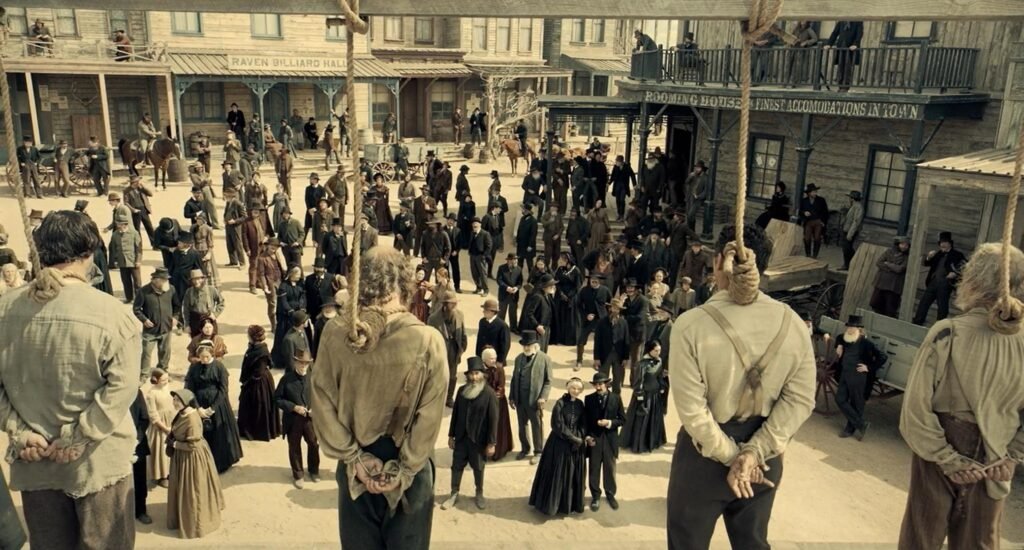
Perhaps the most absurd story in the anthology follows a cowboy who repeatedly escapes death only to be executed for a crime he never committed.
Ironically, he survives situations that should have killed him but dies during one that shouldn’t have happened at all.
Just before his execution, he notices a beautiful young woman in the crowd and quietly smiles.
It becomes one of cinema’s strangest final moments.
Philosophical Meaning
Life isn’t fair.
Justice and fate are not synonyms.
Good people suffer.
Bad people survive.
The universe remains indifferent.
This chapter echoes Albert Camus‘ philosophy of the absurd, where humans desperately seek order in a world that offers none.
Story 3: Meal Ticket
What Is a Human Worth?
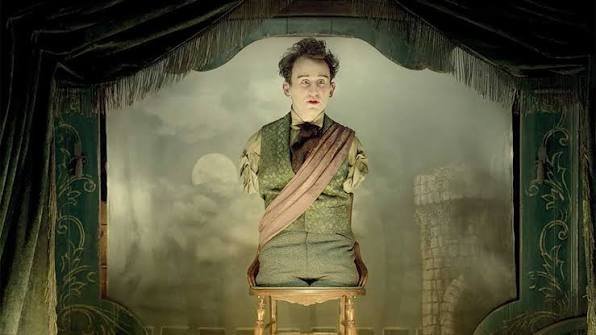
A travelling impresario earns money through a limbless performer who recites Shakespeare, Shelley, Lincoln, and the Bible.
As audiences decline, the manager discovers a mathematically gifted chicken that attracts larger crowds.
Soon afterward, the performer disappears.
The implication is devastating.
He has become economically obsolete.
Philosophical Meaning
This is perhaps the darkest story in the anthology.
It questions modern society’s tendency to value people according to productivity.
The performer possesses extraordinary intellect and artistry.
But once profit disappears…
So does compassion.
The Coens ask a disturbing question:
Are people valuable because they are human, or only because they are useful?
Story 4: All Gold Canyon
Patience Is Greater Than Greed
Unlike the other stories, this one feels almost peaceful.
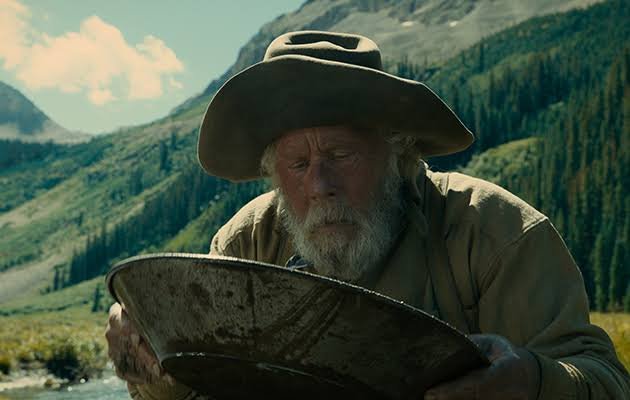
An old prospector patiently studies nature, reading the landscape like a book.
Rather than conquering the wilderness, he works with it.
Even after discovering gold, he survives because he remains calm instead of becoming greedy.
Philosophical Meaning
Nature is neither good nor evil.
It simply exists.
Success belongs to those who understand patience.
The chapter quietly argues that wisdom is earned through observation rather than domination.
Story 5: The Gal Who Got Rattled
Fear Can Become Fate
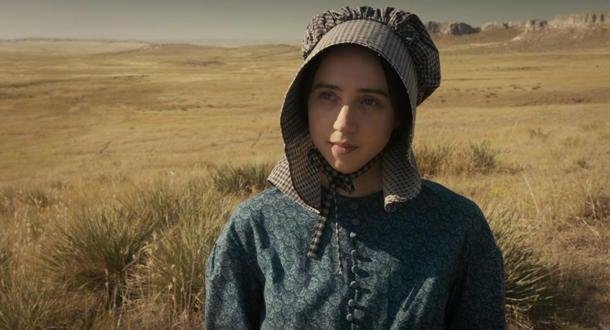
Alice Longabaugh joins a wagon train hoping for a better future.
Circumstances gradually isolate her.
Miscommunication, grief, uncertainty, and fear eventually culminate in one irreversible decision.
Moments later, it becomes clear that everything might have turned out differently.
Philosophical Meaning
Many tragedies aren’t caused by villains.
They’re caused by fear.
The Coens suggest that our greatest enemy often exists within our own imagination.
Sometimes we create the fate we desperately wanted to avoid.
Story 6: The Mortal Remains
The Final Destination
The final chapter is the film’s philosophical masterpiece.
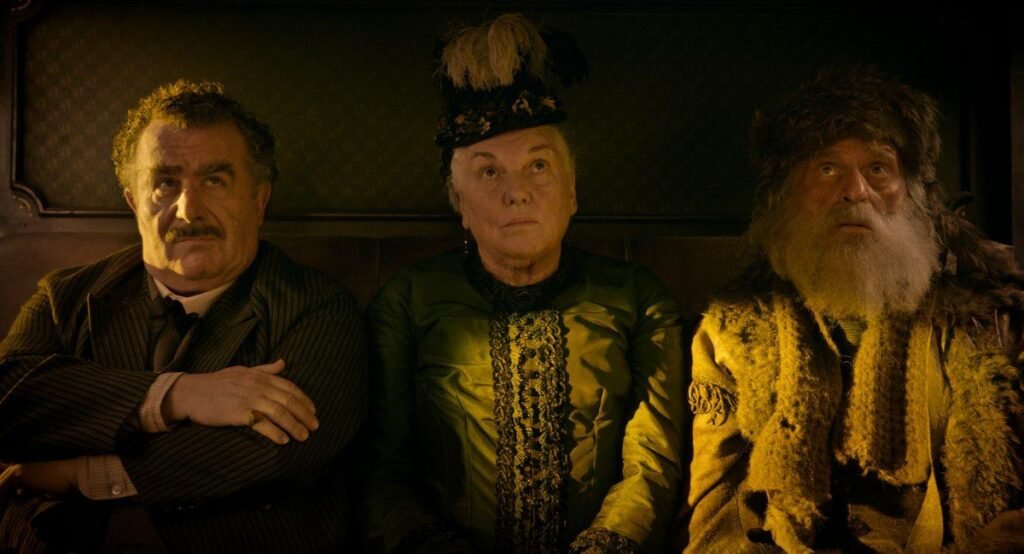
Five strangers travel together in a stagecoach toward an isolated hotel.
As conversations unfold, subtle clues reveal something unsettling.
Nobody truly knows one another.
The bounty hunters calmly transport a corpse.
The passengers represent different worldviews.
And the hotel increasingly resembles the afterlife.
When the doors finally open…
The film ends.
What Does the Ending Mean?
The ending deliberately avoids certainty.
Instead, it functions as an allegory.
The stagecoach represents life.
The passengers symbolize humanity.
The journey is existence itself.
The hotel represents death—or perhaps whatever comes after it.
No one can leave the coach before reaching the destination.
Every passenger must eventually arrive.
The Ballad of Buster Scruggs Ending Explained
Many viewers wonder whether the final story is literal or symbolic.
The answer is intentionally ambiguous.
Rather than depicting heaven or hell, the Coen Brothers portray death as life’s only universal certainty.
The passengers argue.
They laugh.
They debate morality.
They cling to beliefs.
Yet none of these discussions changes where the journey ends.
The destination remains the same for everyone.
Existentialism in The Ballad of Buster Scruggs
The film shares striking similarities with existential philosophy.
Existentialism argues that life possesses no predetermined meaning.
Instead, individuals create meaning through their choices.
The Coens neither reject nor endorse this philosophy completely.
Instead, they suggest that while death is unavoidable, dignity, kindness, courage, curiosity, and love remain meaningful precisely because they are temporary.
Life matters because it ends.
Absurdism and Albert Camus
Few modern films embody Absurdism as effectively as The Ballad of Buster Scruggs.
Camus believed humans constantly search for order, fairness, and purpose.
The universe responds with silence.
That silence doesn’t make life meaningless.
It makes meaning our responsibility.
Every chapter in the anthology demonstrates this tension between expectation and reality.
Stoicism and the Acceptance of Death
Another philosophical thread running throughout the movie is Stoicism.
Stoic thinkers believed we should focus only on what lies within our control.
Death isn’t one of those things.
Our character is.
Several characters fail because they attempt to control fate.
Others survive by accepting uncertainty with grace.
Why the Film Still Resonates
Unlike traditional Westerns, The Ballad of Buster Scruggs refuses to reward virtue or punish evil consistently.
Heroes die.
Cowards survive.
Dreams collapse.
Fortunes appear and disappear.
This unpredictability mirrors real life far more closely than conventional Hollywood storytelling.
That’s precisely why the film continues to spark discussion years after its release.
Final Verdict
The Ballad of Buster Scruggs isn’t simply one of the best Western anthologies ever made.
It’s one of the most intellectually rewarding films of the 21st century.
By blending dark comedy, breathtaking cinematography, unforgettable performances, and profound philosophical themes, the Coen Brothers crafted a timeless reflection on mortality itself.
Every story asks a different question.
Every answer points toward the same truth.
Death is inevitable.
Meaning is optional.
What defines us isn’t how long we live.
It’s how we choose to make the journey.
⭐ Fandomora Rating: 9.5/10
A haunting, brilliant, and deeply philosophical masterpiece that transforms the Western genre into an unforgettable meditation on life, death, and the stories we tell ourselves along the way.
Stay updated with the latest trends on Fandomora — your go-to destination for breaking movie news, web series updates, anime releases, gaming trends, celebrity insights, and music updates. Explore reviews, OTT release dates, anime guides, gaming walkthroughs, and curated lists to discover the best in global entertainment.
About The Author