A Story That Still Resonates Deeply
Some books feel like they were written for the moment they’re read. Azar Nafisi’s 2003 memoir Reading Lolita in Tehran captured the quiet defiance of women seeking intellectual freedom under oppression. More than two decades later, director Eran Riklis brings that story to the screen in a film that feels both deeply personal and urgently contemporary. Released in limited theaters and heading to wider audiences in 2026, the adaptation reminds us why literature matters — especially when the world tries to silence it.
As a longtime admirer of the book, I approached the film with cautious hope. Adaptations of beloved memoirs are tricky; they must honor the source while standing as cinema in their own right. Riklis’ version largely succeeds, delivering a thoughtful, emotionally grounded drama anchored by strong performances and a clear-eyed look at courage in small acts.
From Page to Screen: Adapting a Beloved Memoir
The film follows Azar Nafisi, a passionate literature professor who returns to Iran after studying abroad, only to witness the Islamic Revolution reshape her country. As the regime tightens control over education, dress, and thought, Nafisi makes a radical choice: she invites a small group of dedicated female students into her home for a private book club. Together, they read and discuss forbidden Western classics — Vladimir Nabokov’s Lolita, Jane Austen’s Pride and Prejudice, F. Scott Fitzgerald’s The Great Gatsby, and Henry James.
Director Eran Riklis (The Syrian Bride, Lemon Tree) handles the material with respect and restraint. The screenplay condenses the memoir’s reflective structure into a more linear narrative, focusing on the women’s secret gatherings and the personal risks they take. Cinematography captures both the oppressive atmosphere of post-revolution Tehran and the intimate warmth of Nafisi’s living room, where ideas flow freely.
Golshifteh Farahani Shines as Azar Nafisi
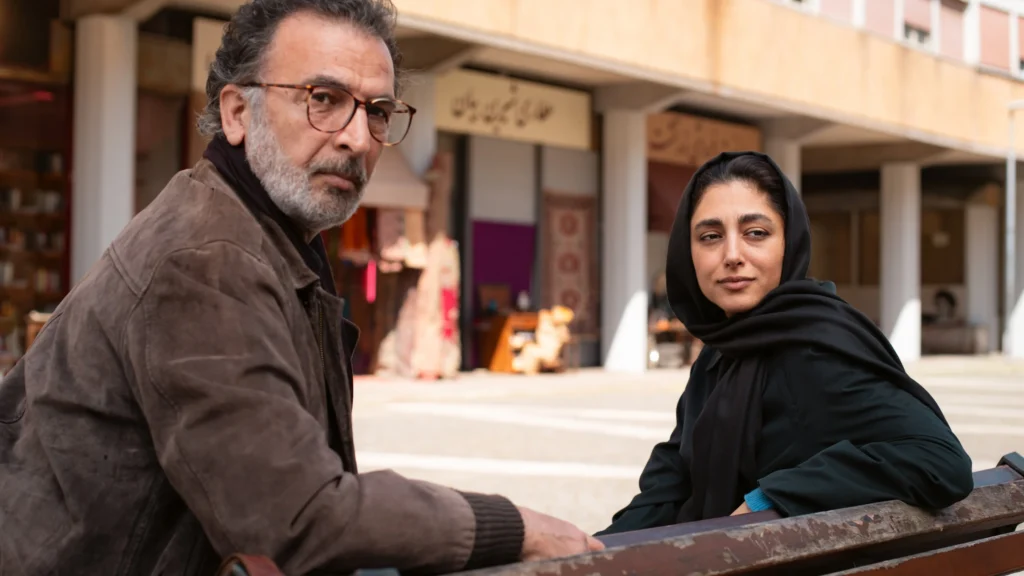
At the center of it all is Golshifteh Farahani, delivering a performance of quiet intensity as Nafisi. Farahani brings dignity, intelligence, and simmering frustration to the role. You feel the weight of her character’s internal conflict — her love for her students and literature clashing with the growing dangers around her.
The supporting cast of young actresses playing the students is equally strong. Each woman brings distinct personality and backstory, making the group feel like real people rather than symbols. Their discussions about the books are some of the film’s most engaging moments, revealing how literature helps them process their own lives under restriction.
Thematic Power: Literature as Resistance
What elevates the film beyond a simple period piece is its exploration of reading as an act of rebellion. In a society that seeks to control narratives — both personal and political — engaging with complex stories becomes a form of liberation. The women debate themes of autonomy, desire, and societal expectations while wearing mandatory hijabs in Nafisi’s home.
The film doesn’t shy away from the harsh realities of life in revolutionary Iran, including arrests, surveillance, and the erosion of personal freedoms. Yet it also finds hope in human connection and the transformative power of art. In 2026, as debates about censorship and women’s rights continue globally, these themes land with renewed force.
Strengths and Occasional Stumbles
Strengths:
- Authentic cultural details and respectful portrayal of Iranian life.
- Strong ensemble performances, particularly among the students.
- Beautifully shot intimate scenes that contrast with the broader political tension.
- A clear message without feeling preachy.
Areas for Improvement:
- Some pacing issues in the middle section, where the book’s reflective nature is harder to translate to screen.
- A few moments lean into inspirational tropes rather than letting the quiet power speak for itself.
- The film occasionally tells rather than shows the emotional impact of the readings.
Despite these minor flaws, the overall experience is compelling and thought-provoking. Riklis has crafted a film that honors the spirit of Nafisi’s work while making it accessible to a wider audience.
How It Stands in 2026
Watching Reading Lolita in Tehran today feels remarkably relevant. The struggles depicted — women fighting for education, self-expression, and autonomy — echo in headlines from various parts of the world. The film serves as both historical document and subtle call to action: never underestimate the power of a book, a conversation, or a small gathering of determined minds.
It also highlights the importance of cross-cultural storytelling. An Israeli director adapting an Iranian-American memoir creates a bridge through art, something the characters themselves would likely appreciate.
Who Should Watch It
This is essential viewing for book lovers, fans of literary adaptations, and anyone interested in women’s stories from around the world. It’s suitable for mature teens and adults, though some themes and historical context may benefit from discussion afterward.
Reading Lolita in Tehran may not reach the cinematic heights of its source material’s emotional impact, but it succeeds as a respectful, well-acted drama that honors the courage of its real-life inspirations. In a time when stories like this still need telling, it’s a film worth experiencing.
Frequently Asked Questions (FAQ)
1. What is Reading Lolita in Tehran (2026) about?
Reading Lolita in Tehran is a drama based on the internationally acclaimed memoir by Azar Nafisi. The film follows a literature professor who secretly gathers a group of female students in Tehran to read and discuss banned Western novels, using literature as a way to explore identity, freedom, and resistance under political oppression.
2. Is Reading Lolita in Tehran based on a true story?
Yes. The movie is adapted from Azar Nafisi’s bestselling memoir of the same name. While the film dramatizes certain moments for storytelling, it is rooted in Nafisi’s real-life experiences teaching literature in Iran during the years following the Islamic Revolution.
3. Is Reading Lolita in Tehran worth watching?
If you enjoy thoughtful dramas, literary adaptations, and character-driven stories, Reading Lolita in Tehran is well worth watching. Rather than relying on action or spectacle, the film focuses on powerful performances, emotional storytelling, and the enduring impact of literature in challenging times.
4. What themes does Reading Lolita in Tehran explore?
The film explores several meaningful themes, including:
Freedom of expression
Women’s rights and resilience
The transformative power of literature
Censorship and political oppression
Hope, identity, and personal courage
5. Do you need to read the book before watching the movie?
No. The film stands on its own and provides enough context for first-time viewers. However, readers of Azar Nafisi’s memoir may notice additional literary references and deeper character nuances that enrich the experience.
6. Is Reading Lolita in Tehran suitable for all audiences?
The movie deals with mature subjects, including political repression, gender inequality, and emotional hardship. While it avoids relying on sensationalism, its serious themes make it better suited for mature teens and adult viewers.
7. How faithful is the movie to the original memoir?
The adaptation stays true to the memoir’s central message about the power of literature and intellectual freedom. As with most book-to-film adaptations, some events are condensed or reimagined to create a more cinematic narrative while preserving the emotional core of the story.
8. What makes Reading Lolita in Tehran different from other literary dramas?
Unlike many literary adaptations that focus primarily on classic novels, Reading Lolita in Tehran uses literature as a lens to examine real-world struggles. The discussions around books become symbols of resistance, making the film both emotionally engaging and socially relevant.
9. Is Reading Lolita in Tehran one of the best literary adaptations of 2026?
Early reactions suggest that Reading Lolita in Tehran stands out as one of 2026’s most compelling literary adaptations. Its thoughtful storytelling, strong performances, and timely themes make it a film that is likely to resonate with both critics and audiences looking for meaningful cinema.
Stay updated with the latest trends on Fandomora — your go-to destination for breaking movie news, web series updates, anime releases, gaming trends, celebrity insights, and music updates. Explore reviews, OTT release dates, anime guides, gaming walkthroughs, and curated lists to discover the best in global entertainment.
About The Author