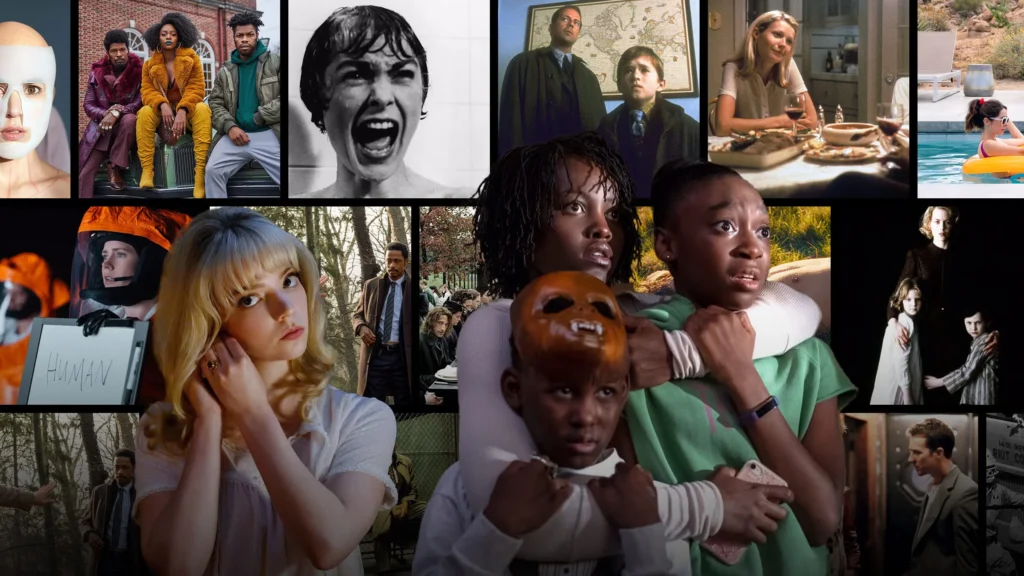
Spoiler Warning: This article discusses the biggest twists and endings from the movies featured below. If you want to experience these reveals without knowing what happens, watch the films first.
The greatest plot twists of all time do more than shock an audience. They change the meaning of everything that came before, reveal information that was hiding in plain sight, or completely alter our understanding of a character. The best examples also hold up on a second viewing because the clues were there all along.
For this ranking, the focus isn’t simply on which movie has the most shocking reveal. The strongest movie plot twists are judged by surprise, storytelling, emotional impact, originality, foreshadowing, rewatch value and how dramatically the revelation changes the film. That distinction matters because a surprise isn’t automatically a great twist; a great twist should make the earlier story look different in hindsight.
15. Primal Fear (1996) — Aaron Was Never What He Seemed
Edward Norton’s breakout performance in Primal Fear delivers one of the most effective courtroom thriller twists of the 1990s. Aaron Stampler initially appears to be a frightened altar boy accused of murdering an archbishop, while defense attorney Martin Vail becomes convinced that Aaron’s alleged multiple personalities explain the crime.
The real shock arrives when Aaron reveals that his violent personality was an act and that he manipulated everyone around him. The twist works because the film encourages the audience to trust the same evidence that convinces Vail. It isn’t just a revelation about Aaron; it’s a revelation about how easily both the lawyer and viewer were manipulated.
14. The Others (2001) — Grace and Her Children Are the Ghosts
The Others slowly builds the impression that Grace and her children are being terrorized by supernatural visitors inside their isolated house. The film deliberately keeps the audience aligned with Grace’s perspective, making the strange events appear to have a conventional ghost-story explanation.
The final revelation completely reverses that assumption: Grace and her children are actually the dead ones haunting the house. It is a classic example of a twist that changes the meaning of earlier scenes without needing excessive exposition. The revelation also gives the film’s eerie atmosphere a tragic emotional weight.
13. Planet of the Apes (1968) — The Statue of Liberty
The ending of Planet of the Apes remains one of science fiction’s most famous revelations. George Taylor believes he has landed on another planet ruled by intelligent apes, only to discover that he has actually been on a post-apocalyptic Earth.
The sight of the ruined Statue of Liberty transforms the entire adventure. What initially looked like an alien-world story becomes a warning about humanity’s own capacity for destruction. Few movie plot twists have used a single visual image so effectively.
12. Parasite (2019) — The Secret Beneath the House
Bong Joon Ho’s Parasite begins as a darkly comic story about a struggling family gradually infiltrating the household of a wealthy family. Then the discovery of a hidden bunker beneath the Park residence changes the movie completely.
The revelation introduces another desperate family living beneath the surface and turns the film into something far more unsettling. More importantly, the twist deepens the movie’s themes about class, inequality and the people society chooses not to see. Parasite proves that a great twist can strengthen a film’s central ideas rather than simply deliver shock value.
11. The Usual Suspects (1995) — Keyser Söze’s Identity
The Usual Suspects builds its mystery around the elusive criminal mastermind Keyser Söze and the testimony of Roger “Verbal” Kint. As Verbal tells his story, the audience begins piecing together a complicated account of crime, betrayal and murder.
The final moments reveal that much of what Verbal described was constructed from details he noticed around the police office. The implication that Verbal himself is Keyser Söze turns the entire interrogation into a masterclass in unreliable storytelling.
The twist remains effective because it forces viewers to mentally reconstruct the movie after the credits. It isn’t merely about discovering someone’s identity; it’s about realizing that the storyteller controlled what you believed.
10. Arrival (2016) — Time Was Never Linear
Arrival takes a different approach to the traditional plot twist. Instead of revealing a hidden villain or secret identity, the film gradually changes our understanding of time itself.
Louise Banks appears to be experiencing memories of her daughter, but the audience eventually realizes that these aren’t memories of the past. They are experiences of events that have not happened yet.
The revelation gives the entire movie a new emotional meaning. Scenes that initially seem like flashbacks become part of a nonlinear experience of Louise’s life. It’s one of the strongest examples of a science-fiction twist being used for emotional storytelling rather than spectacle. Arrival is frequently included among the best modern movie twists for precisely this reason.
9. Saw (2004) — The Body on the Floor
For most of Saw, two men are trapped inside a filthy bathroom with what appears to be a dead body lying between them. The mystery revolves around the Jigsaw Killer and the impossible rules of their captivity.
Then the “dead body” gets up.
The revelation that the corpse has been John Kramer, the Jigsaw Killer, sitting in the room the entire time is brilliantly simple. The film had shown the answer to the audience repeatedly, but nobody was looking at the scene in the right way. That is exactly what makes the twist work.
8. Memento (2000) — Leonard Is Tricking Himself
Christopher Nolan’s Memento is built around Leonard Shelby’s inability to create new memories. The unusual narrative structure forces viewers to experience events almost as Leonard does, constantly questioning what is true.
The deeper twist is that Leonard has effectively created a system that allows him to continue his search for revenge even after discovering the truth about his past. He chooses information that supports the story he wants to believe.
The result is more disturbing than a conventional twist because Leonard isn’t simply being deceived by someone else. He is deceiving himself. The film’s fragmented structure makes the revelation especially powerful on rewatch.
7. The Prestige (2006) — The Secret Behind the Transported Man
Christopher Nolan’s The Prestige revolves around two rival magicians, Robert Angier and Alfred Borden, whose obsession with defeating each other becomes increasingly dangerous.
The movie’s biggest reveal is that Borden’s seemingly impossible trick is based on a secret far more extreme than the audience initially expects: there are actually two Bordens, identical twin brothers who have shared one identity throughout their lives.
Angier’s secret is equally disturbing. His version of the transported-man trick depends on repeatedly creating another version of himself, with each performance carrying a deadly consequence.
The twist works because the film openly tells viewers its central philosophy: the audience wants to be fooled. The clues are present, but our desire to believe in the illusion makes us overlook them.
6. Fight Club (1999) — Tyler Durden Doesn’t Exist
One of the most famous twists in modern cinema arrives in Fight Club, when the unnamed narrator realizes that Tyler Durden and he are the same person.
Throughout the movie, Tyler appears to be a separate, charismatic and rebellious character. The audience accepts this because the narrator accepts it. Once the truth is revealed, earlier conversations, encounters and seemingly impossible events take on an entirely different meaning.
The twist is especially effective because it isn’t simply a surprise ending. It reinforces the movie’s themes of identity, consumerism, masculinity and alienation. The film becomes a different experience once you know what is really happening.
5. Psycho (1960) — Norman Bates and Mother
Alfred Hitchcock’s Psycho contains multiple shocking revelations, but its most important twist is the truth about Norman Bates and his mother.
For much of the movie, Norman appears to be an awkward young man living under the controlling influence of his domineering mother. Eventually, the audience discovers that Norman has killed his mother and psychologically adopted her identity.
The film also famously disrupts expectations by killing Marion Crane, played by Janet Leigh, much earlier than audiences expected. That decision alone changed how viewers understood the movie’s narrative. The later revelation about Norman and “Mother” completes one of cinema’s most influential psychological horror stories. Psycho remains a benchmark against which later movie twists are often judged.
4. Se7en (1995) — What’s in the Box?
David Fincher’s Se7en spends most of its runtime following detectives Somerset and Mills as they investigate a serial killer whose crimes are based on the seven deadly sins.
The final revelation is devastating precisely because the film refuses to turn it into a conventional victory for the detectives. John Doe has already completed his plan before Mills fully understands what has happened.
The infamous “What’s in the box?” moment is effective because the twist isn’t merely about an object. It forces Mills into the final stage of Doe’s plan and turns the detective’s emotional weakness into the killer’s final weapon.
3. The Sixth Sense (1999) — Malcolm Was Dead
Few greatest movie plot twists are as recognizable as the ending of The Sixth Sense.
Dr. Malcolm Crowe spends the movie helping young Cole Sear, a boy who claims that he can see dead people. The audience assumes Malcolm is alive and working with Cole to understand his unusual ability.
Near the end, Malcolm realizes the truth: he has been dead throughout the movie.
The twist is powerful because M. Night Shyamalan carefully constructed the film so that many earlier scenes can be interpreted differently after the reveal. Malcolm’s interactions with other characters, his relationship with his wife and the strange distance between him and the living suddenly make sense.
It is the textbook example of a twist that rewards a second viewing.
2. The Empire Strikes Back (1980) — Darth Vader Is Luke’s Father
The revelation that Darth Vader is Luke Skywalker’s father became one of the most famous twists in blockbuster cinema.
At the time, the revelation radically changed the Star Wars conflict. Vader was no longer simply an evil villain standing against Luke; he was connected to Luke in the most personal way possible.
The twist also introduced a deeper conflict between Luke’s desire to understand his father and the reality of Vader’s transformation into a Sith Lord. Even though the reveal has become part of pop-culture vocabulary, its importance to the Star Wars saga remains enormous. It is still regularly ranked among the greatest movie twists ever made.
1. The Sixth Sense, Psycho and The Empire Strikes Back? What Makes the Greatest Twist of All Time?
Choosing one greatest plot twist of all time is ultimately subjective, but The Sixth Sense earns the top spot for the way its central revelation changes the entire film without invalidating what came before.
The twist is shocking on a first viewing, but the real achievement is how coherent the movie becomes afterward. Dialogue, character interactions and seemingly minor details take on new meanings once the audience knows Malcolm is dead.
That combination of surprise, foreshadowing, emotional impact and rewatch value is what separates a truly great plot twist from a cheap shock. Lists from film publications regularly place The Sixth Sense, The Empire Strikes Back, Psycho, Fight Club and The Usual Suspects among the defining examples of the form.
What Makes a Great Plot Twist?
A great plot twist should change the audience’s understanding of the story rather than simply provide information they didn’t know. The strongest twists are usually supported by clues, misdirection and character decisions that make sense once the truth is revealed.
Foreshadowing is particularly important. If a twist has no groundwork, it can feel like the filmmaker invented an answer at the last minute. When the clues were visible all along, however, viewers often experience that satisfying reaction of realizing they were fooled fairly.
Why Do Plot Twists Work So Well?
Plot twists work because audiences naturally create theories while watching a movie. We predict motives, identify heroes and villains, and make assumptions about what will happen next.
A successful twist takes one or more of those assumptions and overturns them. The best ones then provide enough information for viewers to understand why they were wrong.
That is why films such as The Sixth Sense, Fight Club, Memento, The Prestige and The Usual Suspects remain popular for repeat viewings. Once the mystery is gone, the filmmaking itself becomes the attraction.
Best Plot Twists vs. Best Twist Endings
A plot twist doesn’t necessarily have to occur in the final scene. Some of the strongest twists happen in the middle of a movie and completely redirect the story.
A good example is Parasite, where the discovery beneath the house changes the film’s trajectory. Psycho similarly changes direction when Marion Crane’s story ends much earlier than expected. A final twist can be memorable, but a twist that transforms the entire narrative can be even more effective.
Why the Best Movie Twists Deserve a Rewatch
The greatest movie plot twists aren’t ruined by knowing them. In many cases, they become more interesting.
After discovering that Malcolm is dead in The Sixth Sense, Tyler and the narrator are one person in Fight Club, or that the apparent corpse in Saw is actually Jigsaw, viewers can return to the movie and notice details that were easy to overlook the first time.
That is the real test of a twist: does knowing the answer make the movie less interesting, or does it reveal how carefully the story was constructed?
The best twists usually do the latter.
Frequently Asked Questions
1. What is considered the greatest plot twist of all time?
There is no universally agreed winner, but The Sixth Sense, Psycho, The Empire Strikes Back, Fight Club, The Usual Suspects and Se7en are consistently discussed among the most memorable movie plot twists.
2. What movie has the most famous plot twist?
The Sixth Sense is one of the strongest candidates because its final revelation that Malcolm was dead became a defining example of the twist-ending format.
3. What is the best plot twist movie to watch first?
For a classic introduction to twist-driven filmmaking, The Sixth Sense is an excellent starting point. Psycho is essential for horror, The Usual Suspects for mystery, Fight Club for psychological storytelling and The Prestige for a more intricate puzzle-box narrative.
4. What makes a plot twist good?
A good plot twist should be surprising but believable within the movie’s established rules. It should also recontextualize earlier events, have meaningful consequences and ideally contain clues that become obvious in hindsight.
5. Are plot twists the same as surprise endings?
No. A surprise ending simply reveals something unexpected. A plot twist usually changes how the audience understands the story, characters or events that have already happened. That distinction is important when evaluating the best movie twists.
Final Thoughts
The greatest plot twists of all time aren’t necessarily the ones that produce the loudest reaction. The most enduring examples are the ones that make audiences rethink the entire movie.
From Norman Bates’ secret in Psycho and Luke’s parentage in The Empire Strikes Back to Malcolm’s fate in The Sixth Sense and the identity of Tyler Durden in Fight Club, these reveals have remained part of movie culture because they combine surprise with strong storytelling.
A great twist should leave you with more than a shocked reaction. It should make you want to rewind the movie, look for the clues you missed and experience the story from an entirely different perspective.
Stay updated with the latest trends on Fandomora — your go-to destination for breaking movie news, web series updates, anime releases, gaming trends, celebrity insights, and music updates. Explore reviews, OTT release dates, anime guides, gaming walkthroughs, and curated lists to discover the best in global entertainment.
About The Author