Korean horror dramas have a distinctive way of making the supernatural feel personal. Instead of relying only on jump scares or frightening creatures, many horror K-dramas build their stories around Korean folklore, spiritual traditions and characters carrying unresolved pain.
Ghosts, dokkaebi, gumiho and other supernatural beings often have motives that go far beyond simply frightening the living. They can represent grief, loneliness, revenge, guilt or the inability to let go of the past. That gives Korean horror dramas an emotional dimension that can be just as important as the scares.
Some series take a darker approach to traditional folklore, while others mix supernatural horror with romance, comedy, mystery or action. A ghost might be searching for closure, an exorcist might be dealing with family trauma, or a supernatural being might be trying to understand what it means to be human.
That combination makes these supernatural K-dramas particularly interesting for viewers who want more than a straightforward horror story.
Here are six Korean dramas that use ghosts, spirits and traditional folklore to tell stories about fear, loss, identity and healing.
1. Oh My Ghost (2015)
Oh My Ghost takes one of Korea’s most recognizable ghost legends and turns it into a romantic supernatural comedy with an unexpectedly emotional core.
Na Bong-sun (Park Bo-young) is a timid assistant chef who has the ability to see ghosts. Her already complicated life becomes even stranger when she is possessed by Shin Soon-ae (Kim Seul-gi), a young ghost determined to resolve the unfinished business that keeps her from moving on.
Soon-ae’s personality is almost the complete opposite of Bong-sun’s. While Bong-sun is shy and withdrawn, Soon-ae is bold, impulsive and determined to experience the things she never got to enjoy while alive. Her possession of Bong-sun creates much of the show’s comedy, particularly when she begins pursuing star chef Kang Sun-woo (Jo Jung-suk).
The series draws on the Korean folklore concept of the cheonyeo gwishin, traditionally associated with the spirit of an unmarried young woman whose unresolved emotions prevent her from peacefully moving on.
What makes Oh My Ghost work as a horror K-drama is the way it gradually gives Soon-ae more emotional depth. Her desire to resolve her unfinished business isn’t simply a supernatural plot device. It becomes a story about regret, loneliness and the fear of dying without having experienced the life you wanted.
Park Bo-young also gets to play two very different personalities through the same character, making the possession storyline one of the drama’s biggest strengths.
2. Hotel Del Luna (2019)
Few supernatural Korean dramas are as visually distinctive as Hotel Del Luna.
The series follows Jang Man-wol (IU), the mysterious owner of a hotel that exists specifically for deceased guests who have unfinished business in the human world. She has been tied to the hotel for centuries as punishment for her past, leaving her trapped between life and death.
Her world changes when Goo Chan-sung (Yeo Jin-goo), a living human, becomes the hotel’s new general manager.
The hotel’s guests arrive with their own stories, regrets and reasons for being unable to move on. Some are frightening, while others are heartbreaking. This allows Hotel Del Luna to move between supernatural mystery, romance, fantasy and emotional drama without being confined to conventional horror.
The series also incorporates ideas associated with Korean spiritual traditions and beliefs about the afterlife. The hotel functions as a liminal space between the world of the living and the world beyond it, while its supernatural staff help guide spirits toward their final destination.
Jang Man-wol’s own story gives the drama much of its emotional weight. Beneath her glamorous appearance and sharp personality is someone who has spent centuries carrying guilt and resentment.
That makes Hotel Del Luna a strong choice for viewers searching for a K-drama about ghosts and the afterlife rather than a series built entirely around conventional horror.
3. Goblin (2016)
Goblin, also known as Guardian: The Lonely and Great God, approaches Korean folklore from a fantasy-romance perspective, but its supernatural mythology gives the series plenty of darker material.
Kim Shin (Gong Yoo) is an immortal being who has lived for centuries after being cursed following his life as a military general. The only person who can end his immortality is his destined human bride, Ji Eun-tak (Kim Go-eun).
Living alongside him is the Grim Reaper (Lee Dong-wook), an equally mysterious supernatural figure who has lost his memories and guides deceased souls into the afterlife.
The central supernatural figure is inspired by the dokkaebi, a creature from Korean folklore that has traditionally been portrayed in different ways, including as a mischievous or powerful supernatural being.
The drama gives that folklore figure a very different identity. Kim Shin is not simply a frightening monster. He is a lonely immortal carrying the consequences of his past and desperately searching for an end to a life that has continued far longer than it should have.
That focus on immortality, punishment and redemption gives Goblin its emotional foundation.
While Goblin is more fantasy romance than pure horror, it belongs in conversations about supernatural K-dramas based on Korean folklore because its mythology plays such an important role in the story.
The relationship between Kim Shin and the Grim Reaper also gives the series a lighter side, creating a balance between its darker supernatural themes and its comedy.
4. The Master’s Sun (2013)
For viewers who want a Korean horror drama about ghosts, The Master’s Sun offers a particularly entertaining premise.
Tae Gong-shil (Gong Hyo-jin) can see ghosts, and the ability has turned her everyday life into a nightmare. She constantly encounters spirits who need something from her, making it difficult for her to live normally.
Her situation changes when she discovers that physical contact with Joo Joong-won (So Ji-sub), an arrogant and emotionally guarded CEO, makes the ghosts disappear.
Joong-won effectively becomes Gong-shil’s supernatural safe zone.
The unusual relationship gives The Master’s Sun a strong romantic-comedy element, but its individual ghost stories are often much more emotional than the central premise suggests.
The series draws on the Korean concept of gwishin, spirits associated with unresolved emotions, grudges or unfinished business. Instead of making every ghost a simple villain, the drama frequently asks why the spirit remains in the world of the living.
That allows individual episodes to explore grief, family, loneliness and regret.
Some ghosts are frightening when they first appear, but understanding their stories often changes the way they are perceived. The horror therefore comes from the emotional circumstances surrounding death as much as from the supernatural appearances themselves.
5. The Uncanny Counter (2020)
The Uncanny Counter takes Korean supernatural mythology in a completely different direction by mixing horror with action, fantasy and superhero-style storytelling.
The Counters appear to be ordinary employees at a noodle restaurant, but their real job is hunting evil spirits. They are connected to the afterlife and use supernatural abilities to confront spirits that have become dangerous to humans.
So Mun (Jo Byeong-gyu) becomes the newest member of the group, joining experienced Counters who possess abilities ranging from extraordinary physical strength to healing and psychokinesis.
Rather than presenting its supernatural world as an isolated collection of ghosts and haunted houses, the series builds an entire system around spirits, the afterlife and the boundary between good and evil.
That gives The Uncanny Counter a much more action-oriented approach to Korean supernatural storytelling.
However, the emotional foundation remains important.
The characters are not simply demon hunters. Many of them carry trauma, loss and personal wounds. Their relationships gradually develop into a found family, giving the series an emotional center beneath its supernatural battles.
The Territory, which amplifies the Counters’ abilities, also gives the series a distinctive visual identity and helps separate its supernatural action from more traditional Korean horror dramas.
For viewers who prefer supernatural stories with fights, powers and team dynamics rather than slow-burn haunting, The Uncanny Counter is a natural choice.
6. Sell Your Haunted House (2021)
Sell Your Haunted House takes one of the most familiar ideas in Korean horror—exorcism—and gives it an unusual professional setting.
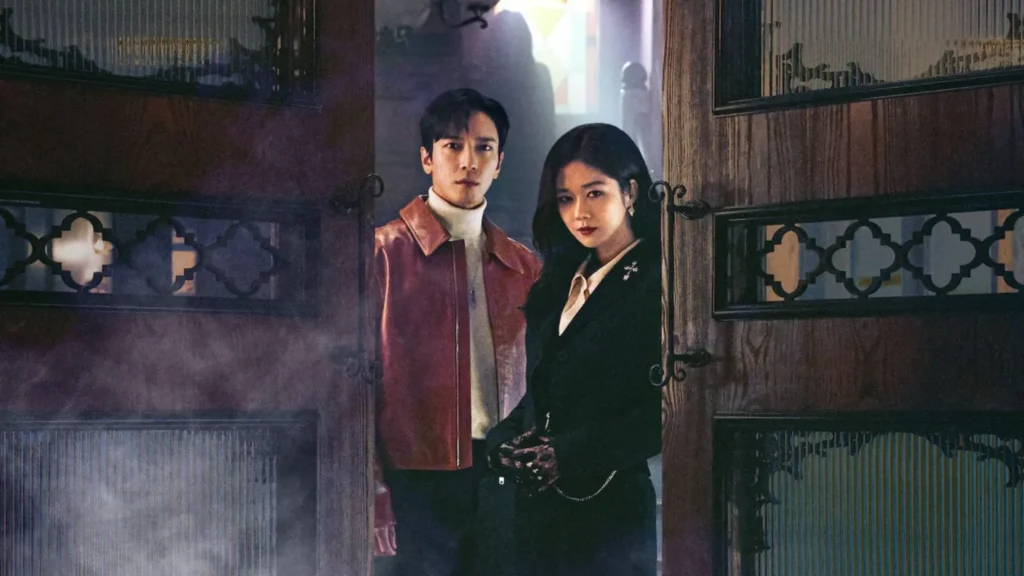
Hong Ji-ah (Jang Na-ra) runs Daebak Real Estate, but the company doesn’t simply help people buy and sell properties. Ji-ah is also an exorcist who removes spirits haunting buildings before they can be sold.
She eventually works with Oh In-beom (Jung Yong-hwa), a conman who becomes involved in the supernatural world despite initially approaching it from a more skeptical perspective.
The premise immediately gives the drama an episodic structure. Different properties come with different ghosts, histories and reasons for remaining behind.
But the supernatural cases are connected to something much larger. As Ji-ah and In-beom investigate haunted properties, they begin uncovering connections between their own pasts.
The drama also incorporates spiritual rituals and ideas associated with Korean exorcism traditions. Ghosts are not simply obstacles that need to be eliminated; their histories matter, and understanding what happened to them becomes part of resolving the haunting.
That gives Sell Your Haunted House a strong balance between supernatural mystery and character-driven storytelling.
It is particularly appealing for viewers who want a K-drama about exorcism and ghosts but also want an overarching mystery rather than a collection of disconnected hauntings.
Why Korean Horror K-Dramas Feel Different From Traditional Horror
One of the most interesting things about Korean horror dramas is how often the supernatural is connected to unresolved human emotions.
A ghost may appear because of grief. A supernatural curse may originate from revenge. An immortal character may be trapped because of guilt. Even an apparently evil spirit can have a history that changes the way the audience understands its actions.
This approach gives folklore a contemporary purpose.
Instead of simply recreating an old legend, these dramas place supernatural figures in modern workplaces, homes, restaurants, hotels and relationships. Ancient beliefs become part of stories about problems that remain familiar today.
That is why Korean folklore horror can work even for viewers who are not particularly interested in mythology. The supernatural elements may be unfamiliar, but the emotions driving the characters are not.
Korean Folklore Makes Ghost Stories More Emotional
Ghosts are among the most common figures in Korean supernatural dramas, but they rarely exist only to frighten the audience.
The idea of unfinished business is especially important. A spirit that cannot move on is often connected to something that was never resolved during its lifetime.
That creates a natural connection between horror and emotional storytelling.
Oh My Ghost uses this idea for comedy and romance. The Master’s Sun turns it into episodic supernatural stories. Hotel Del Luna builds an entire world around spirits preparing to move on.
The result is horror that can make viewers uncomfortable in one scene and emotional in the next.
Are These K-Dramas Actually Horror?
Not all six dramas fit neatly into the traditional horror genre.
Oh My Ghost, Hotel Del Luna and Goblin blend supernatural elements with romance, comedy and fantasy. The Uncanny Counter combines supernatural horror with action, while Sell Your Haunted House leans more heavily into exorcism and mystery.
That variety is actually one of the biggest strengths of Korean supernatural television.
If you want frightening ghosts, The Master’s Sun and Sell Your Haunted House are closer to conventional horror. If you prefer romance and fantasy, Goblin, Hotel Del Luna and Oh My Ghost offer a softer supernatural experience. If action is more important to you, The Uncanny Counter takes the genre in a very different direc
Stay updated with the latest trends on Fandomora — your go-to destination for breaking movie news, web series updates, anime releases, gaming trends, celebrity insights, and music updates. Explore reviews, OTT release dates, anime guides, gaming walkthroughs, and curated lists to discover the best in global entertainment.
About The Author