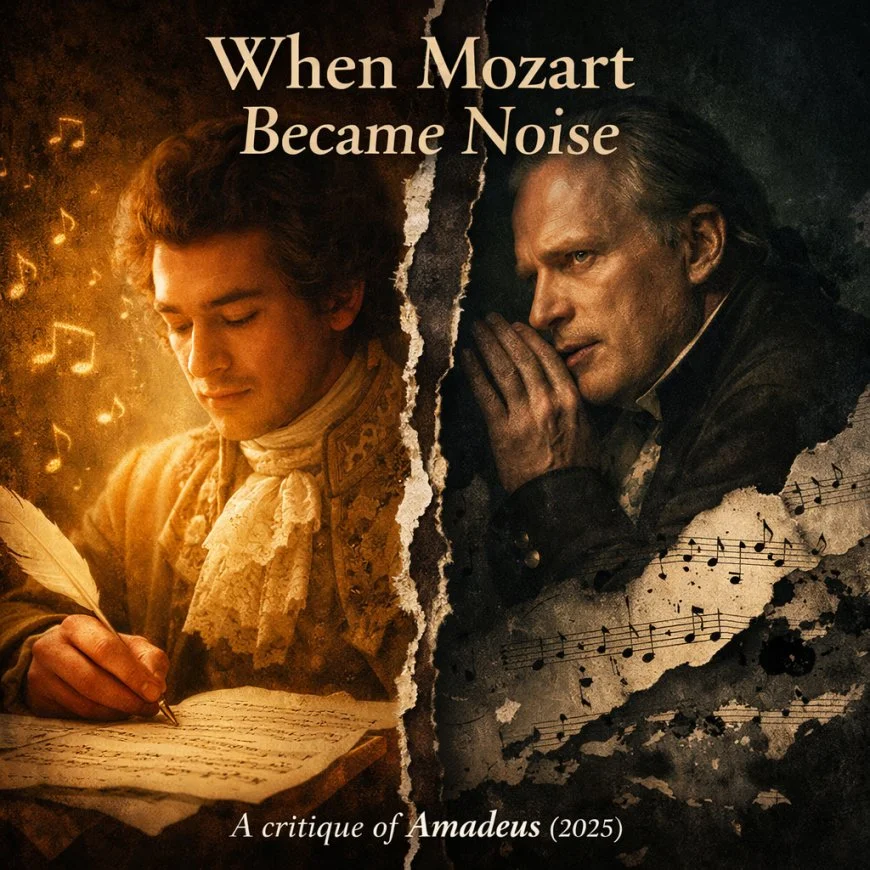
Historical dramas often walk a delicate line between entertainment and authenticity. When they center on iconic figures like Wolfgang Amadeus Mozart, audience expectations become even higher. The challenge is not only recreating an important period in history but also capturing the genius, complexity, and cultural significance of one of the world’s greatest composers.
Unfortunately, Amadeus struggles to consistently meet those expectations.
While the series deserves credit for its ambitious approach, lavish production design, and attempts to modernize Mozart’s story for contemporary audiences, it frequently falls short where it matters most: emotional engagement, narrative focus, and character depth.
For viewers hoping for a compelling exploration of Mozart’s life and legacy, Amadeus delivers occasional moments of brilliance but ultimately fails to fully capitalize on its fascinating subject matter.
Quick Verdict
| Category | Rating |
|---|---|
| Storytelling | 6.5/10 |
| Acting Performances | 7.5/10 |
| Historical Atmosphere | 8/10 |
| Character Development | 6/10 |
| Visual Presentation | 8/10 |
| Entertainment Value | 6.5/10 |
| Overall Rating | 6.8/10 |
What Is Amadeus About?
Amadeus attempts to dramatize the life, career, and personal struggles of Wolfgang Amadeus Mozart, one of history’s most influential composers. The series explores his extraordinary musical talent, relationships, creative ambitions, and conflicts within the cultural and political environment of his time.
Rather than functioning as a traditional biography, the show often blends historical events with dramatic storytelling choices designed to appeal to modern audiences.
On paper, this approach offers enormous potential. Mozart’s life was filled with artistic triumphs, personal hardships, rivalries, and controversies that naturally lend themselves to compelling television.
However, the execution often feels less engaging than the subject matter deserves.
The Series Looks Better Than It Feels
One of the strongest aspects of Amadeus is its visual presentation.
The costumes, set design, architecture, and overall period atmosphere successfully transport viewers into Mozart’s world. The production team clearly invested significant effort into recreating the elegance and grandeur associated with eighteenth-century Europe.
Many scenes feel visually rich and immersive, helping establish a sense of authenticity even when the narrative itself struggles.
The attention to historical aesthetics creates an appealing backdrop that occasionally elevates otherwise ordinary scenes.
For fans of period dramas, this visual craftsmanship remains one of the show’s most appealing qualities.
Mozart Deserves a More Compelling Character Arc
The central problem with Amadeus lies in its portrayal of Mozart himself.
Historical records and popular culture have long depicted Mozart as a fascinating contradiction: a musical genius capable of extraordinary creativity while also navigating personal flaws, social pressures, and professional challenges.
The series acknowledges these elements but rarely explores them with sufficient depth.
Instead of fully embracing the complexity of Mozart’s personality, the narrative often simplifies his journey. As a result, audiences may admire the character without truly connecting to him emotionally.
This lack of deeper characterization prevents many key moments from achieving the dramatic impact they should have.
For a story centered on one of history’s most remarkable figures, that feels like a missed opportunity.
The Supporting Cast Delivers Mixed Results
The supporting cast contributes some of the series’ stronger moments.
Several performances help bring historical figures to life and provide much-needed energy to scenes that might otherwise feel slow or predictable.
However, character development remains inconsistent throughout the series.
Certain relationships receive meaningful attention, while others appear underdeveloped despite their potential importance to Mozart’s story. This uneven approach makes the narrative feel fragmented at times.
A stronger focus on interpersonal dynamics could have significantly improved the emotional weight of the series.
The Music Remains the Show’s Greatest Strength
Any project centered on Mozart ultimately succeeds or fails based on its relationship with music.
Fortunately, this is one area where Amadeus performs well.
The incorporation of Mozart’s compositions helps remind viewers why his legacy continues to endure centuries after his death. The musical sequences often capture the emotional power and brilliance that made him one of the most celebrated composers in history.
Whenever the series allows the music to take center stage, it becomes far more compelling.
These moments provide glimpses of the extraordinary story the show is attempting to tell.
For many viewers, the soundtrack may ultimately become the most memorable aspect of the experience.
Why the Story Never Fully Comes Together
Despite its impressive subject matter, Amadeus frequently struggles with pacing and narrative structure.
The series often shifts between historical events, personal conflicts, and artistic milestones without establishing a clear emotional throughline.
As a result, individual scenes may work well on their own while failing to build sustained momentum across the larger story.
This inconsistency makes it difficult for viewers to remain fully invested in Mozart’s journey.
The problem is not a lack of interesting material. Mozart’s life offers more than enough drama to support a compelling series.
Instead, the issue stems from the show’s inability to consistently prioritize the most engaging aspects of that story.
Historical Drama Fans May Still Find Value
Despite its shortcomings, Amadeus is not without merit.
Viewers interested in classical music, European history, and period dramas may appreciate the series’ atmosphere, production quality, and educational value.
The show also serves as a useful introduction for audiences unfamiliar with Mozart’s life and contributions to music.
While it may not become a definitive portrayal of the composer, it still offers moments of insight and entertainment.
Those with a strong interest in historical figures are likely to find enough worthwhile material to justify watching.
Is Amadeus Worth Watching?
The answer largely depends on expectations.
If you’re searching for a deeply emotional character study or a groundbreaking historical drama, Amadeus may leave you disappointed.
However, if you enjoy period pieces, classical music, and stories about influential historical figures, the series offers enough strengths to remain watchable.
Its visual presentation, musical performances, and historical setting provide a solid foundation, even if the storytelling never fully reaches the same level.
Ultimately, Amadeus is a series with admirable ambitions but uneven execution.
Final Verdict
Amadeus deserves recognition for attempting to bring Mozart’s extraordinary story to a modern audience. The series benefits from strong production values, beautiful historical settings, and a soundtrack filled with timeless musical masterpieces.
Unfortunately, weak character development, inconsistent pacing, and a lack of emotional depth prevent it from achieving its full potential.
While dedicated fans of historical dramas and classical music may still find value in the experience, the series falls short of becoming the definitive Mozart adaptation many viewers were hoping for.
Overall Rating: 6.8/10
The talent, history, and music are all present. What is missing is the storytelling power needed to transform those elements into something truly unforgettable.
Frequently Asked Questions (FAQs)
1. What is Amadeus about?
Amadeus is a historical drama series inspired by the life and career of Wolfgang Amadeus Mozart. The show explores his musical genius, personal struggles, relationships, and influence on classical music history.
2. Is Amadeus based on a true story?
The series draws inspiration from real historical events and Mozart’s life, although certain elements may be dramatized for storytelling purposes.
3. Is Amadeus worth watching?
If you enjoy historical dramas, classical music, and stories about influential historical figures, the series offers enough strengths to make it worth considering despite its flaws.
4. Does the series accurately portray Mozart?
While the show incorporates historical details, it also takes creative liberties. Viewers seeking complete historical accuracy should consider it a dramatized interpretation rather than a documentary.
5. What are the biggest strengths of Amadeus?
The strongest aspects of the series include its production design, period atmosphere, costumes, historical setting, and incorporation of Mozart’s music.
6. Why does Amadeus fall short compared to other historical dramas?
The series struggles with character development, pacing issues, and emotional engagement, making it less impactful than some of the best historical dramas available today.
7. Is the music in Amadeus authentic?
Yes. Mozart’s compositions play a major role in the series and remain one of its most compelling features.
8. Who should watch Amadeus?
The series is best suited for fans of historical dramas, classical music enthusiasts, students of music history, and viewers interested in stories about famous cultural figures.
Stay updated with the latest trends on Fandomora — your go-to destination for breaking movie news, web series updates, anime releases, gaming trends, celebrity insights, and music updates. Explore reviews, OTT release dates, anime guides, gaming walkthroughs, and curated lists to discover the best in global entertainment.
About The Author