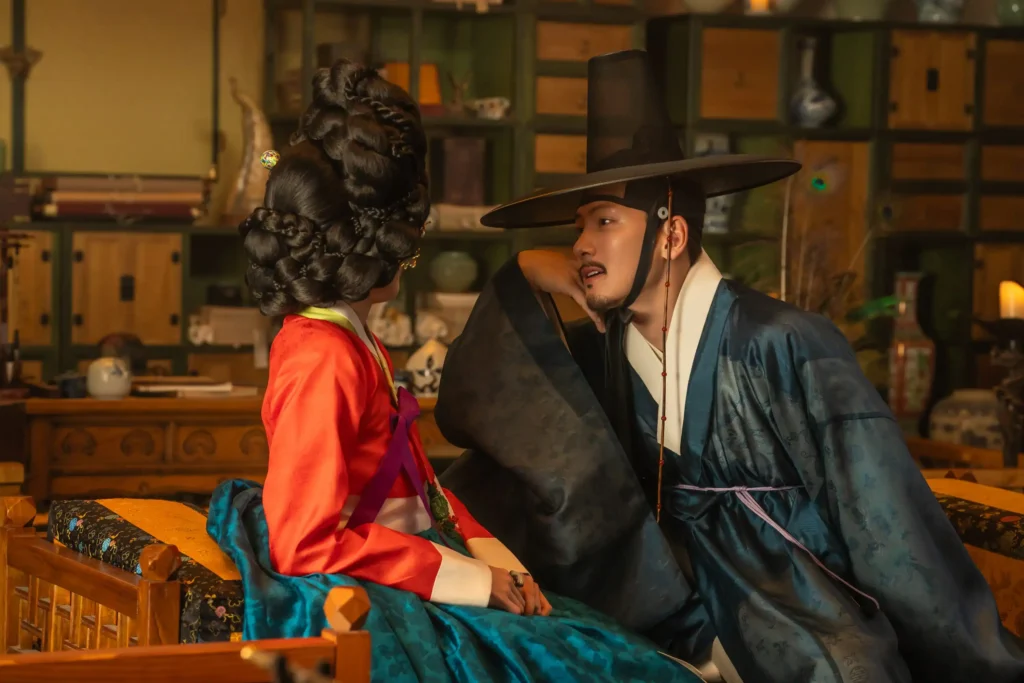
Netflix’s The Scandal had a lot to prove before it even premiered.
The new historical K-drama brings together Son Ye-jin, Ji Chang-wook and NANA for a dangerous romance set in Joseon, throws in a seductive wager, adds an adult edge rarely seen in mainstream Korean period dramas, and draws from the same source material that inspired the 2003 Korean film Untold Scandal.
Netflix’s latest Korean period drama The Scandal had an unusually strong hook before it even premiered: Son Ye-jin returning to a major K-drama role, Ji Chang-wook playing a notorious Joseon-era womanizer, Nana entering the dangerous love game, and an adult-rated story inspired by Les Liaisons Dangereuses.
Now that all eight episodes are streaming, the curiosity has shifted.
Does The Scandal actually deliver on that premise?
The answer is complicated.
The new Netflix K-drama has plenty going for it. Son Ye-jin gives Lady Cho a controlled but emotionally layered presence, Ji Chang-wook gets to move away from the conventional romantic-hero template, and Nana brings another perspective to a story built around seduction and manipulation.
But The Scandal is also a deliberately paced drama, and its central relationships do not always develop as quickly or as convincingly as viewers might expect.
That makes it less of a straightforward historical romance and more of a psychological game about desire, power and people who believe they can control love.
Now that all eight episodes are streaming, the question is no longer whether The Scandal looks intriguing.
It does.
The bigger question is whether the drama actually delivers on that promise.
After watching the full story unfold, the answer is yes — although it is not quite the conventional historical romance some viewers may expect.
The Scandal is at its best when it focuses on desire, manipulation and the complicated power dynamics between its three leads. Son Ye-jin is especially compelling as a woman who refuses to accept the limited role society has created for her, while Ji Chang-wook gets to play one of his more morally questionable romantic characters.
And beneath all the sensuality is a much darker question: what happens when people turn love into a game and eventually discover that they are no longer controlling the rules?
What Is The Scandal About?
Set in Joseon, The Scandal follows Lady Cho, played by Son Ye-jin, a brilliant noblewoman living in a society where women have very little control over their own lives.
Her husband takes a young concubine, leaving Lady Cho with another reminder of how little power she actually possesses inside her marriage.
Rather than quietly accept the situation, she turns to Cho Won, played by Ji Chang-wook.
Cho Won is already notorious throughout Joseon society for his romantic conquests. He is charming, confident and seemingly uninterested in anything resembling genuine commitment.
Lady Cho knows exactly how to use that reputation.
She proposes a dangerous game involving Hui-yeon, a young widow played by NANA who has vowed to remain faithful to her late husband.
What begins as a wager gradually becomes something far more complicated when attraction and genuine emotion enter the equation.
Netflix describes the series as a story in which a secret proposal ignites hidden desires between a gifted noblewoman, a famed lover and an unsuspecting woman caught in their dangerous game.
That description is actually a pretty good introduction to the drama.
Because The Scandal isn’t really about a simple love triangle.
It is about three people with very different ideas about love, desire and control.
Son Ye-jin Is the Real Power Player in The Scandal
The easiest way to misunderstand The Scandal is to assume that Ji Chang-wook’s Cho Won is the character driving everything.
He isn’t.
That distinction belongs to Son Ye-jin’s Lady Cho.
She is intelligent, calculating and painfully aware of the restrictions placed on women in Joseon. Her response isn’t to become a traditional rebel who simply rejects society. Instead, she learns how to operate inside that society and manipulate its rules to her advantage.
That makes her much more interesting.
Lady Cho understands that she cannot openly demand everything she wants. So she uses influence, relationships and other people’s weaknesses to create opportunities for herself.
Son Ye-jin’s performance works because she rarely needs to announce what Lady Cho is thinking.
A look can suggest jealousy.
A pause can reveal hesitation.
A seemingly polite conversation can conceal an entirely different intention.
That restrained approach is particularly effective in a story where almost every character is hiding something.
Son Ye-jin has also explained that Lady Cho’s attraction came partly from the opportunity to explore human desire in an era where such feelings were treated as taboo. She described the series as allowing the character to become increasingly complex as the story progresses.
That complexity is ultimately what prevents Lady Cho from becoming a standard revenge-driven historical heroine.
She is sympathetic in some moments.
Manipulative in others.
And sometimes both at once.
Ji Chang-wook Finally Gets to Be the Charming Menace
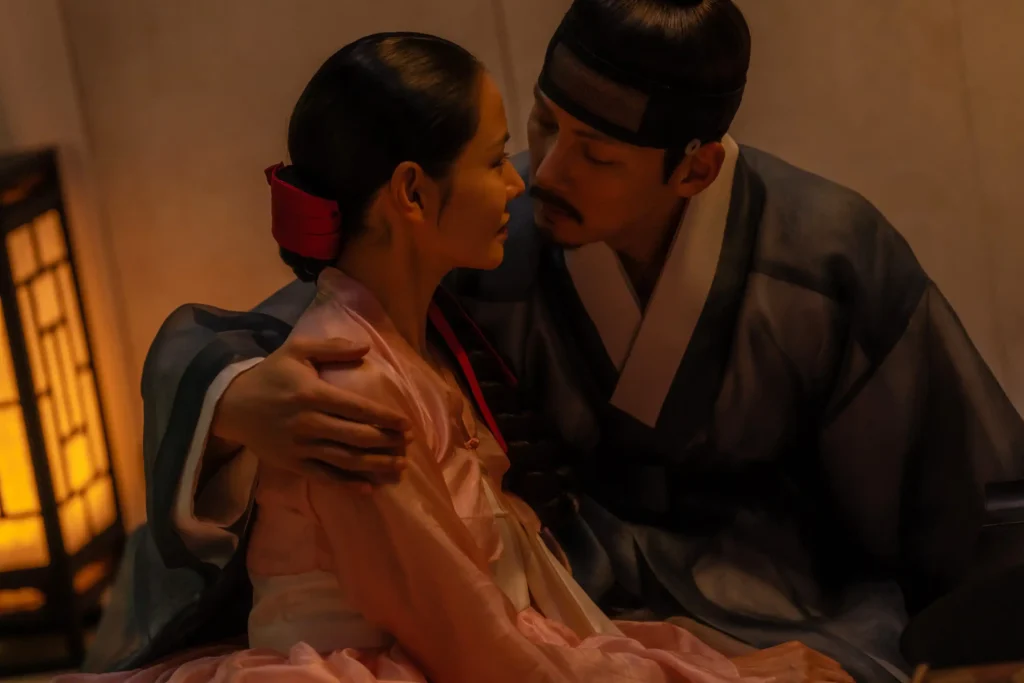
Ji Chang-wook has played plenty of romantic leads, but Cho Won gives him a noticeably different playground.
This isn’t the wounded hero waiting patiently for the right woman.
Cho Won is a playboy.
He enjoys attention, understands his own attractiveness and has built an entire identity around being someone who can seduce almost anyone.
In other words, he enters the wager thinking he has already mastered the game.
That confidence is exactly what makes his eventual emotional complications interesting.
Cho Won initially approaches Hui-yeon as another challenge. But the closer he gets to her, the harder it becomes to separate the original wager from genuine feeling.
Netflix’s episode descriptions gradually reflect that shift, with Cho Won’s pursuit moving from a calculated seduction toward something emotionally messier.
And that is where Ji Chang-wook gets to have some fun.
He can be playful and arrogant in one scene, then surprisingly vulnerable in the next.
The character also gives him an opportunity to step away from the more straightforward romantic heroes audiences may associate with him.
If you’ve followed Ji Chang-wook’s recent projects, his willingness to switch between genres is part of the appeal. His upcoming and recent work has covered everything from romance to action, which makes Cho Won another useful change of pace.
Hui-yeon Is Not Just the Woman Caught Between Them
NANA’s Hui-yeon initially looks like the most vulnerable person in the story.
She is a young widow who has promised to remain faithful to her late husband. She doesn’t enter the story looking for another romance, and she certainly doesn’t ask to become part of Lady Cho and Cho Won’s wager.
That resistance is important.
If Hui-yeon immediately responded to Cho Won’s charm, the central conflict would lose much of its tension.
Instead, she forces him to work for her trust.
NANA also gives the character an emotional identity beyond being the third point in a love triangle.
Hui-yeon’s choices are shaped by grief, loyalty, attraction and the social expectations surrounding her. As the relationship develops, the drama becomes increasingly interested in what she actually wants rather than simply what other people want from her.
That is one of the better decisions in the writing.
The women in The Scandal aren’t simply waiting for the male lead to make a choice.
They have desires of their own — and they are capable of making choices that change the entire game.
For viewers interested in NANA’s wider range as an actress, her performance here also offers a very different experience from the kind of unconventional romance seen in projects such as Ha Ji-won and Nana’s Climax K-drama.
The Adult Romance Is Actually Part of the Story
A major part of the pre-release curiosity around The Scandal came from its mature rating.
The drama is considerably more sensual than the average mainstream historical K-drama, and it isn’t shy about presenting attraction as something physical as well as emotional.
But the mature material isn’t the only reason the series works.
In fact, treating The Scandal as simply a “steamy K-drama” undersells what it is doing.
The intimate moments are connected to the show’s larger ideas about power, temptation, jealousy and manipulation.
The characters use romance as a weapon.
They test each other’s boundaries.
They deliberately provoke reactions.
And sometimes they convince themselves that what they’re doing is harmless because it began as a game.
That is what gives the adult content more narrative purpose.
The drama is interested in what desire does to people once social rules, personal pride and emotional attachment collide.
For viewers who were initially curious about the show’s 19+ rating, our earlier look at why Son Ye-jin’s The Scandal received a 19+ rating provides more context around that aspect of the series.
Why The Scandal Feels Different From a Typical Historical K-Drama
This is where The Scandal becomes more interesting than its marketing might initially suggest.
On paper, it has many familiar ingredients:
Joseon aristocrats.
Forbidden romance.
A beautiful widow.
A notorious playboy.
Jealousy.
Secrets.
A powerful woman.
But the way those elements are arranged makes the drama feel closer to a psychological seduction story than a conventional historical romance.
Netflix confirms that the series reimagines Pierre Choderlos de Laclos’ Dangerous Liaisons, the 1782 novel that also inspired the 2003 Korean film Untold Scandal.
That connection matters.
The story has always been about people treating relationships as games and discovering that emotions are much harder to control than expected.
The Joseon setting adds another layer because social restrictions make every private desire more dangerous.
A relationship isn’t simply a relationship.
It can become a scandal.
A letter can become evidence.
A rumour can destroy someone’s reputation.
And an attraction that would be complicated in private becomes potentially devastating when everyone around you is watching.
The Visuals Are One of The Scandal’s Biggest Strengths
If the story sometimes moves slowly, the production rarely looks sluggish.
The Scandal is an extremely polished-looking drama.
The costumes, interiors, lighting and cinematography create a Joseon world that feels deliberately theatrical.
That visual approach isn’t just there to make the series expensive-looking.
The characters themselves are constantly performing.
Lady Cho has to perform the role of the respectable noblewoman.
Cho Won performs the role of the fearless womanizer.
Hui-yeon performs the role of the faithful widow.
Everyone is hiding something.
That makes the carefully composed imagery feel appropriate to the story.
The costumes also have a symbolic role. Director Jung Ji-woo has discussed using hanbok and colour to reflect the characters’ emotional states, while Son Ye-jin noted the restrained beauty of the costume design during the drama’s production discussions.
The result is a series where the visual language often tells you something the dialogue doesn’t.
The Dangerous Liaisons Connection Gives The Story More Weight
If The Scandal feels familiar at times, that’s partly because its central premise has a long history.
The drama isn’t an entirely new concept.
It is a Joseon-era reimagining of Dangerous Liaisons, with the 2003 Korean film Untold Scandal having previously adapted the same basic material.
Netflix has been clear about that lineage from the beginning. The company describes the series as a new interpretation of the classic story, while director Jung Ji-woo has emphasized that the drama goes back to the original novel and rewrites its characters and relationships rather than simply recreating the earlier film.
That distinction matters for viewers who have already seen Untold Scandal.
The new series has eight episodes to explore relationships that a feature film had considerably less time to develop.
That extra room allows Lady Cho, Cho Won and Hui-yeon to become more complicated.
It also means the drama has more time to examine what happens after the initial seduction game starts falling apart.
Does The Scandal Have a Pacing Problem?
This is probably the biggest question surrounding the series.
And the honest answer is: some viewers will think it does.
The eight-episode structure sounds short, but the drama takes its time establishing its characters and allowing the relationships to change.
That deliberate pacing works when the focus is on psychological tension.
It becomes less effective when viewers are waiting for the consequences of the central wager to arrive.
Current critical reactions reflect that divide. India Today praised the nuanced performances and described the series as a carefully paced exploration of power and restraint, while other reviews have been much harsher about how long the story takes to reach its destination.
That split is actually useful when deciding whether to watch.
If you prefer fast-moving K-dramas with constant twists, The Scandal may feel slower than expected.
If you enjoy character-driven historical romance with psychological tension, its pacing is easier to appreciate.
Is The Scandal Worth Watching on Netflix?
Yes, particularly if you want something more mature and morally complicated than a traditional historical romance.
The strongest reason to watch is the cast.
Son Ye-jin gives Lady Cho enough ambiguity to make her impossible to reduce to either hero or villain. Ji Chang-wook clearly enjoys playing Cho Won as a charismatic man whose confidence starts to collapse when his own emotions become involved. NANA gives Hui-yeon enough agency to stop the central relationship from becoming a simple seduction story.
The production is another major advantage.
And while the pacing won’t work for everyone, the relatively compact eight-episode structure means the entire story is still easy to finish without committing to a sprawling 16-episode K-drama.
If you’re coming to The Scandal because you love Joseon dramas, it is also worth remembering that this is a very different experience from the more conventional historical romance.
For example, viewers who enjoy the broader Joseon genre may also want to explore the best Joseon time-travel K-dramas, but The Scandal is much more focused on adult desire, social restrictions and psychological manipulation.
Where to Watch The Scandal
The Scandal is streaming exclusively on Netflix.
The series premiered globally on September 18, 2026, and consists of eight episodes. Netflix currently lists the complete season, with episodes ranging from roughly 48 minutes to the 80-minute finale.
That makes it a relatively easy weekend binge for viewers who prefer completing a K-drama in one sitting.
The Scandal Netflix Review: Final Verdict
The Scandal doesn’t reinvent the historical K-drama.
It doesn’t need to.
Its appeal comes from taking a familiar story about seduction and betrayal and giving it three actors capable of making the characters considerably more complicated than the premise initially suggests.
Son Ye-jin is the standout, largely because Lady Cho is the character with the most control over the story — at least in the beginning.
Ji Chang-wook is having obvious fun with Cho Won, a charming playboy who slowly discovers that being good at seduction doesn’t mean being good at handling genuine emotion.
And NANA gives Hui-yeon enough emotional independence to make the central triangle feel like more than a competition between two people over one woman.
The sensuality will undoubtedly remain one of the show’s biggest talking points, but it isn’t the most interesting thing about the series.
The real hook is the power struggle underneath it.
Everyone thinks they are manipulating someone else.
Everyone believes they understand the rules.
And everyone eventually discovers that desire doesn’t care who started the game.
For viewers looking for a conventional, feel-good historical romance, The Scandal may not be the right Netflix K-drama.
But if you want Son Ye-jin, Ji Chang-wook and NANA in a darker Joseon romance filled with desire, manipulation, secrets and complicated emotions, this eight-episode drama is absolutely worth adding to your watchlist.
Fandomora Verdict: 8/10 — Beautifully acted, visually striking and daring enough to stand apart, even if its deliberately slow pacing won’t work for everyone.
Stay updated with the latest trends on Fandomora — your go-to destination for breaking movie news, web series updates, anime releases, gaming trends, celebrity insights, and music updates. Explore reviews, OTT release dates, anime guides, gaming walkthroughs, and curated lists to discover the best in global entertainment.
About The Author