Lucky Strike Review: Is Scott Eastwood’s New War Movie Worth Watching?
World War II movies continue to be a staple of Hollywood filmmaking, but standing out in a genre filled with classics is never easy. Lucky Strike (2026), directed by Rod Lurie, attempts to do exactly that by telling a survival-focused story set during one of the most pivotal moments of the war: the Battle of the Bulge.
Starring Scott Eastwood as an American Army captain trapped behind enemy lines, Lucky Strike trades large-scale battlefield action for a more intimate and suspense-driven narrative. Rather than focusing on armies clashing across Europe, the film follows a single soldier fighting to survive against impossible odds while navigating Nazi-controlled territory.
While the movie doesn’t reinvent the war genre, it delivers enough tension, atmosphere, and strong supporting performances to keep viewers engaged. For audiences who enjoy survival thrillers and historical war dramas, Lucky Strike offers a compelling if somewhat familiar experience.
What Is Lucky Strike About?
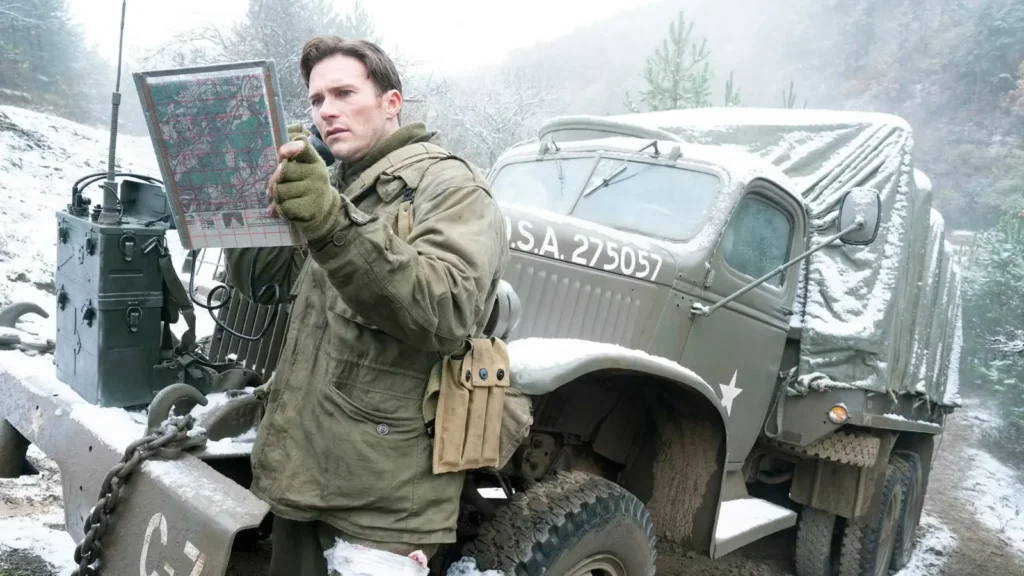
Inspired by true events, Lucky Strike follows Captain John Castle, an American officer who becomes stranded behind enemy lines during the Battle of the Bulge in December 1944.
Armed with little more than a Motorola SCR-300 military radio, Castle must evade German forces, survive freezing winter conditions, and find a way back to Allied territory. As he journeys through occupied Belgium, every encounter becomes a potential life-or-death situation.
Unlike traditional war epics that focus on massive battles, Lucky Strike operates more like a survival thriller. The story unfolds as a series of tense encounters that continually test the protagonist’s courage, intelligence, and determination.
Scott Eastwood Leads the Film — For Better and Worse
The biggest talking point surrounding Lucky Strike is Scott Eastwood’s performance.
Eastwood certainly looks the part of a WWII officer. He carries the physical presence, confidence, and screen charisma necessary for a leading role. His commanding voice and military appearance help make the character believable from the start.
However, some critics have noted that while Eastwood performs effectively during action sequences and interactions with supporting characters, the film occasionally struggles when he is left carrying scenes alone. Because much of the story revolves around his solitary journey, emotional depth becomes particularly important. Several reviews have suggested that the performance doesn’t always reach the level required to fully elevate the material.
That said, Eastwood remains watchable throughout, and fans of his previous work will likely appreciate his understated approach.
Rod Lurie’s Direction Keeps the Tension High
Where Lucky Strike truly succeeds is in its ability to create suspense.
Director Rod Lurie understands that survival stories depend on constant uncertainty. The film places viewers alongside Castle as he moves through hostile territory, never knowing who can be trusted or what danger awaits around the next corner.
Rather than relying heavily on explosive action scenes, Lurie builds tension through atmosphere, pacing, and the ever-present threat of discovery. The result is a movie that often feels more like a thriller than a traditional war film.
This approach helps differentiate Lucky Strike from many recent WWII releases.
Supporting Cast Delivers Strong Performances
While Scott Eastwood receives most of the attention, several supporting actors leave a lasting impression.
Cast Highlights
- Colin Hanks
- Aunjanue Ellis-Taylor
- Taylor John Smith
- Lorne MacFadyen
Many critics have specifically praised Taylor John Smith’s scenes, which introduce some of the movie’s most emotionally engaging moments. Colin Hanks also brings credibility and gravitas to his role, helping strengthen the film whenever he appears on screen.
The supporting cast adds depth to a story that could otherwise feel repetitive due to its isolated premise.
What Works in Lucky Strike
Suspenseful Survival Story
One of Lucky Strike’s greatest strengths is its ability to maintain suspense throughout the film. Rather than relying solely on large-scale combat sequences, the story focuses on the constant dangers faced by a soldier stranded behind enemy lines. Every decision carries significant consequences, and even seemingly ordinary encounters can quickly become life-threatening. This keeps viewers invested from beginning to end and creates a tense, edge-of-your-seat experience.
A Fresh Perspective on World War II
Unlike many WWII movies that center on major battles, military operations, or historical victories, Lucky Strike takes a more personal approach. The film examines the physical and emotional challenges of survival through the eyes of a single American officer navigating hostile territory. This narrower focus allows audiences to experience the war from a deeply human perspective, making the story feel more intimate and emotionally engaging.
Strong Atmosphere and Cinematography
The movie does an excellent job of capturing the harsh realities of wartime Europe. Snow-covered forests, foggy landscapes, and isolated villages create a constant sense of uncertainty and danger. The cinematography effectively highlights the loneliness and vulnerability of the protagonist, helping immerse viewers in the story’s survival-driven narrative.
Solid Supporting Performances
While Scott Eastwood leads the film, the supporting cast plays a crucial role in elevating the story. Actors such as Colin Hanks and Taylor John Smith bring emotional depth to their scenes, helping break up the protagonist’s solitary journey. These performances add credibility to the film and provide some of its most memorable moments.
What Doesn’t Work in Lucky Strike
1. Predictable Story Elements
Although the survival premise is compelling, some plot developments feel familiar to fans of war and survival films. Certain encounters and challenges follow recognizable genre patterns, making it easier for experienced viewers to anticipate what might happen next.
2. Limited Character Exploration
The film spends much of its runtime following Captain John Castle’s physical struggle for survival, but it doesn’t always dive deeply into his personal history, motivations, or emotional transformation. As a result, some viewers may find it difficult to form a stronger connection with the character compared to protagonists in more character-driven war dramas.
4. Inconsistent Pacing
Despite maintaining tension throughout most of its runtime, Lucky Strike occasionally suffers from pacing issues. Some sequences feel highly engaging and suspenseful, while others slow the narrative momentum. A tighter structure could have made the journey feel more cohesive and impactful.
Overall Assessment
These shortcomings do not significantly detract from the overall viewing experience. Lucky Strike remains an engaging World War II survival thriller that succeeds in creating tension, atmosphere, and suspense. However, its familiar storytelling beats and limited character development prevent it from reaching the same level as genre-defining classics such as Saving Private Ryan, Dunkirk, or 1917.
For fans of military dramas and survival-focused war stories, Lucky Strike is still a worthwhile watch that delivers solid entertainment and a compelling look at one soldier’s fight to survive behind enemy lines.
How Lucky Strike Compares to Other WWII Movies
World War II cinema has produced some of the most acclaimed films in movie history, from Saving Private Ryan to Dunkirk and 1917. However, Lucky Strike takes a noticeably different approach than many of these large-scale war epics.
Rather than focusing on massive military operations, battlefield tactics, or historic victories, Lucky Strike centers on the personal survival journey of a single soldier trapped behind enemy lines during the Battle of the Bulge. The film prioritizes tension, isolation, and psychological endurance over explosive action sequences and grand spectacle.
In many ways, Lucky Strike feels closer to a survival thriller than a traditional war movie. Viewers spend most of the film following Captain John Castle as he navigates dangerous territory, avoids enemy patrols, and struggles against the brutal conditions of wartime Europe.
This smaller, character-focused scope allows the movie to create a more intimate and suspenseful experience. While it may lack the epic scale and emotional impact of genre-defining classics, it succeeds in offering a different perspective on World War II—one that emphasizes individual resilience rather than large-scale combat.
For audiences who appreciate personal war stories and survival-driven narratives, Lucky Strike provides a refreshing alternative to conventional WWII blockbusters.
Is Lucky Strike Worth Watching?
If you’re wondering whether Lucky Strike deserves a place on your watchlist, the answer largely depends on what you’re looking for in a war film.
You should consider watching Lucky Strike if you enjoy:
- World War II dramas
- Survival thrillers
- Historical military films
- Scott Eastwood movies
- Character-driven stories
- Suspenseful wartime adventures
The film doesn’t attempt to reinvent the genre, but it delivers enough tension, atmosphere, and compelling moments to keep viewers engaged throughout its runtime. Its focus on survival and personal endurance helps distinguish it from many modern war movies that rely heavily on large-scale action.
That said, viewers expecting a groundbreaking masterpiece or the emotional depth of the genre’s greatest films may find it somewhat familiar. The story occasionally follows predictable paths, and some character arcs could have benefited from additional development.
Still, Lucky Strike remains an entertaining and worthwhile watch for fans of military thrillers and historical dramas. Its suspenseful storytelling and immersive setting make it an easy recommendation for audiences interested in World War II cinema.
Final Verdict: Lucky Strike Review
Lucky Strike (2026) delivers a solid and engaging World War II survival thriller that succeeds through atmosphere, suspense, and strong direction. Director Rod Lurie effectively captures the dangers and uncertainty of life behind enemy lines, while the Battle of the Bulge setting provides an authentic historical backdrop.
Scott Eastwood delivers a capable performance as Captain John Castle, and the supporting cast helps add emotional depth to the story. Although the film occasionally relies on familiar genre conventions and doesn’t always explore its characters as deeply as it could, it remains consistently watchable and tense.
The movie’s greatest strength is its ability to place audiences directly alongside its protagonist, creating a constant sense of danger and urgency. Rather than focusing on the larger war effort, it tells a personal story of courage, survival, and perseverance.
Rating: 7/10 ⭐⭐⭐⭐☆
A well-crafted WWII survival thriller that prioritizes tension, atmosphere, and personal struggle over large-scale action. While not a genre-defining classic, it offers enough suspense and historical intrigue to satisfy fans of military dramas and survival-focused war stories.
Frequently Asked Questions (FAQs)
1. Is Lucky Strike based on a true story?
Yes, Lucky Strike is inspired by real events that took place during the Battle of the Bulge, one of the most significant military campaigns of World War II. While certain characters and story elements have been dramatized for cinematic purposes, the film draws heavily from the challenges faced by Allied soldiers trapped behind enemy lines during the winter of 1944.
2. Who stars in Lucky Strike?
Lucky Strike features a talented ensemble cast led by Scott Eastwood. The film also stars Colin Hanks, Aunjanue Ellis-Taylor, Taylor John Smith, and Lorne MacFadyen. Their performances help bring emotional depth and authenticity to the wartime survival story.
3. Who directed Lucky Strike?
The film was directed by Rod Lurie, a filmmaker known for character-driven dramas and military-themed stories. Lurie previously directed acclaimed films such as The Last Castle and Deterrence, making him a natural fit for a World War II survival thriller.
4. What is Lucky Strike about?
Lucky Strike follows Captain John Castle, an American Army officer who becomes stranded behind enemy lines during the Battle of the Bulge. Armed with limited supplies and facing constant danger, he must navigate Nazi-occupied territory, survive harsh winter conditions, and find a way back to Allied forces. The film combines historical drama, suspense, and survival elements to tell a gripping wartime story.
5. Is Lucky Strike worth watching?
If you enjoy World War II movies, military thrillers, or survival dramas, Lucky Strike is worth adding to your watchlist. The film delivers strong suspense, atmospheric storytelling, and solid performances, particularly from its supporting cast. While it may not reinvent the war genre, it offers an engaging and tense viewing experience for fans of historical cinema.
7. What makes Lucky Strike different from other WWII movies?
Unlike many war films that focus on large-scale battles and military strategy, Lucky Strike centers on the personal survival journey of a single soldier. This smaller, character-focused approach creates a more intimate and suspenseful experience, allowing viewers to connect with the emotional and psychological challenges faced by the protagonist.
8. Where does Lucky Strike take place?
The film is set during the Battle of the Bulge in the winter of 1944, primarily in Nazi-occupied regions of Belgium and surrounding European territories. The harsh weather conditions and dangerous wartime environment play a major role in shaping the story and its tension-filled atmosphere.
Stay updated with the latest trends on Fandomora — your go-to destination for breaking movie news, web series updates, anime releases, gaming trends, celebrity insights, and music updates. Explore reviews, OTT release dates, anime guides, gaming walkthroughs, and curated lists to discover the best in global entertainment.
About The Author