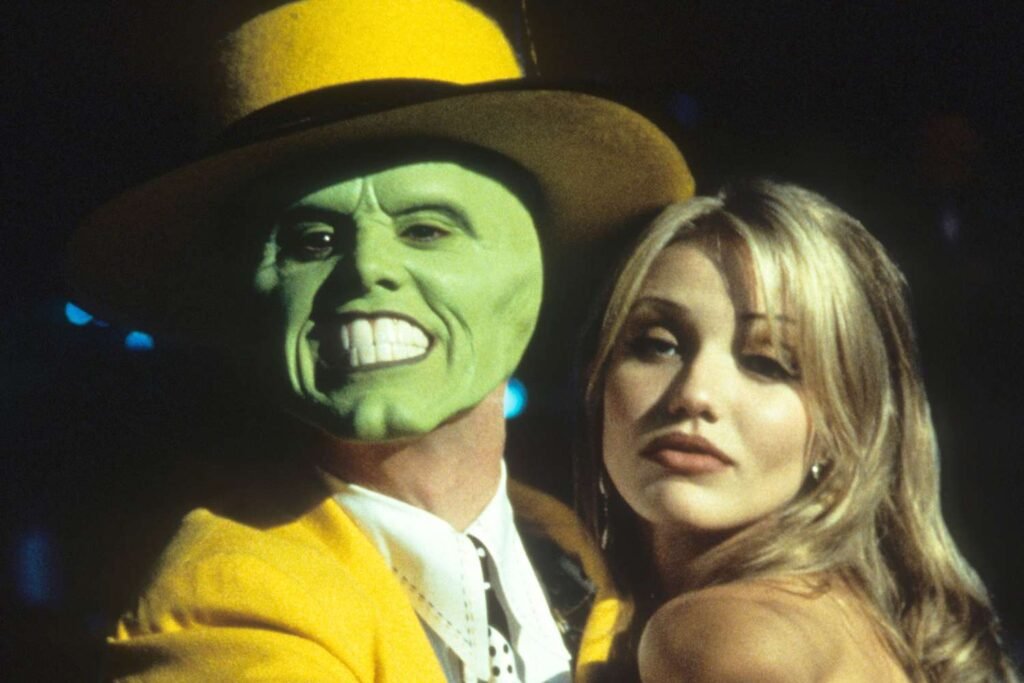
More than 30 years after The Mask released in theaters, fans still continue debating one surprisingly complicated question — is The Mask actually a hero, or is he secretly a villain hiding behind comedy?
At first glance, many people instantly think of the funny green-faced character played by Jim Carrey. They remember the dancing, cartoon-style chaos, exaggerated comedy, and over-the-top confidence that made the movie unforgettable during the 1990s.
But once you look deeper into the original comic books, the character’s psychology, and the darker meaning behind the magical mask itself, the answer becomes far more disturbing.
That’s why the topic “Is The Mask a villain or a hero?” continues trending across movie discussions, comic-book forums, fan theories, and entertainment debates even today.
The truth is, The Mask was never designed to be a traditional superhero.
Instead, the character exists somewhere between freedom, madness, power fantasy, and complete emotional chaos.
And honestly, that unpredictability is exactly what makes the character so fascinating decades later.
The Original The Mask Comics Were Much Darker Than Most Fans Realize
One of the biggest reasons audiences still debate whether The Mask is evil or heroic is because the original comic-book version was dramatically darker than the movie adaptation starring Jim Carrey.
In the comics published by Dark Horse Comics, The Mask is not portrayed as a goofy troublemaker who simply embarrasses criminals with cartoon humor. Instead, the character becomes extremely violent, emotionally unstable, and dangerously unpredictable.
The mask itself transforms people by removing all emotional restraint and amplifying their hidden impulses. Once someone wears it, their personality changes completely.
That transformation often leads to horrifying behavior.
In several comic storylines, The Mask brutally kills enemies while treating violence like entertainment. The character enjoys chaos, destruction, fear, and emotional manipulation in ways that feel genuinely disturbing.
This darker portrayal completely changes how people interpret the character morally.
A traditional superhero usually follows rules, protects innocent people carefully, and tries to avoid unnecessary violence. The Mask, however, rarely shows that level of control.
Instead, the character often acts based on impulse, revenge, anger, amusement, or emotional instability.
That moral unpredictability is exactly why many fans believe The Mask is closer to an antihero — or even a villain — rather than a true hero.

Why the The Mask Made Audiences See Him as a Hero
Even though the comic version was dark and violent, the 1994 Hollywood adaptation completely changed how mainstream audiences viewed the character.
The movie transformed The Mask into a comedic fantasy character filled with slapstick humor, visual effects, romance, music, and cartoon-style energy inspired by classic animated shows.
In the film, Stanley Ipkiss begins as an awkward, shy, and socially ignored bank employee struggling with confidence and loneliness. When he discovers the magical mask, his entire personality transforms overnight.
Suddenly, he becomes fearless, charismatic, confident, rebellious, and impossible to control.
That transformation emotionally connected with audiences because Stanley represented something relatable. Many viewers understood what it feels like to feel powerless, invisible, embarrassed, or emotionally trapped in everyday life.
The Mask became a fantasy version of freedom.
He could say anything, fight back against bullies, ignore social rules, and become the center of attention instantly.
That emotional wish-fulfillment made audiences root for him even when his behavior became reckless or chaotic.
Another important reason viewers saw him as heroic is because the movie softened the violence dramatically. Instead of horrifying brutality from the comics, the film used cartoon comedy and exaggerated visual humor to make the chaos feel entertaining instead of disturbing.
Without that comedic tone, the character would likely feel much darker and more psychologically dangerous.
The Mask Is Best Described as an Antihero, Not a Traditional Superhero
The most accurate answer to the question “Is The Mask a villain or a hero?” is probably neither.
The character fits much more naturally into the antihero category.
An antihero is someone who may oppose criminals or dangerous people but still behaves in morally questionable, reckless, or destructive ways. That description perfectly matches The Mask.
Throughout both comics and films, the character constantly breaks laws, creates public chaos, manipulates people emotionally, and uses excessive force against enemies.
At the same time, The Mask often targets gangsters, corrupt individuals, criminals, or abusive people instead of innocent civilians.
That contradiction creates moral confusion. Unlike heroes such as Batman or Spider-Man, The Mask has no ethical code controlling his actions.
He acts based entirely on instinct and emotion. Sometimes those emotions push him toward justice.
Other times, they create complete destruction. That unpredictability makes him impossible to classify as purely heroic or purely evil.
Is the Mask Itself Actually Evil?
One of the most fascinating fan theories surrounding The Mask is that the mask itself may actually be the real villain of the story.
In several comic versions and adaptations, the magical mask is connected to supernatural mythology and chaos-driven energy. Some stories even suggest the artifact was created by Loki, the legendary trickster figure known for manipulation and disorder.
The mask doesn’t simply give someone powers.
Instead, it removes inhibition completely. That means the wearer loses fear, guilt, embarrassment, restraint, and emotional self-control.
Psychologically, the mask unlocks hidden desires and suppressed impulses that normally stay buried inside people. That’s why every person who wears The Mask becomes different.
A shy person may become confident and rebellious. A violent person may become horrifyingly dangerous. A lonely person may become emotionally addicted to power and attention.
This idea makes The Mask much deeper than a normal superhero story because it asks an uncomfortable question:
Does the mask create evil… or does it simply reveal what already exists inside human nature? That question is one major reason the character still inspires discussion decades later.
The Character Represents Hidden Human Desires and Emotional Freedom
One reason The Mask became such a huge cultural success is because the character represents fantasies many people secretly imagine.
Deep down, countless people wonder what life would feel like without fear, insecurity, social pressure, embarrassment, or consequences. The Mask represents complete emotional freedom.
Stanley Ipkiss transforms from someone emotionally invisible into a person capable of doing absolutely anything without caring what society thinks. That transformation feels exciting because it taps into universal emotions.
The Mask can:
- Say whatever he wants
- Ignore social rules
- Fight powerful enemies
- Gain attention instantly
- Take revenge without fear
- Become emotionally fearless
For audiences, that freedom feels thrilling. But the story also warns about the danger of unlimited power without emotional control. Once someone loses all restraint, chaos becomes unavoidable.
That balance between fantasy and danger is what makes The Mask psychologically interesting even today
Why Jim Carrey’s Performance Still Feels Legendary.
A huge reason audiences continue loving The Mask decades later is because of Jim Carrey’s unforgettable performance.
Carrey brought incredible physical comedy, facial expressions, cartoon-like energy, and emotional charisma to the role in ways very few actors could ever replicate.
Without his performance, The Mask could have easily felt creepy, disturbing, or emotionally uncomfortable.
Instead, Carrey made the character entertaining, lovable, unpredictable, and strangely relatable despite all the chaos happening around him.
His ability to balance comedy with emotional vulnerability helped audiences emotionally connect with Stanley Ipkiss underneath the madness.
That’s one major reason people still remember The Mask as funny and iconic rather than terrifying.
Even today, many movie fans consider it one of the greatest comedy performances of the 1990s.
Could a Dark Reboot Turn The Mask Into a True Villain?
In recent years, darker comic-book adaptations and psychological horror stories have become increasingly popular with modern audiences. Because of this trend, many fans believe a future reboot of The Mask could finally explore the character’s violent comic-book roots more seriously.
A darker version would likely portray The Mask as emotionally dangerous instead of comedic.
Instead of slapstick humor and cartoon chaos, the story could focus on:
- power addiction
- loss of identity
- psychological corruption
- violent obsession
- emotional instability
- supernatural horror
That type of reboot could completely change how mainstream audiences view the character.
Rather than seeing The Mask as a funny antihero, viewers may begin viewing him as a dangerous supernatural force capable of destroying anyone emotionally weak enough to wear the mask.
And honestly, considering modern Hollywood’s interest in darker comic stories, that possibility no longer feels impossible.
Final Verdict: Is The Mask a Villain or a Hero?
The truth is, The Mask was never meant to fit cleanly into either category. He is not a traditional superhero because he lacks discipline, morality, responsibility, and emotional restraint.
At the same time, he is not purely evil because he often fights criminals, opposes corrupt people, and protects innocent individuals. The Mask exists somewhere between hero, villain, antihero, fantasy, and psychological chaos. That moral ambiguity is exactly why the character remains so memorable decades later.
Depending on who wears the mask, the story can become funny, violent, emotional, horrifying, empowering, or completely insane. And honestly, that unpredictability may be the real reason audiences still cannot stop talking about The Mask after all these years.
FAQs
1. Is The Mask a hero or villain?
The Mask is best described as an antihero because the character mixes heroic behavior with chaotic and morally questionable actions.
2. Is The Mask evil in the comics?
Yes, the original comic version is significantly darker, more violent, and psychologically disturbing compared to the movie adaptation.
3. Why is The Mask so powerful?
The magical mask removes inhibition and amplifies the wearer’s deepest emotions, desires, and hidden instincts.
4. Was The Mask created by Loki?
Some comic-book storylines connect the mask to Loki and supernatural trickster mythology.
5. Why do fans still love Jim Carrey’s version?
Jim Carrey brought unique comedy, charisma, and emotional energy to the role, making the character unforgettable.
Stay updated with the latest trends on Fandomora — your go-to destination for breaking movie news, web series updates, anime releases, gaming trends, celebrity insights, and music updates. Explore reviews, OTT release dates, anime guides, gaming walkthroughs, and curated lists to discover the best in global entertainment.
About The Author