Few war films have left a lasting impact on cinema like Full Metal Jacket. Directed by legendary filmmaker Stanley Kubrick, the 1987 classic remains one of the most realistic and psychologically intense portrayals of military life during the Vietnam War. Rather than focusing solely on battlefield action, the film examines how military training transforms ordinary young men into soldiers, exploring the emotional and mental consequences of war through unforgettable characters.
A major reason the film continues to resonate with audiences decades later is its exceptional cast. From Matthew Modine’s thoughtful portrayal of Private Joker to R. Lee Ermey’s commanding performance as Gunnery Sergeant Hartman, every character contributes to the film’s powerful narrative. Even supporting roles leave a lasting impression, helping create one of the most memorable ensembles in war movie history.
Whether you’re revisiting Full Metal Jacket or watching it for the first time, understanding the cast and their characters adds greater appreciation for the performances that helped define the film. This guide explores the main cast, explains each character’s role in the story, and examines why these performances continue to influence war films nearly four decades after the movie’s release.
Full Metal Jacket Cast at a Glance
Before exploring each character in detail, here’s a quick overview of the film’s principal cast.
| Actor | Character |
|---|---|
| Matthew Modine | Private J.T. “Joker” Davis |
| R. Lee Ermey | Gunnery Sergeant Hartman |
| Vincent D’Onofrio | Private Leonard “Gomer Pyle” Lawrence |
| Adam Baldwin | Sergeant Animal Mother |
| Arliss Howard | Private Cowboy |
| Dorian Harewood | Eightball |
| Kevyn Major Howard | Rafterman |
| Ed O’Ross | Lieutenant Touchdown |
| John Terry | Lieutenant Lockhart |
| Kieron Jecchinis | Crazy Earl |
Each actor brought authenticity and emotional depth to Kubrick’s vision, creating characters that remain recognizable to movie fans around the world.
Matthew Modine as Private J.T. “Joker” Davis
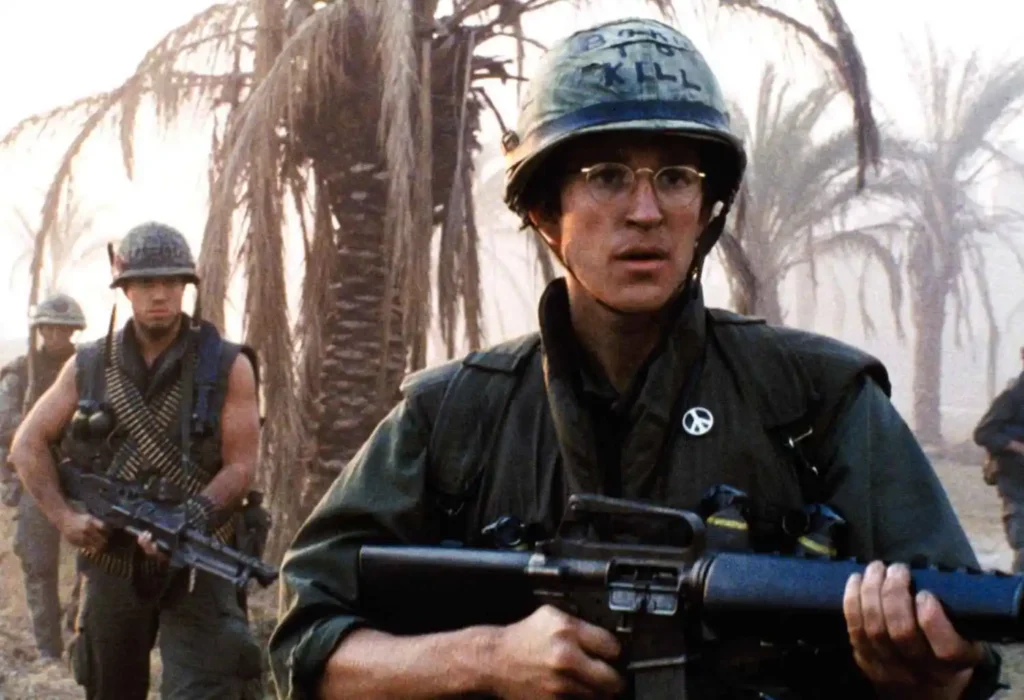
Matthew Modine delivers the film’s central performance as Private Joker, a Marine whose intelligence, sarcasm, and moral awareness make him stand apart from many of his fellow recruits.
Unlike some of the other soldiers, Joker constantly questions the brutality surrounding him. He uses humor as a coping mechanism, often masking his fear and uncertainty behind witty remarks and ironic observations. His famous peace symbol worn alongside the phrase “Born to Kill” perfectly captures the internal conflict that defines his character throughout the film.
Following the brutal training at Parris Island, Joker becomes a military journalist covering the Vietnam War. His experiences on the battlefield force him to confront the harsh realities of combat while challenging his own beliefs about violence, humanity, and survival.
Matthew Modine’s restrained performance gives Joker emotional complexity without relying on dramatic speeches. His expressions, reactions, and quiet moments often communicate more than dialogue, making Joker one of the most memorable protagonists in any war film.
Today, many critics consider Joker one of the finest characters in Stanley Kubrick’s filmography because he serves as both participant and observer, allowing audiences to experience the psychological cost of war through his perspective.
R. Lee Ermey as Gunnery Sergeant Hartman
If there’s one performance that defines Full Metal Jacket, it’s R. Lee Ermey’s unforgettable portrayal of Gunnery Sergeant Hartman.
Hartman is responsible for transforming inexperienced civilian recruits into disciplined United States Marines through relentless physical training, strict discipline, and constant verbal intimidation. His rapid-fire insults have become some of the most quoted lines in movie history, yet beneath the harsh language lies a character whose only goal is preparing recruits for the brutal realities of war.
What makes the performance extraordinary is its authenticity. Before becoming an actor, R. Lee Ermey served as a real U.S. Marine drill instructor. His military experience allowed him to bring unmatched realism to the role, leading Stanley Kubrick to expand Hartman’s screen time after witnessing Ermey’s improvisational skills during auditions.
Although Hartman appears only during the film’s first half, his influence extends throughout the entire story. The psychological impact of his training continues to shape the Marines long after they leave boot camp.
His commanding presence, booming voice, and uncompromising leadership have made Gunnery Sergeant Hartman one of cinema’s greatest military characters.
Vincent D’Onofrio as Private Leonard “Gomer Pyle” Lawrence
Among the film’s most tragic characters is Private Leonard Lawrence, nicknamed Gomer Pyle by Hartman.
When audiences first meet Pyle, he appears awkward, overweight, and unable to keep pace with military training. His repeated mistakes frustrate Hartman and create tension among the other recruits, who begin blaming him for their collective punishments.
As the pressure intensifies, Pyle’s emotional and psychological state steadily deteriorates. The abuse he endures, combined with isolation from his fellow Marines, leads to one of the most shocking and unforgettable sequences in the history of war cinema.
Vincent D’Onofrio underwent a remarkable physical transformation for the role, gaining nearly 70 pounds to portray Pyle convincingly. More impressive than the physical change is his emotional performance, which gradually shifts from innocence to quiet instability.
His portrayal remains one of the finest examples of psychological character development in modern cinema, demonstrating how prolonged emotional trauma can permanently alter an individual.
Many film historians regard Pyle as one of the most heartbreaking characters ever written for a war movie.
Adam Baldwin as Sergeant Animal Mother
While the first half of Full Metal Jacket focuses on military training, the Vietnam sequences introduce audiences to Sergeant Animal Mother, played by Adam Baldwin.
Animal Mother represents the hardened combat soldier whose survival depends on fearlessness and aggression. Confident, outspoken, and intimidating, he thrives in dangerous situations where hesitation could mean death.
Unlike Joker, who often reflects on the morality of war, Animal Mother rarely questions the violence surrounding him. His practical mindset reflects the harsh realities faced by soldiers operating in active combat zones, where difficult decisions must often be made within seconds.
Despite his intimidating personality, Animal Mother earns respect from his fellow Marines through his courage and willingness to protect his unit during firefights.
Adam Baldwin’s commanding performance helps illustrate the psychological contrast between soldiers shaped by prolonged combat and those still struggling to understand the purpose of the war itself.
Arliss Howard as Private Cowboy
Private Cowboy serves as one of the emotional anchors of the platoon during the Vietnam portion of the film.
Having completed boot camp alongside Joker and Pyle, Cowboy develops into a dependable squad leader who values teamwork, discipline, and responsibility. Unlike Animal Mother, Cowboy approaches leadership with calm judgment rather than intimidation.
Throughout the film, his friendship with Joker highlights the strong bonds that often develop between soldiers during wartime. Their shared experiences during training create mutual trust that carries into combat, even as the dangers surrounding them continue to grow.
Cowboy’s leadership style reflects the difficult balance required of military commanders. He must maintain discipline while protecting the lives of those under his command, often facing impossible decisions with limited information.
Arliss Howard brings quiet confidence and emotional sincerity to the role, making Cowboy one of the film’s most relatable and sympathetic characters.
Dorian Harewood as Eightball
Among the Marines serving alongside Joker is Eightball, portrayed by Dorian Harewood.
Although Eightball receives less screen time than some of the film’s central characters, his presence adds authenticity to the platoon’s dynamic. He represents the professionalism and teamwork required for survival in combat, consistently supporting his fellow Marines during dangerous missions.
Eightball is portrayed as reliable, courageous, and deeply committed to his unit. Rather than seeking attention, he focuses on completing the mission and protecting those around him.
Dorian Harewood’s understated performance contributes to the film’s realistic portrayal of military life by emphasizing that every member of a combat unit plays an essential role, regardless of how much dialogue they receive.
His character helps reinforce one of the film’s central messages—that survival in war depends not only on individual bravery but also on trust, cooperation, and shared responsibility.
Why These Characters Continue to Resonate
One reason Full Metal Jacket remains widely discussed decades after its release is the depth of its characters. None of them fit neatly into traditional hero or villain roles. Instead, they represent different responses to the pressures of military training and combat.
Joker questions the morality of war while trying to preserve his humanity. Hartman believes discipline is essential for survival. Pyle illustrates the devastating effects of psychological pressure. Animal Mother embodies the hardened instincts of experienced soldiers, while Cowboy demonstrates responsible leadership under impossible circumstances.
Together, these contrasting personalities create a layered exploration of war that feels just as relevant today as it did when the film premiered.
Kevyn Major Howard as Rafterman
Among the Marines stationed in Vietnam, Rafterman stands out as one of the most relatable characters. Played by Kevyn Major Howard, he serves as a combat photographer for Stars and Stripes alongside Joker. Unlike many of the battle-hardened soldiers around him, Rafterman begins his journey with little firsthand experience of combat.
At first, he approaches the war with curiosity and even excitement, eager to witness the action he has only photographed from a distance. His perspective reflects how many young servicemen arrived in Vietnam with limited understanding of the dangers they would soon face. As the story progresses, however, the harsh realities of combat replace his initial enthusiasm.
Rafterman’s evolving relationship with Joker adds another layer to the narrative. While Joker has become more skeptical about the purpose of the war, Rafterman is still trying to prove himself. Their conversations reveal the different ways soldiers cope with fear, uncertainty, and responsibility.
Kevyn Major Howard delivers a natural and believable performance, portraying a young Marine whose understanding of war changes dramatically through experience. His character reminds viewers that many soldiers entered conflict without fully grasping the emotional and psychological challenges that awaited them.
Ed O’Ross as Lieutenant Touchdown
Lieutenant Touchdown, portrayed by Ed O’Ross, commands the Marines during the Vietnam sequences and represents the pressures faced by military officers responsible for making life-or-death decisions.
Unlike the recruits seen during boot camp, Touchdown operates in an environment where every choice carries immediate consequences. He must coordinate missions, respond to changing battlefield conditions, and maintain the confidence of his troops despite constant danger.
Although his screen time is limited, the character helps illustrate the chain of command within military operations. His presence reinforces the film’s realistic portrayal of leadership, showing that officers must balance strategy with the safety of their soldiers while facing unpredictable combat situations.
Ed O’Ross brings authority and professionalism to the role, contributing to the film’s documentary-like realism.
John Terry as Lieutenant Lockhart
Lieutenant Lockhart appears during Joker’s assignment as a military correspondent, offering another perspective on how the Vietnam War was presented to both soldiers and the public.
As Joker’s superior in the military press division, Lockhart places significant emphasis on morale and public perception. His interactions with Joker highlight the tension between honest reporting and military messaging, raising questions about how war is documented and communicated.
These scenes provide an important contrast to the intense combat sequences. Instead of focusing on firefights, they explore the role of journalism during wartime and the challenges faced by reporters trying to balance truth with official expectations.
John Terry’s restrained performance fits the film’s realistic tone, emphasizing institutional priorities rather than personal heroics.
Kieron Jecchinis as Crazy Earl
Crazy Earl, played by Kieron Jecchinis, serves as another experienced Marine whose brief appearances contribute to the authenticity of the platoon’s dynamic.
Although not a central character, Crazy Earl reflects the personalities often found within military units. His confidence, battlefield experience, and interactions with fellow Marines help create a believable portrayal of soldiers operating under extreme pressure.
Kubrick frequently used supporting characters like Crazy Earl to enrich the world of Full Metal Jacket. Even without extensive dialogue, these roles make the platoon feel like a genuine military unit rather than a collection of isolated protagonists.
Supporting Cast That Adds Authenticity
One of Full Metal Jacket’s greatest strengths is its commitment to creating a believable military environment. Every supporting actor contributes to the atmosphere, whether portraying recruits during boot camp or Marines serving in Vietnam.
Rather than giving every character lengthy backstories, Stanley Kubrick allows personalities to emerge naturally through conversations, reactions, and shared experiences. This approach mirrors real military life, where soldiers often know one another through daily interactions rather than dramatic introductions.
The supporting cast helps create a sense of realism that distinguishes Full Metal Jacket from many traditional war films. Their performances make every scene feel lived-in, reinforcing the emotional weight of the story.
Character Relationships That Drive the Story
While Full Metal Jacket is remembered for its intense dialogue and striking visuals, its emotional impact comes from the relationships between its characters.
The bond between Joker and Pyle forms the emotional core of the first half of the film. Joker is one of the few recruits who initially treats Pyle with kindness, making Pyle’s tragic decline even more heartbreaking.
The relationship between Hartman and the recruits illustrates the psychological demands of military training. Hartman’s relentless methods are intended to prepare young Marines for combat, but they also expose the emotional cost of transforming civilians into soldiers.
In Vietnam, Joker’s interactions with Cowboy, Animal Mother, and Rafterman reveal different perspectives on war. Each character represents a unique response to fear, duty, and survival, allowing the film to explore the complexity of combat without presenting simple moral answers.
These relationships give Full Metal Jacket lasting emotional depth and help explain why the film continues to resonate with audiences decades after its release.
Why the Full Metal Jacket Cast Still Stands Out Today
Nearly four decades after its release, the performances in Full Metal Jacket remain widely praised because they avoid exaggeration. Instead of presenting larger-than-life heroes, the cast portrays ordinary individuals placed in extraordinary circumstances.
Matthew Modine captures the inner conflict of a soldier trying to preserve his humanity. Vincent D’Onofrio delivers one of cinema’s most unforgettable portrayals of psychological collapse. Adam Baldwin represents the hardened instincts of experienced combat troops, while Arliss Howard brings quiet leadership and emotional balance to the battlefield.
Perhaps no performance has become more iconic than R. Lee Ermey’s Gunnery Sergeant Hartman. His authentic military background gave the character a level of realism rarely seen in film, influencing countless military portrayals that followed.
Together, these performances transformed Full Metal Jacket into far more than a traditional war movie. They created characters who continue to be studied by filmmakers, actors, and audiences around the world.
Stanley Kubrick’s Approach to Casting
Stanley Kubrick was known for his meticulous attention to detail, and his casting choices played a major role in the film’s success.
Rather than relying exclusively on established Hollywood stars, Kubrick selected performers who could fully embody their roles. Many cast members underwent extensive preparation to understand military discipline, while R. Lee Ermey’s real-life experience as a Marine drill instructor added an unmatched level of authenticity.
Kubrick also encouraged repeated takes and demanded emotional precision from his actors. Although his methods were often challenging, the result is a cast whose performances feel remarkably genuine and emotionally believable.
This commitment to realism remains one of the defining qualities of Full Metal Jacket.
The Lasting Legacy of the Cast
The cast of Full Metal Jacket helped create one of the most influential war films ever produced. Their performances continue to inspire actors, filmmakers, and military dramas decades after the movie’s release.
Many memorable lines, scenes, and characters have become part of popular culture, while the film itself remains a frequent subject of discussion among critics and cinema enthusiasts.
The emotional honesty of the performances ensures that Full Metal Jacket remains relevant for new generations of viewers. Rather than relying solely on action, the film succeeds because its characters feel authentic, vulnerable, and deeply human.
Final Thoughts
The enduring success of Full Metal Jacket owes as much to its remarkable cast as it does to Stanley Kubrick’s direction. Every major character contributes something meaningful to the story, whether illustrating the psychological impact of military training, the realities of combat, or the emotional cost of war.
Matthew Modine’s thoughtful portrayal of Joker, Vincent D’Onofrio’s heartbreaking performance as Private Pyle, and R. Lee Ermey’s unforgettable Gunnery Sergeant Hartman have become defining performances in cinematic history. Supporting actors such as Adam Baldwin, Arliss Howard, Kevyn Major Howard, and Dorian Harewood further strengthen the film by creating a believable military brotherhood shaped by fear, loyalty, and survival.
Decades after its release, Full Metal Jacket continues to be regarded as one of the greatest war films ever made—not only because of its powerful storytelling, but because of the unforgettable cast that brought its complex characters to life.
Stay updated with the latest trends on Fandomora — your go-to destination for breaking movie news, web series updates, anime releases, gaming trends, celebrity insights, and music updates. Explore reviews, OTT release dates, anime guides, gaming walkthroughs, and curated lists to discover the best in global entertainment.
About The Author