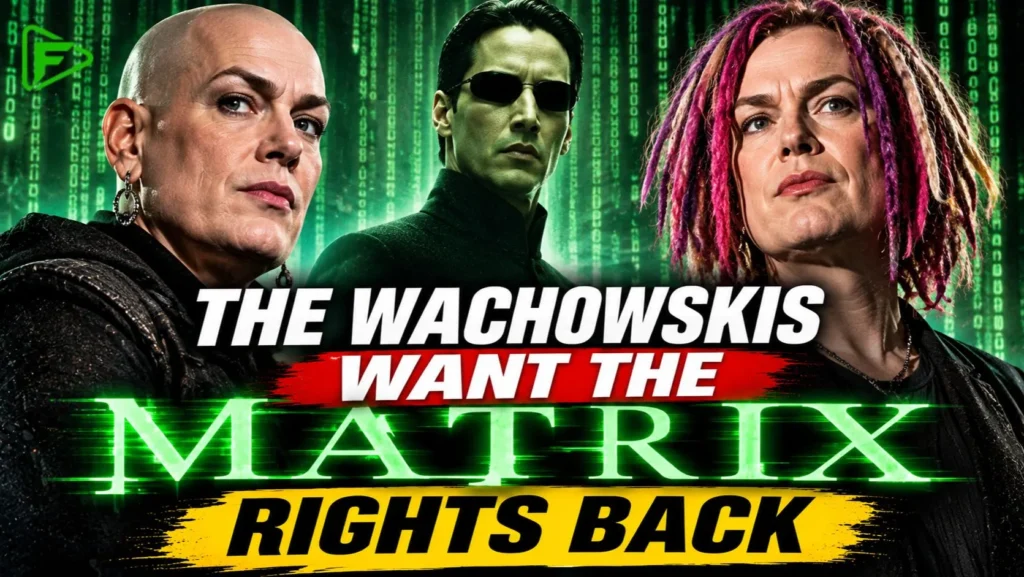
The Wachowskis Want The Matrix Rights Back: What It Means for Matrix 5
The future of The Matrix franchise could be heading towards a major change behind the scenes. Lana and Lilly Wachowski, the filmmakers who created the iconic science-fiction series, have reportedly notified Warner Bros. that they intend to exercise their copyright termination rights and reclaim control of the property.
According to a November 17 report by Puck journalist Eriq Gardner, Warner Bros. could lose its U.S. rights to The Matrix as early as February 2029. The development comes at an important moment for the franchise, as a fifth instalment is already in development with filmmaker Drew Goddard attached to write and direct.
However, the notice does not mean the Wachowskis have already regained ownership, nor does it automatically cancel the upcoming sequel. The situation involves a complicated question about the filmmakers’ original agreement with Warner Bros., the eligibility of the film for copyright termination, and whether the studio can negotiate a new deal before the deadline.
Here’s what the reported rights dispute means for The Matrix, Warner Bros. and the future of Matrix 5.
Why Are the Wachowskis Trying to Reclaim The Matrix Rights?
Lana and Lilly Wachowski have reportedly taken formal steps to recover rights to The Matrix from Warner Bros. by invoking a provision of U.S. copyright law known as copyright termination.
The development was first reported by Puck, which says the filmmakers have notified the studio that they intend to exercise their termination rights. If the move succeeds, Warner Bros. could lose control of the franchise’s U.S. rights in February 2029.
The timing is particularly significant because Warner Bros. is now part of David Ellison’s Skydance business following the companies’ combination. The deal brought a major collection of entertainment properties under the new corporate structure, including valuable franchises such as The Matrix.
For the Wachowskis, the issue is about more than the ownership of a familiar movie title. The franchise includes its characters, fictional universe and the potential for future stories. Recovering the relevant rights could give the filmmakers a stronger position in deciding how the property is licensed and developed.
It is important to understand that this is currently a reported legal move, not a completed transfer of ownership. The February 2029 date is a potential effective date, and the studio could challenge the claim or reach a new agreement with the creators before then.
What Is Copyright Termination and How Does It Work?
Copyright termination rights allow eligible creators or their heirs to reclaim certain copyright interests that they previously transferred or licensed to another party.
Under the U.S. Copyright Act, these provisions exist partly to protect creators whose early agreements may no longer reflect the commercial value of their work. A film, book or other creative property can become far more valuable years after its original release, and termination provisions can give qualifying creators another opportunity to regain rights.
The U.S. Copyright Office explains that the applicable rules depend on several factors, including when the original grant was made, who signed it and when the copyright was secured.
For certain grants made on or after January 1, 1978, Section 203 of the Copyright Act provides a termination framework. A notice generally must be served between two and ten years before the chosen effective date, with the notice also properly recorded with the Copyright Office.
That is why the Wachowskis’ reported notice matters now, even though the potential change in rights is not expected to take effect until February 2029.
There is another important limitation: work-made-for-hire agreements are generally not eligible for termination under these provisions. If a court determines that The Matrix was created under a qualifying work-for-hire arrangement, Warner Bros. could have a legal argument against the Wachowskis’ attempt.
In other words, the notice begins a potentially important process, but it does not settle the ownership question by itself.
Could Warner Bros. Challenge the Wachowskis’ Copyright Claim?
Yes. One of the biggest complications is the original agreement between the Wachowskis and Warner Bros.
According to Gardner’s report, The Matrix was connected to a three-picture arrangement involving the filmmakers and former Warner Bros. executive Lorenzo di Bonaventura. The reported agreement included the Wachowskis’ work on Assassins, the 1996 film Bound, and The Matrix.
Warner Bros. could potentially argue that The Matrix was commissioned as a work made for hire. If that argument succeeds, the studio could claim that the filmmakers do not have the termination rights they are now seeking to exercise.
The distinction matters because U.S. copyright law treats work-made-for-hire projects differently from works whose creators later transfer or license their copyright. In a qualifying work-for-hire arrangement, the commissioning party is generally treated as the author for copyright purposes.
However, the Wachowskis may have a counterargument.
The Puck report points to an earlier copyright lawsuit in which Warner Bros. reportedly indicated that the sisters had begun developing The Matrix as early as 1992 and had written scripts for the original trilogy before their reported 1994 agreement with di Bonaventura.
If the filmmakers can establish that the relevant work existed before the studio contract, it could weaken Warner Bros.’ potential work-for-hire argument.
That historical detail could become important if the dispute reaches court. Ultimately, the outcome would depend on the actual agreements, the relevant copyright grants and how the law applies to the specific works and rights involved.
What Does This Mean for The Matrix 5?
The rights dispute arrives while The Matrix 5 is already in development, making the situation especially interesting for fans waiting for the next chapter.
Warner Bros. announced the fifth mainline film in 2024, with Drew Goddard attached to write and direct. Goddard is known for projects including The Cabin in the Woods, The Martian and Project Hail Mary. Lana Wachowski was announced as an executive producer.
The sequel has remained relatively quiet during development, and major plot details and casting announcements have not been confirmed.
The new copyright development could complicate the studio’s long-term plans if Warner Bros. cannot retain or renegotiate the necessary rights before the potential 2029 termination date.
However, it would be premature to assume that The Matrix 5 is cancelled or that production must stop. A rights dispute does not automatically erase a project that is already in development. The precise consequences would depend on the rights covered by the notice, the terms of existing agreements and any new deal the parties reach.
There is also a reason to believe that the filmmakers may not be trying to block the sequel altogether. Gardner reports that the Wachowskis have been encouraging of Goddard’s concept and have recently increased their involvement with the project.
That suggests the situation could become a negotiation over creative control, licensing and financial terms rather than a straightforward battle to stop another Matrix movie.
Are Lana and Lilly Wachowski Involved in The Matrix 5?
The Wachowskis’ relationship with the fifth film has been a little complicated.
In September 2026, Lilly Wachowski said she did not personally want to return to the Matrix universe, although she indicated that Goddard wanted the creators’ blessing before moving forward with the project.
Speaking on KCRW’s The Business, Lilly suggested that she and Lana might take a closer look at the new film and decide whether they wanted to support it.
Warner Bros. had previously confirmed Lana Wachowski as an executive producer on the fifth instalment, while Goddard was attached to write and direct.
The latest Puck report adds another development: the sisters have reportedly been supportive of the new sequel and have increased their involvement in recent months.
That does not mean either filmmaker has been confirmed as a director or writer on The Matrix 5. Their reported involvement should also be distinguished from the legal question of who controls the franchise rights.
Still, their participation could prove valuable. The Wachowskis established the visual language, philosophical ideas and fictional mythology that made the original film a landmark in science-fiction cinema. Their perspective could help the next instalment remain connected to the world they created.
Could Skydance and the Wachowskis Reach a New Deal?
A negotiated agreement may be the most straightforward way to avoid a lengthy legal fight.
According to Puck, Skydance is optimistic about reaching an arrangement with the filmmakers. The studio has a potential precedent in its handling of The Godfather rights.
The report notes that Mario Puzo’s estate previously exercised copyright termination rights involving The Godfather, leading to a new agreement that allowed the studio to maintain access to the property.
A similar arrangement could potentially allow Warner Bros. to continue developing The Matrix films under newly negotiated terms.
Such a deal might address licensing rights, financial compensation, creative involvement and the studio’s ability to produce future sequels or prequels. The exact terms would depend on what the Wachowskis and the studio are willing to accept.
The alternative could be a legal dispute over whether the original agreement qualifies as work made for hire and whether the termination notice is valid.
For a franchise with significant commercial and cultural value, both sides have reasons to explore a negotiated solution. Warner Bros. would want to protect its plans for the property, while the creators would have an opportunity to revisit an agreement made decades ago.
Could The Matrix Franchise Leave Warner Bros. in 2029?
It is possible, but the outcome is not guaranteed.
If the Wachowskis’ termination claim is successful and the relevant rights revert in February 2029, Warner Bros. could lose control of the covered U.S. rights. That would significantly affect how the studio approaches future projects based on the franchise.
However, the scope of the rights involved is important. The current reporting focuses on the potential return of U.S. rights, and it should not be interpreted as confirmation that every international right, existing film or related property would automatically transfer in the same way.
The U.S. Copyright Office also explains that certain derivative works prepared under an earlier grant may continue to be used under the terms of that grant after termination. Rights to authorise new uses or create new derivative works can be affected differently.
That distinction matters for a franchise that already includes four live-action films and other material. The future of existing films and the ability to develop entirely new stories are not necessarily the same legal question.
For now, the biggest question is whether Warner Bros. and the Wachowskis can agree on a new arrangement before the potential deadline.
What Happens Next in The Matrix Rights Dispute?
The next stage will likely involve negotiations and closer examination of the original agreements.
Warner Bros. and Skydance could try to reach a fresh licensing arrangement with the filmmakers, allowing the studio to continue developing the franchise. Alternatively, the companies could challenge the termination claim, particularly over whether the original film qualifies as work made for hire.
The reported evidence about when the Wachowskis began writing The Matrix could become a significant part of any legal argument.
There is also the question of how the dispute affects the fifth film’s schedule. With no confirmed release date or detailed production timeline publicly established in the reporting, it is too early to predict whether the rights issue will delay the sequel.
One thing is clear: the creators’ reported move has put the franchise’s long-term ownership back into the spotlight. The next few years could determine whether Warner Bros. retains its current position, negotiates a new deal or faces a more serious legal challenge.
Final Thoughts
The Wachowskis’ reported attempt to reclaim The Matrix rights is one of the most significant developments surrounding the franchise in recent years. It brings together Hollywood’s complicated copyright rules, the commercial value of established intellectual property and the creators’ relationship with the studio that helped turn their film into a global phenomenon.
February 2029 could become an important date, but the outcome is far from settled. Warner Bros. may challenge the claim or negotiate a new agreement, and neither possibility automatically means the end of The Matrix 5.
For fans, the most interesting question is not simply who owns the franchise. It is whether the next chapter can move forward with the involvement and support of the filmmakers who created its world in the first place.
Frequently Asked Questions
1. Are the Wachowskis taking back The Matrix rights?
Lana and Lilly Wachowski have reportedly notified Warner Bros. that they intend to exercise their copyright termination rights. The move could allow them to reclaim certain rights to the franchise, potentially in February 2029. Ownership has not transferred yet.
2. When could The Matrix rights return to the Wachowskis?
According to Puck‘s November 17, 2026 report, Warner Bros. could lose the relevant U.S. rights as early as February 2029 if the termination process succeeds.
3. Why can the Wachowskis reclaim The Matrix rights?
U.S. copyright law allows eligible creators or their heirs to terminate certain copyright transfers or licences after a statutory period. The rules include specific notice requirements and exceptions, including for qualifying works made for hire.
4. Is The Matrix 5 cancelled because of the rights dispute?
No cancellation has been announced. The fifth film remains in development with Drew Goddard attached to write and direct. The rights dispute could complicate future plans, but a new agreement could allow the project to continue.
5. Who is directing The Matrix 5?
Drew Goddard is attached to write and direct the fifth mainline Matrix film. Lana Wachowski was announced as an executive producer.
6. Can Warner Bros. stop the Wachowskis from reclaiming the rights?
Warner Bros. could potentially challenge the claim by arguing that the original film was made under a work-for-hire agreement. Whether that argument succeeds would depend on the contracts, evidence and applicable copyright law.
7. Are Lana and Lilly Wachowski returning for The Matrix 5?
They have not been confirmed as directors or writers on the fifth film. However, Puck reports that the sisters have been supportive of the project and have recently increased their involvement.
Stay updated with the latest trends on Fandomora — your go-to destination for breaking movie news, web series updates, anime releases, gaming trends, celebrity insights, and music updates. Explore reviews, OTT release dates, anime guides, gaming walkthroughs, and curated lists to discover the best in global entertainment.
About The Author