Midnight X-Men #1 Review: Jonathan Hickman’s Gothic Vampire X-Men
Rather than completely reinventing the X-Men from the ground up, Jonathan Hickman imagines a world where the familiar history of mutantkind largely happened as expected—until a vampire outbreak changes everything.
The result is a dense, atmospheric comic that blends X-Men mythology, vampire horror, superhero action, religious conflict and gothic drama into one increasingly complicated world. With Matteo Della Fonte on art, Arthur Hesli on colors and Cory Petit on lettering, the first issue wastes little time establishing that this is not simply another alternate-universe X-Men story.
Hickman instead builds a timeline where the familiar X-Men have been pushed into a completely different conflict. Vampires are hiding in plain sight, mutant vampires have their own agenda, Magneto leads the Brotherhood, Nightcrawler has become part of the Catholic Church’s fight against vampires, and the remaining X-Men are caught somewhere inside this increasingly fractured landscape.
That density is exactly what makes Midnight X-Men #1 so intriguing.
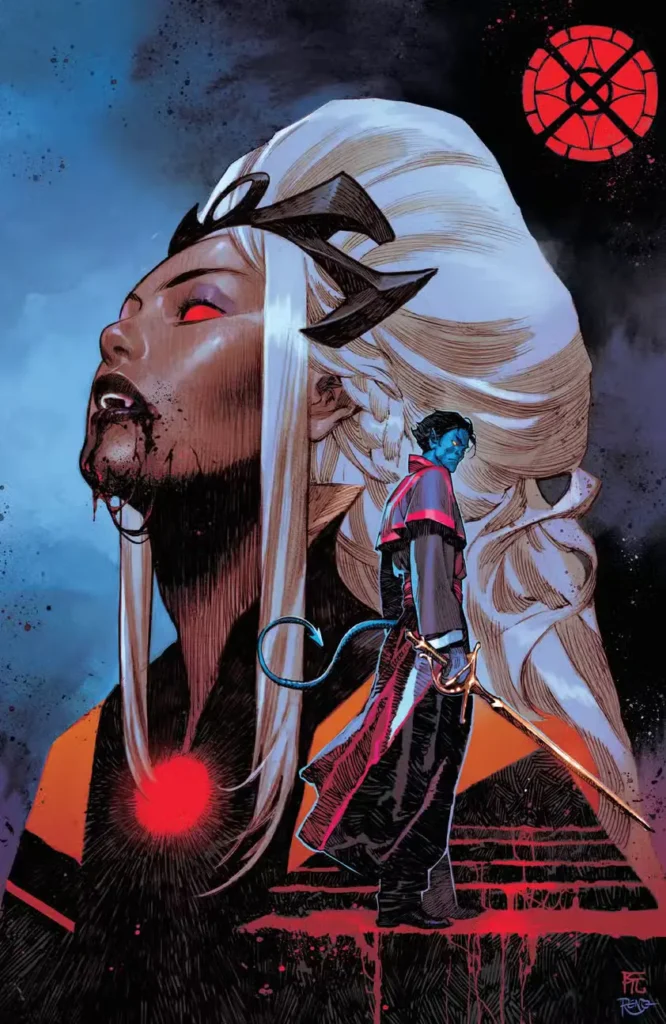
What Is Midnight X-Men #1 About?
At its core, Midnight X-Men #1 is about what happens when a vampire outbreak tears apart the world of mutants. The important distinction is that this isn’t presented as a universe where the X-Men never existed or where every familiar character has been completely redesigned.
Instead, Hickman starts from a recognizable X-Men foundation and introduces a major divergence in history.
The classic mutant world existed much as readers would expect, but a vampire outbreak eventually changed the direction of that history. Years later, the consequences have become impossible to ignore.
Vampires remain difficult to identify because they operate from the shadows, creating a world where their presence isn’t always obvious. That uncertainty gives the series an unusual horror quality. The danger isn’t simply that monsters are attacking people in the streets. The bigger problem is that the enemy can exist without being immediately recognized.
That setup allows Hickman to combine traditional X-Men superhero storytelling with a much darker supernatural atmosphere.
Midnight X-Men Brings Vampire Horror Into the Mutant World
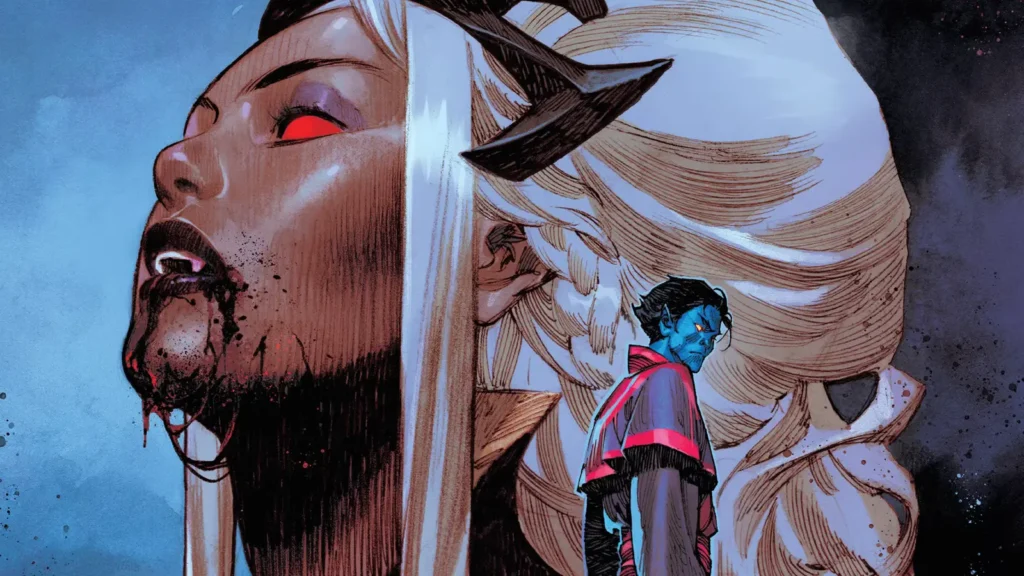
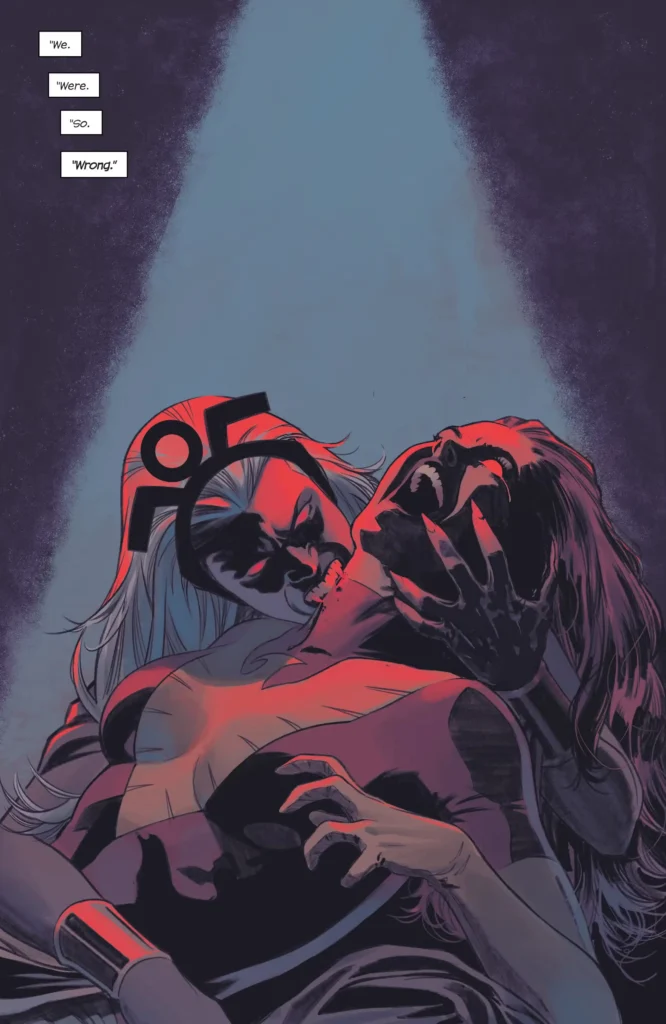
One of the strongest moments in the first issue arrives almost immediately with a striking full-page image of Vampire Storm attacking Phoenix.
It is an intentionally outrageous image, but it communicates the premise almost perfectly. Readers aren’t being asked to choose between an X-Men comic and a vampire comic. Midnight X-Men is deliberately both.
That combination gives the book its identity.
Storm is already one of the most recognizable characters in X-Men history, so turning her into a vampire instantly gives the horror side of the story a familiar face. At the same time, the appearance of Phoenix reinforces just how far the new timeline has moved away from the world readers know.
The horror works because Hickman doesn’t abandon superhero mythology to make room for vampires. Instead, he forces the two genres to exist together.
That makes the book feel much more like a gothic X-Men story than a conventional superhero adventure with horror elements added on top.
Jonathan Hickman’s Biggest Strength Is the World-Building
The most ambitious part of Midnight X-Men #1 isn’t necessarily the vampire violence. It is the number of competing factions Hickman introduces and the way they occupy different positions within this altered X-Men world.
There are ordinary vampires, mutant vampires, Magneto’s Brotherhood of Mutants, Nightcrawler’s Church, and remnants of the original X-Men. Each group has its own interests, creating a political and ideological conflict underneath the supernatural horror.
That is classic Hickman territory.
Rather than reducing the story to heroes versus villains, Hickman creates a situation where several groups can have understandable motivations while still being fundamentally opposed to one another. The vampire outbreak has fractured the world, but it hasn’t created a simple division between good and evil.
The result is a comic that asks readers to keep track of several different power structures at once.
That could easily become confusing. In Hickman’s hands, however, the density becomes part of the appeal.
Why the Different Vampire Factions Matter
The existence of both regular vampires and mutant vampires gives the conflict another layer. They may share the same basic supernatural identity, but they are not simply one unified enemy.
At the same time, mutant society has fractured in response to the crisis.
Magneto’s Brotherhood represents one side of the mutant world, while Nightcrawler has embraced the Catholic Church, which has become one of the major forces hunting vampires. The remnants of the original X-Men occupy another part of the increasingly unstable landscape.
This structure makes Midnight X-Men feel larger than the immediate events of its first issue.
The vampire outbreak isn’t simply a monster-of-the-week threat. It has changed institutions, alliances and relationships.
That is also why the comic benefits from multiple readings. There is a lot of information packed into the issue, and Hickman uses additional text material to expand the mythology, including information about different ways vampires can be killed.
Rather than slowing the story down completely, that additional world-building makes the universe feel deliberately constructed.
Matteo Della Fonte’s Art Gives Midnight X-Men Its Gothic Identity
Jonathan Hickman’s writing establishes the complicated mythology, but Matteo Della Fonte’s artwork is what gives the series much of its immediate personality.
The source material particularly highlights Della Fonte’s character work, and that is important because Midnight X-Men isn’t relying entirely on grotesque vampire imagery.
The characters still need to feel like themselves even after their world has changed.
Della Fonte’s vampire Storm is an obvious visual centerpiece, but the more impressive work comes through the interactions between familiar characters. His portrayal of Storm and Nightcrawler gives the issue an emotional center that prevents the story from becoming purely about supernatural spectacle.
The horror is striking, but the relationships are what make the horror matter.
Arthur Hesli’s colors further strengthen the atmosphere, particularly during sequences where the transition from daylight into darkness creates an increasingly haunting mood.
That combination of character-focused artwork and gothic atmosphere gives Midnight X-Men #1 a visual identity separate from the other Midnight books.
Nightcrawler and Storm Give the First Issue Its Emotional Core
The relationship between Nightcrawler and Storm is arguably the most compelling part of the first issue.
On paper, they are positioned on opposite sides of a larger conflict. Yet their personal history makes that division far more complicated.
Nightcrawler’s determination to save Storm is not simply about defeating an enemy. He still sees his friend beneath the supernatural transformation. Storm, meanwhile, attempts to restrain herself because of her own connection to Nightcrawler.
That tension gives the story an emotional dimension that the vampire mythology alone could not provide.
It also demonstrates why the familiar X-Men history matters so much to Hickman’s approach.
If these characters were complete reinventions, the emotional weight of their confrontation would be different. Because they carry years of recognizable relationships and history into this altered world, their interactions immediately feel more significant.
The horror therefore becomes personal.
Midnight X-Men Is More Than Another Alternate X-Men Story
The biggest distinction between Midnight X-Men and the other Midnight titles is the way Hickman approaches the source material.
The source article points out that Midnight Spider-Man and Midnight Fantastic Four take much more radical approaches to their respective characters. Their versions are substantially reconceived.
Hickman’s strategy is different.
He asks what the X-Men world might look like if its familiar history continued normally until one enormous event pushed the timeline in another direction.
That approach allows readers to recognize the world while constantly questioning what has changed.
For longtime X-Men fans, that can be particularly effective because familiar characters, institutions and relationships become clues. The more readers know about the traditional X-Men mythology, the more meaning they can potentially find in the altered version.
Cardinal Stryker Shows How Hickman Handles Exposition
One of the risks of a story this dense is exposition.
With vampires, mutant vampires, the Brotherhood, the Church, the X-Men and an altered timeline all needing explanation, Midnight X-Men #1 could easily turn into a giant information dump.
Instead, Hickman often delivers information through character conflict.
Cardinal Stryker is one example. Some of his scenes primarily communicate developments within the wider plot, but his characterization keeps those sequences engaging rather than making them feel like a lecture about the world.
That is one of Hickman’s most useful storytelling strengths.
The reader is learning about the universe while watching characters pursue their own objectives. Information becomes part of the drama rather than something completely separate from it.
The issue is therefore packed with exposition without constantly feeling like exposition.
How Midnight X-Men Uses Familiar X-Men Vampire History
The X-Men have encountered vampires before, which gives Hickman plenty of existing mythology to draw upon.
Vampire Storm, particularly through the Bloodstorm concept, is already a recognizable alternate interpretation of the character. Midnight X-Men takes that familiar idea and places it inside a much larger vampire-driven X-Men timeline.
That familiarity helps the comic avoid feeling completely disconnected from Marvel‘s established mythology.
At the same time, Hickman’s version isn’t simply repeating an earlier vampire Storm story. The character becomes part of a larger conflict involving mutantkind, the Church and competing vampire factions.
This is where the comic’s gothic approach becomes especially useful: familiar X-Men ideas are recognizable, but their context has changed.
Why Midnight X-Men #1 Rewards a Second Reading
There is a lot happening in the first issue.
Readers are introduced to the altered history, the vampire outbreak, multiple factions, religious elements, character relationships and rules surrounding the vampires. Hickman also adds supplementary text that expands the mythology.
That density means Midnight X-Men #1 isn’t necessarily a comic that reveals everything on the first pass.
A second reading can make the relationships between different factions easier to follow and can also put individual scenes into a broader context.
For readers who enjoy heavily constructed fictional universes, that is one of the comic’s biggest strengths.
The book expects attention from its audience rather than simplifying the mythology into a straightforward hero-versus-monster story.
Midnight X-Men #1 Review: Is It Worth Reading?
Midnight X-Men #1 is an unusually ambitious launch for a vampire-themed X-Men series.
Jonathan Hickman doesn’t simply place the X-Men inside a horror story. He rebuilds the political and social landscape around them while retaining enough familiar history for the characters to remain emotionally recognizable.
Matteo Della Fonte’s artwork gives the book a distinctive gothic atmosphere, while the relationship between Storm and Nightcrawler prevents the issue from becoming all spectacle and mythology.
The biggest challenge is also its greatest strength: there is a lot to process.
Readers looking for a simple superhero story may find the first issue extremely dense. But anyone interested in X-Men horror, vampire comics, gothic superhero stories and Jonathan Hickman’s world-building will find plenty to unpack.
The first issue feels less like a complete standalone story and more like the opening chapter of a much larger design.
If Marvel continues giving Hickman the freedom described in the source material, Midnight X-Men could become one of the more distinctive X-Men runs to emerge from the Midnight line.
Final Verdict
Midnight X-Men #1 succeeds because it understands that the X-Men already have decades of mythology worth disrupting.
Jonathan Hickman doesn’t need to erase everything familiar. Instead, he changes one enormous piece of the timeline and explores the consequences through vampire horror, mutant politics, religious conflict and deeply personal relationships.
That approach makes the comic feel simultaneously recognizable and strange.
Della Fonte’s artwork gives the story its gothic edge, while Storm and Nightcrawler provide the emotional connection underneath the supernatural chaos. Hickman’s plotting, meanwhile, turns what could have been a simple vampire crossover into a dense new world with several factions moving against one another.
For readers willing to embrace the complexity, Midnight X-Men #1 looks like the beginning of a particularly intriguing chapter in Marvel’s Midnight line.
Frequently Asked Questions
1. What is Midnight X-Men #1 about?
Midnight X-Men #1 takes place in a version of the X-Men universe where familiar mutant history largely happened as expected before a major vampire outbreak changed the timeline. Years later, vampires, mutant vampires and several competing mutant factions are fighting for control.
2. Who writes Midnight X-Men?
Jonathan Hickman is the writer of Midnight X-Men #1. The first issue features art by Matteo Della Fonte, colors by Arthur Hesli, and lettering by Cory Petit.
3. Is Midnight X-Men a vampire comic?
Yes. Vampires are central to the premise, but the series combines vampire horror with X-Men superhero mythology rather than abandoning the traditional mutant elements.
4. Is Storm a vampire in Midnight X-Men?
Yes. The first issue prominently features Vampire Storm, including a dramatic confrontation involving Phoenix.
5. What makes Midnight X-Men different from Midnight Spider-Man and Midnight Fantastic Four?
The Midnight X-Men approach is less of a complete reinvention. Hickman largely preserves the familiar X-Men history before introducing a major divergence caused by the vampire outbreak.
6. Is Midnight X-Men connected to the traditional X-Men mythology?
The source presents the series as a world where the X-Men developed largely as they normally would before the major timeline split. That allows Hickman to build on familiar characters and relationships while changing their circumstances.
Stay updated with the latest trends on Fandomora — your go-to destination for breaking movie news, web series updates, anime releases, gaming trends, celebrity insights, and music updates. Explore reviews, OTT release dates, anime guides, gaming walkthroughs, and curated lists to discover the best in global entertainment.
About The Author